Turkey’s Constitutional Court ruled Thursday that a university president violated a student’s right to protest by using a domestic violence protection law to obtain a restraining order against them during campus demonstrations, the T24 news website reported.
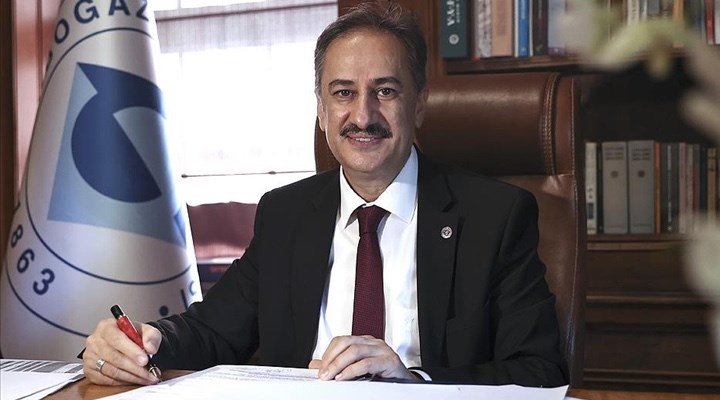
The court found that Boğaziçi University President Naci İnci improperly invoked Law No. 6284, legislation designed to protect victims of domestic violence and prevent violence against women, to silence a student protester. A lower court had granted İnci’s request for a protective order, citing “persistent stalking” and ordering the student to refrain from threatening or insulting behavior for one month.
In its decision the Constitutional Court said the lower court failed to adequately explain how İnci qualified as a victim of stalking. The justices ruled that misusing the domestic violence law to restrict peaceful protest violated the student’s constitutional rights.
The decision represents a rare judicial rebuke of tactics used to suppress dissent at Turkish universities, where academic freedom has come under growing pressure in recent years.
The case stems from yearslong protests at Boğaziçi University that began in January 2021, when President Recep Tayyip Erdoğan appointed Melih Bulu as university president, bypassing the institution’s democratic election process. Bulu, a political ally who had run as a candidate for Erdoğan’s ruling Justice and Development Party (AKP), became the first outsider appointed to lead the elite Istanbul university since a 1980 military coup.
The appointment sparked immediate and sustained demonstrations by students and faculty who saw it as an assault on academic independence. For years, students and alumni continued protests, with many symbolically turning their backs to the president’s office during demonstrations
During the protests, Erdoğan dismissed demonstrators as “terrorists,” asking, “Are you students or terrorists who are trying to raid the office of the rector?” He accused them of lacking respect for Turkish values and vowed his government would not allow mass government protests like those that swept Turkey in 2013.
When the protests continued after İnci replaced Bulu in August 2021, authorities responded with force. Police detained dozens of students, university gates were padlocked and both academics and alumni, including former elected university president Professor Üstün Ergüder, were barred from the campus. Faculty members also reported being blocked from teaching classes.
Boğaziçi, founded in 1863 as Robert College, the first American college established outside the United States, has long been viewed with suspicion by Erdoğan and his conservative base. In 2018 Erdoğan publicly warned that “the secular, liberal learning environment of Bogazici might become a threat to students that would lead them to alienate themselves from the values of the nation.”
The crackdown at Boğaziçi is part of a broader assault on academic freedom in Turkey. Since a coup attempt in 2016, Erdoğan’s government has dismissed thousands of academics, shuttered universities and moved to assert greater control over institutions of higher education. The government’s stated goal, as Erdoğan has said, is to raise “pious generations,” a vision that clashes with Boğaziçi’s longstanding tradition of a secular, liberal education.