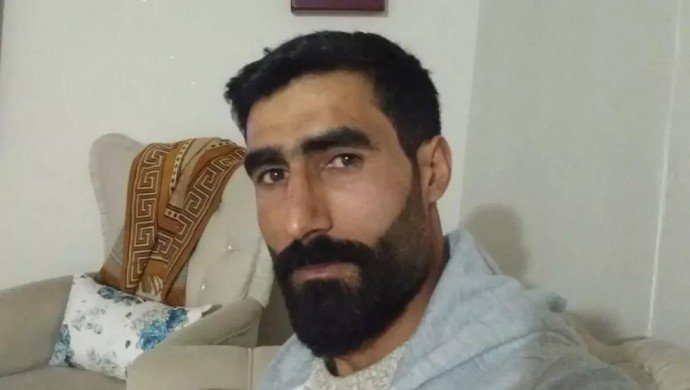
Turkey’s Constitutional Court has ordered a new investigation into the killing of a Kurdish man during a 2019 military operation, ruling that failures in the original investigation violated the procedural aspect of the right to life, the Mezopotamya news agency reported Monday.
In its unanimous June 18 ruling, the court said the Ağrı Chief Public Prosecutor’s Office had failed to properly establish the circumstances of Murat Kaya’s death, leaving the court unable to determine whether the killing itself violated his right to life.
Kaya, a 28-year-old father of three, was killed during a December 6, 2019, military operation in the village of Soğukpınar in eastern Ağrı province. Three members of the outlawed Kurdistan Workers’ Party (PKK) were also killed, and eight security personnel were injured, according to court documents. The interior ministry said at the time that four militants had been killed in the operation, counting Kaya among them.
Kaya’s family disputed the ministry’s account, maintaining that he was a civilian with no involvement in the PKK. His wife, Zozan Müslüm, said she saw soldiers stop and search her husband before making him sit in a safe area. She later learned that he had been killed.
Designated as a terrorist organization by Turkey and its Western allies, the PKK waged an insurgency against the Turkish state beginning in 1984 but said in May 2025 it would disband and end its armed campaign. The Turkish Parliament established a commission in August 2025 to oversee the peace process.
The Ağrı prosecutor’s office declined to bring charges against security personnel over Kaya’s death on June 22, 2020, concluding that the use of lethal force was lawful because Kaya had acted with armed militants. A criminal magistrate of peace rejected the family’s challenge to that decision in July 2020, prompting them to apply to the Constitutional Court.
The prosecutor also dismissed Kaya’s wife’s account as unreliable, citing in part interviews in which his relatives had criticized Turkish state institutions.
The Constitutional Court found that investigators had failed to identify the soldiers who fired toward the house where Kaya’s body was found or question them as suspects, and had not conducted a ballistic examination of a bullet recovered from his body. It also found no record that potentially crucial footage from armored-vehicle cameras had been examined.
The court further found no concrete evidence supporting the prosecutors’ claim that Kaya had emerged from a militants’ shelter during the fighting. No weapon or ammunition was found near his body, and forensic examinations found no DNA or fingerprint evidence linking him to weapons or materials recovered from the shelter.
The court concluded that investigators had failed to adequately assess whether the use of lethal force was necessary and proportionate. It also found that restrictions on the family’s access to evidence had prevented Kaya’s relatives from effectively participating in the investigation.
The Constitutional Court also ordered the state to pay Kaya’s relatives jointly 330,000 Turkish lira (about $6,550) in nonpecuniary damages and 40,446 lira (about $800) in legal costs.
Human rights groups have long raised concerns about impunity in cases involving Kurds killed by Turkish security forces, citing inadequate investigations, decisions of non-prosecution and lengthy judicial proceedings.