Turkey has experienced a marked resurgence of torture and ill-treatment in custody over the past decade and especially since a coup attempt on July 15, 2016. Lack of condemnation from higher officials and a readiness to cover up allegations rather than investigate them have resulted in widespread impunity for the security forces.
The abuse has primarily been directed at people affiliated with the faith-based Gülen movement, but Kurdish detainees, leftists, protesters and other government critics have also been targeted.
Turkish President Recep Tayyip Erdoğan has targeted followers of the Gülen movement, inspired by the late Muslim cleric Fethullah Gülen, since corruption investigations in December 2013 implicated him as well as some members of his family and inner circle. He dismissed the probes as a Gülenist conspiracy and designated the movement as a terrorist organization in May 2016, intensifying a sweeping crackdown after the coup attempt in July of the same year that he accused Gülen of orchestrating. The movement denies involvement in the attempted coup or any terrorist activity.
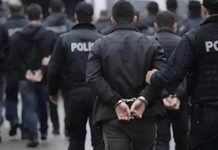
In the immediate aftermath of the coup attempt, tens of thousands of people were detained on coup or terrorism charges, many of them held in improvised locations such as sports halls, stables and the corridors of courthouses. The UN special rapporteur on torture, who visited the country in late 2016, found that “torture and other forms of ill-treatment were widespread” in this period, particularly at the time of arrest and in police and gendarmerie lock-ups.
Court testimony collected in the years that followed exposed the scale of the abuse. According to multiple victims’ statements in court, a police chief who called himself Azrael, the Angel of Death, oversaw two unofficial detention sites in Ankara — a sports hall belonging to the Turkish Volleyball Federation and a makeshift tent in the parking lot of Sincan Prison — where nearly 2,000 people were stripped, deprived of food and water, beaten, electrocuted and held in stress positions in 2016.
A medical doctor assigned to conduct examinations at a gymnasium-turned-detention center described witnessing and recording the torture of detainees there, while CCTV recordings kept secret by the government later corroborated the testimony of dozens of gendarmes who said they were beaten, electrocuted, burned with acid and threatened with rape after surrendering at the Gendarmerie General Command headquarters.
Impunity was built into the legal framework from the outset. Under a state of emergency declared five days after the coup attempt that remained in force for two years, the government ruled by decree: Decree-law No. 667, issued on July 23, 2016, granted sweeping protection to officials involved in coup investigations, and prosecutors repeatedly cited it in refusing to investigate torture complaints. Where prosecutions did proceed, penalties were often symbolic: an appeals court fined a police officer accused of torturing four villagers approximately $450 and deferred even that payment for five years.
The abuse did not end with the state of emergency. The Council of Europe’s Committee for the Prevention of Torture (CPT) confirmed in two reports published in August 2020 the continued existence of ill-treatment and torture in Turkish detention facilities, along with informal questioning, restricted access to lawyers and a fundamentally flawed medical screening system. Turkey has meanwhile blocked the publication of the CPT’s report on its 2016 post-coup visit; documents obtained by Nordic Monitor, a Stockholm-based investigative outlet run by Turkish journalists living in exile, revealed the content of the censored report, which recorded detailed accounts of torture in prisons and detention centers.
Torture has also been an integral part of Turkey’s rendition operations abroad. Court documents revealed that teacher Zabit Kişi, abducted from Kazakhstan in 2017, was beaten unconscious aboard the intelligence agency’s rendition flight and then held for 108 days in a small container at a black site near Ankara Esenboğa Airport, where he was subjected to torture and sexual abuse.
Enforced disappearances, common in Turkey in the 1990s, also made a reappearance. Some 30 people, most of them alleged Gülen movement members, have reportedly been abducted by Turkish intelligence since 2016, many resurfacing in police custody in Ankara after absences of six to nine months. Gökhan Türkmen testified in February 2020 that he had been held incommunicado for 271 days at a black site run by the intelligence agency, where he was tortured and sexually abused, and that officials later visited him in prison to pressure him to retract his allegations. Yasin Ugan told a court in June 2020 that he was tortured for six months with his head covered by a black plastic bag for most of that time. Former civil servant Yusuf Bilge Tunç, who disappeared in Ankara in August 2019, remains missing.
Degrading treatment has persisted in prisons despite official denials. Strip-searches of inmates, including women, have been repeatedly documented. Garibe Gezer, an inmate who alleged she was beaten and sexually harassed by prison guards, was found dead in her cell in December 2021. The Parliamentary Assembly of the Council of Europe adopted a resolution in 2023 naming Turkey among the countries where credible reports suggest torture and ill-treatment tend to be systematic or widespread, along with Azerbaijan and Russia.
The numbers underline the scale of the problem. The Human Rights Foundation of Turkey (TİHV) received 781 applications in 2023 alone from people alleging torture or ill-treatment, bringing the total over the preceding decade to 7,548, while the Human Rights Association (İHD) documented 5,312 people subjected to torture or ill-treatment in the same year. Turkey’s own Constitutional Court has in several cases ruled that detainees held over alleged Gülen links were tortured, awarding compensation and ordering investigations that rarely led to accountability.
The pattern extended into the 10th year of the crackdown. After the March 2025 arrest of İstanbul Mayor Ekrem İmamoğlu triggered mass protests, UN special rapporteurs expressed serious concern over allegations of disproportionate use of force and torture by police against demonstrators, and lawyers reported unlawful strip-searches of detained protesters. The World Organisation Against Torture (OMCT) placed Turkey in the second-highest risk tier among 26 countries assessed in its 2025 Global Torture Index, citing widespread allegations of torture, unchecked police violence and institutional barriers that block accountability. The government has refused to publish the last three CPT reports as well as a report by the UN Subcommittee on Prevention of Torture.
Since the 2016 coup attempt, torture in Turkey has evolved from the mass abuse of the immediate post-coup period into an entrenched feature of the country’s detention system, sustained by legal immunity for perpetrators, ineffective investigations and the suppression of independent monitoring.
Despite repeated findings by UN mechanisms, the Council of Europe and human rights organizations, the culture of impunity remains largely intact. Ten years after the coup attempt, torture continues to be reported in Turkey’s police stations, prisons and secret detention sites.