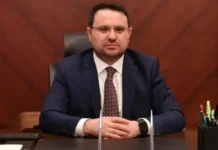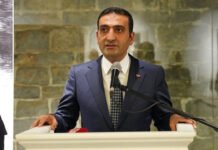
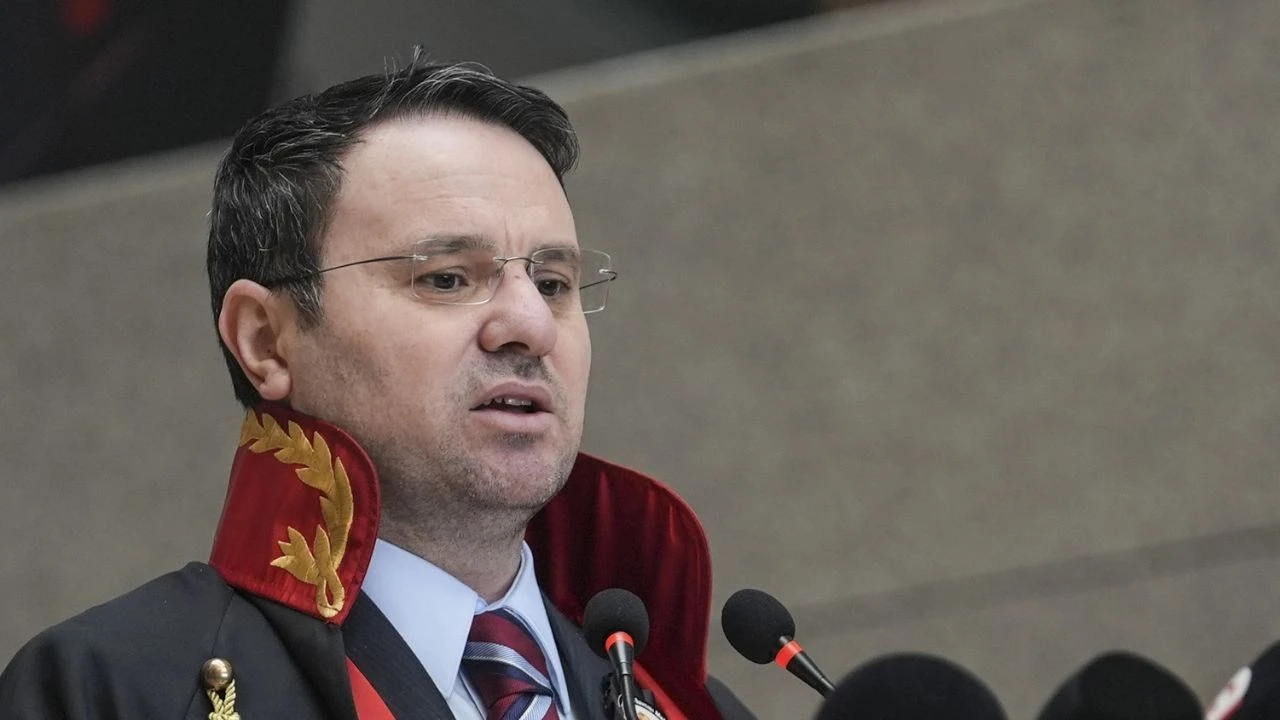
Turkey’s main opposition Republican People’s Party (CHP) has filed a criminal complaint against İstanbul’s top prosecutor, Akın Gürlek, who is overseeing an intensifying crackdown on the party, accusing him of acquiring assets disproportionate to his income and obtaining illicit gains, Turkish Minute reported, citing Deutsche Welle Turkish edition.
The complaint was submitted to the Ankara Chief Public Prosecutor’s Office on December 17 and later referred to the Board of Judges and Prosecutors (HSK) due to jurisdictional rules.
Gürlek, 43, is the chief prosecutor overseeing a series of investigations and prosecutions targeting the CHP.
In the petition the party claims that Gürlek’s declared income could not account for his reported assets and financial activities, raising “strong suspicion” that some income may have been obtained unlawfully.
The complaint includes multiple allegations, including claims that Gürlek had a safe deposit box at a bank in Ankara and made frequent large cash deposits that were unrelated to his personal income.
The CHP claims that the existence of the safe deposit box and its contents were not declared as required under Turkey’s asset disclosure law.
The party also cited Gürlek’s previous role as a board member of Etimine SA, a Luxembourg-based subsidiary of the state-owned Eti Maden mining company. According to the complaint, Gürlek served on the board until August 2025, after being appointed İstanbul chief prosecutor in October 2024, and received income during that period.
CHP leader Özgür Özel recently claimed that Gürlek was appointed chief prosecutor on October 2, 2024, and then named to Etimine’s board on November 29, 2024, claiming that he continued to receive income “for nine months,” including during the period when İstanbul Mayor Ekrem İmamoğlu was detained and later arrested in March.
Gürlek addressed the allegations in a rare interview published last month in the pro-government Yeni Şafak daily and denied the claim.
“I don’t even want to dignify this with an answer,” Gürlek told the paper. “They have come under pressure, so they resorted to attacks,” he said.
CHP lawyers claim that the constitution and Turkey’s law governing judges and prosecutors explicitly prohibit members of the judiciary from engaging in income-generating activities outside their official duties, making any such earnings illegal.
Another allegation concerns a residential property in İstanbul’s Küçükçekmece district that Gürlek reportedly purchased in March 2024 for about 9.8 million lira (around $300,000 at the time), despite similar properties in the area being valued at around 30 million lira. The complaint said the property was later sold for 40 million lira, raising suspicions of preferential treatment and illicit gain.
In addition the CHP accused Gürlek of attempting to purchase another luxury apartment in İstanbul’s Beşiktaş district for more than 95 million lira ($2.4 million) through a preliminary agreement signed in June, an amount the party said was incompatible with his lawful income.
The CHP requested that Turkey’s Financial Crimes Investigation Board (MASAK) and independent experts examine Gürlek’s financial records and spending patterns. The party submitted notarized copies of property contracts as evidence.
Gürlek, a former judge and deputy justice minister known for convicting dissidents in politically motivated trials, was appointed İstanbul’s chief prosecutor amid concerns about further judicial pressure on government critics.
Shortly after his appointment, he started multiple investigations targeting CHP mayors and officials.
According to a CHP report from late October, 16 CHP mayors are currently jailed and 13 municipalities have been placed under government-appointed trustees since the party’s sweeping victory in the March 2024 local elections. The party describes the prosecutions as a “judicial coup” aimed at reversing its gains.
The government denies political motivation, saying all investigations are carried out in accordance with the law.
Deteriorating rule of law
Concerns about the independence of Turkey’s judiciary have deepened since a 2016 coup attempt, after which more than 4,000 judges and prosecutors were removed and replaced with younger officials widely seen as loyal to the ruling Justice and Development Party (AKP).
In the latest global Rule of Law Index released in October 2025 by the World Justice Project, Turkey was ranked 118th out of 143 countries, falling one place from the previous year.