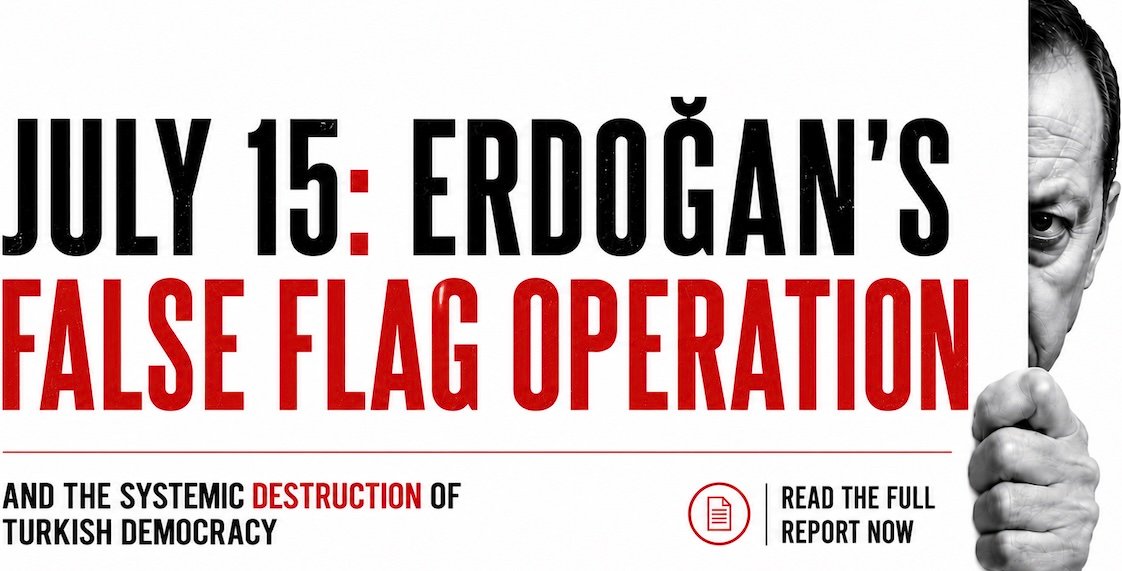
The military mobilization presented by Turkish authorities as a coup attempt on July 15, 2016, was a false-flag operation that created the conditions President Recep Tayyip Erdoğan needed to consolidate power and build an authoritarian system later used against a growing range of government opponents, according to a new report by the Alliance for Shared Values.
Titled “July 15: Erdoğan’s False Flag Operation and the Systemic Destruction of Turkish Democracy,” the report says the operation created the political conditions for sweeping changes that weakened state institutions, subordinated the judiciary and established a system of repression first used against the Gülen movement and later expanded to other government critics.
AfSV is a US-based umbrella non-profit whose local partners were founded by participants in the Gülen movement, also known as the Hizmet (service) movement. The report acknowledges that it was prepared by an institution rooted in the movement and says its analysis draws on public records, court documents, international legal findings, human rights reports, official statistics and witness statements.
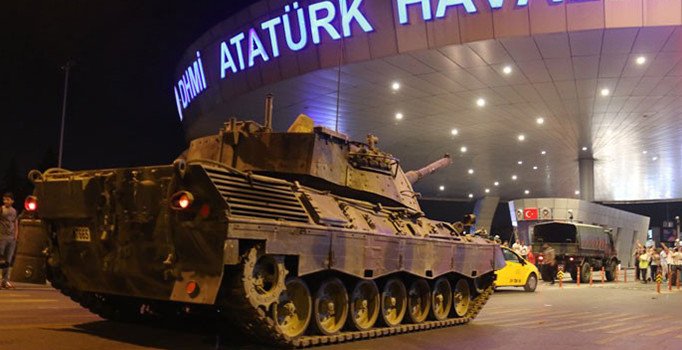
The violence on July 15, 2016, left 251 people dead and more than 2,000 wounded. Erdoğan immediately accused the faith-based Gülen movement, inspired by the late US-based cleric Fethullah Gülen, of orchestrating the attempted coup and intensified a crackdown on its followers that was already underway. The movement strongly denies involvement in the coup attempt or any terrorist activity.
The report cites major contradictions in the official account that support its characterization of the events as a “false-flag” operation, including the failure of senior intelligence and military officials to prevent the mobilization despite receiving warnings hours earlier; the timing and scale of military mobilization; the absence of a publicly identified leader or coherent command structure; and the existence of extensive purge lists prepared within hours.
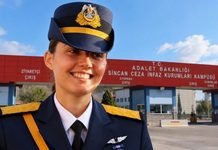
Among the other contradictions highlighted is the treatment of Barış Yurtseven, the pilot whom the official account credited with flying Erdoğan from Dalaman to İstanbul and landing safely after evading F-16s flown by coup plotters. Yurtseven was later dismissed from Turkish Airlines and prosecuted over alleged links to the Gülen movement, although he was acquitted in 2019. The report argues that his actions that night are difficult to reconcile with the claim that he was part of a coordinated operation to remove the president.
The report also points to the partial closure of the Bosporus Bridge during evening rush hour, with soldiers blocking traffic in only one direction rather than securing the bridge. It says the highly visible deployment of military cadets and junior personnel served no clear military objective, while key political leaders remained free, government-aligned media continued broadcasting and communications infrastructure was not seized. According to the report, these were inconsistent with a genuine attempt to take power but effective in creating public fear, anger and spectacle.
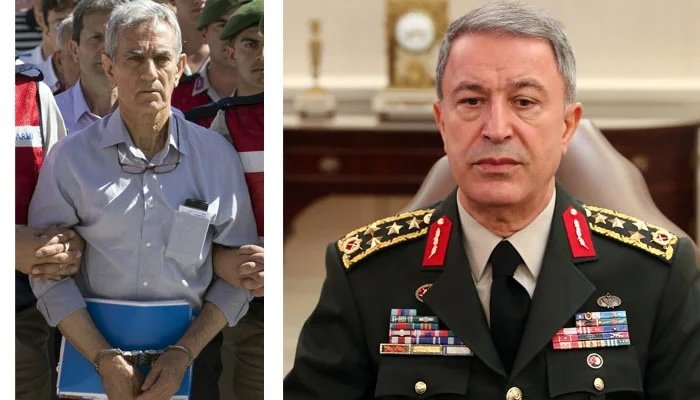
Another contradiction concerns former Air Force commander Gen. Akın Öztürk, whom Turkish authorities portrayed as the military leader of the coup attempt even though he no longer commanded any units. The report says then-chief of General Staff Gen. Hulusi Akar posted a message on the military’s website stating that he had sent Öztürk to Akıncı Air Base to try to stop the mobilization, but the message was later removed. The UN Working Group on Arbitrary Detention subsequently found Öztürk’s detention arbitrary and called for his immediate release.
According to the report, the government’s campaign against the Gülen movement marked a turning point in the erosion of democratic safeguards. It says authorities transformed lawful activities into grounds for criminal prosecution, replacing individual responsibility with guilt by association and turning the judiciary into a tool for political control.
The Turkish government has targeted followers of the Gülen movement, inspired by the late Muslim cleric Fethullah Gülen, since corruption investigations in December 2013 implicated then-prime minister Recep Tayyip Erdoğan as well as some members of his family and inner circle. Erdoğan dismissed the probes as a Gülenist conspiracy, and his government designated the movement as a terrorist organization in May 2016, intensifying the crackdown after the coup attempt.
The report identifies the post-coup state of emergency as a key stage in Turkey’s democratic decline, saying Erdoğan used the coup attempt as a “founding myth” to justify the declaration of a state of emergency and bypass parliamentary oversight while carrying out mass dismissals.
Five days after the coup attempt, the government declared a state of emergency that remained in force until July 19, 2018. Emergency decrees allowed the executive to impose sweeping measures without effective parliamentary or judicial oversight, laying the legal foundation for mass dismissals, arrests, institutional closures and asset seizures.
During the state of emergency, over 121,000 civil servants, including 4,156 judges and prosecutors were dismissed due to alleged links to terrorist organizations, while more than 26,000 members of the armed forces were expelled from the military. Authorities also revoked the teaching licenses of 22,474 teachers at Gülen-affiliated schools.
The report says the 2017 constitutional referendum is the point at which the concentration of power enabled by emergency rule was made permanent. The changes replaced Turkey’s parliamentary system with an executive presidency, expanded Erdoğan’s control over the executive and judiciary and weakened effective checks and balances.
The methods used against the Gülen movement later became a broader model for suppressing dissent, including the use of politically motivated investigations, judicial pressure and criminal charges against perceived government critics.
This includes the mounting judicial pressure on the main opposition Republican People’s Party (CHP), which according to the report is the latest stage of Turkey’s democratic decline. It warns that the methods first used against the Gülen movement have become a permanent feature of governance.
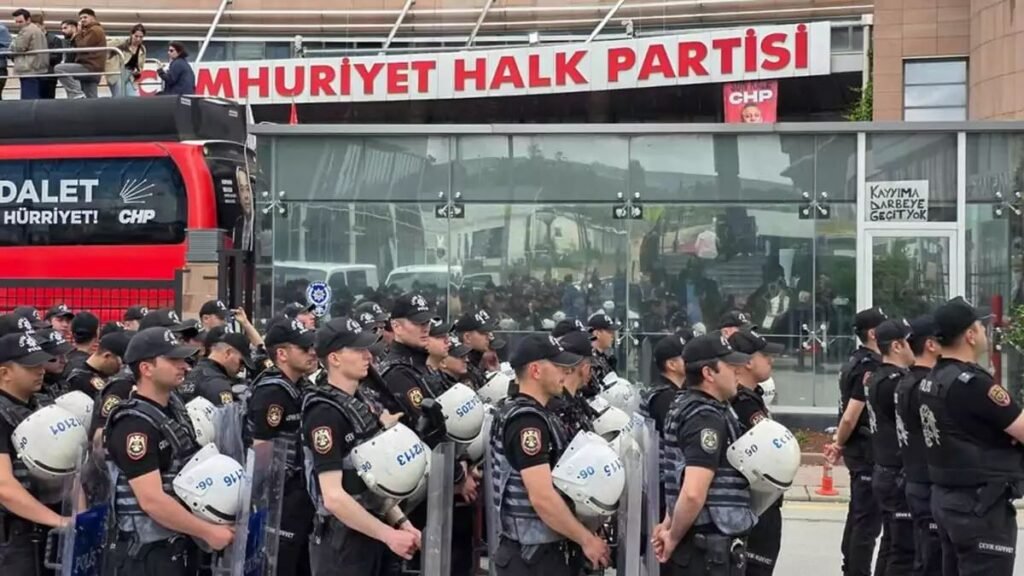
Since the 2024 local elections, 28 elected mayors have been jailed at some point, including İstanbul Mayor Ekrem İmamoğlu, widely regarded as Erdoğan’s strongest political rival. While 21 CHP mayors remain in prison, at least 17 mayors elected from the CHP later switched to the ruling Justice and Development Party (AKP), many allegedly after facing legal pressure or criminal investigations.
According to figures announced by Justice Minister Akın Gürlek, authorities have initiated legal proceedings against 720,338 people over alleged Gülen links since 2016 and secured the conviction of 127,102. Investigations or trials involving another 83,404 people are ongoing, while 10,485 people accused or convicted of involvement in the coup attempt or membership in the movement are still in prison.