A family of four in Turkey now needs nearly 30,000 lira a month to cover basic food expenses, according to a new report released by a labor-backed research group, as the country prepares to set a new minimum wage for 2026, Turkish Minute reported.
The United Metal Workers Union’s Research Center (BİSAM), affiliated with the Confederation of Progressive Trade Unions of Turkey (DİSK), calculated for the month of November what is called the hunger line in Turkey, which reflects the amount a family of four needs to cover their food expenses for a healthy and balanced died and which came in at 27,289 lira ($639), exceeding the current minimum wage of 22,104 lira ($521).
BİSAM’s November report also showed that the poverty threshold, the amount a family of four must spend monthly to cover essential expenses such as food, housing, health care, transportation and education, climbed to 94,393 lira ($2,210),
Turkey is known for its relatively high percentage of the workforce making the minimum wage. Labor unions estimated that roughly half of all workers earn a wage similar to the minimum wage.
The report noted that fruits and vegetables accounted for the largest share of daily food spending for healthy nutrition, revealing the impact of rising food prices on household budgets.
BİSAM also calculated living costs for individuals. For a single person, the minimum monthly expense needed to cover food, housing, transportation, education and healthcare reached 43,882 ($1,027) lira, placing the poverty line for a single adult at the same level.
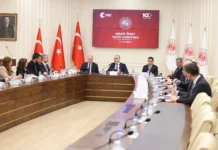
The findings come as negotiations over Turkey’s new minimum wage began at the Ministry of Labor and Social Security in Ankara on Friday.
The second meeting of the Minimum Wage Determination Commission is expected to be held on Thursday.
Under the law, the minimum wage to take effect in 2026 must be determined and announced by the end of the month. A quorum of 10 commission members is sufficient for the meetings.
By law, the minimum wage is set by a 15-member commission made up of five representatives each from labor, employers and the government. Decisions taken at meetings held at the ministry are made by a majority vote.
The commission includes representatives from the Confederation of Turkish Trade Unions (TÜRK-İŞ) for workers and the Turkish Confederation of Employer Associations (TİSK) for employers. TÜRK-İŞ previously warned it would withdraw from the talks unless legal changes are made to the commission’s structure.
President Recep Tayyip Erdoğan also addressed the issue in remarks at TİSK’s general assembly last week, urging employers to take responsibility and make sacrifices during the talks. Any positive step taken for workers, he said, would return as higher productivity and shared prosperity.
Labor unions are calling for a substantial wage increase, arguing that inflation has sharply eroded purchasing power.
In previous years Erdoğan’s government raised the minimum wage once and even twice annually, particularly during election periods. However, despite persistent inflation, which currently stands around 31 percent, the government declined to approve midyear increases in both 2024 and 2025, a shift that unions say has deepened the cost-of-living crisis for workers.