Families of victims of Turkey’s 2023 earthquakes and several bar associations have raised objections to a new judicial reform package that they say will allow suspects in deadly building collapses to gain early release, warning it would reinforce a pattern of impunity, Turkish Minute reported, citing the Karar daily.
The bill, known as the 11th Judicial Package, was submitted to parliament in late November by the ruling Justice and Development Party (AKP).
It expands an emergency measure first used in 2020, when the government allowed prisoners in low-security facilities to move to supervised release early because of COVID. The government now proposes to extend that option to people who committed crimes before July 31, 2023, but whose convictions were not final before that date.
AKP officials say the measure will allow these inmates to serve the remainder of their sentences outside prison under supervision and help to ease severe overcrowding in Turkey’s penal facilities, which hold more than 400,000 inmates despite an official capacity of about 300,000.
Although the first 15 articles of the 38-article package, which amends 12 different laws, were approved in parliament, the entire package has not yet been passed.
Under the new arrangement inmates convicted of crimes committed before July 31, 2023, will be able to move to open prisons and get supervised release three years earlier than current laws allow.
AKP officials insist the measure is not an amnesty, and Justice Minister Yılmaz Tunç said it seeks to correct unequal treatment between prisoners who received the COVID benefit in 2020 and others whose cases dragged on for years.
But legal experts, bar association leaders and families of earthquake victims say the exclusions in the bill do not cover offenses typically charged after structural failures, such as “causing death by negligence” or “conscious negligence.”
As a result contractors accused of using substandard materials, engineers accused of falsifying reports and public officials accused of neglecting oversight could be released long before serving their full sentences.
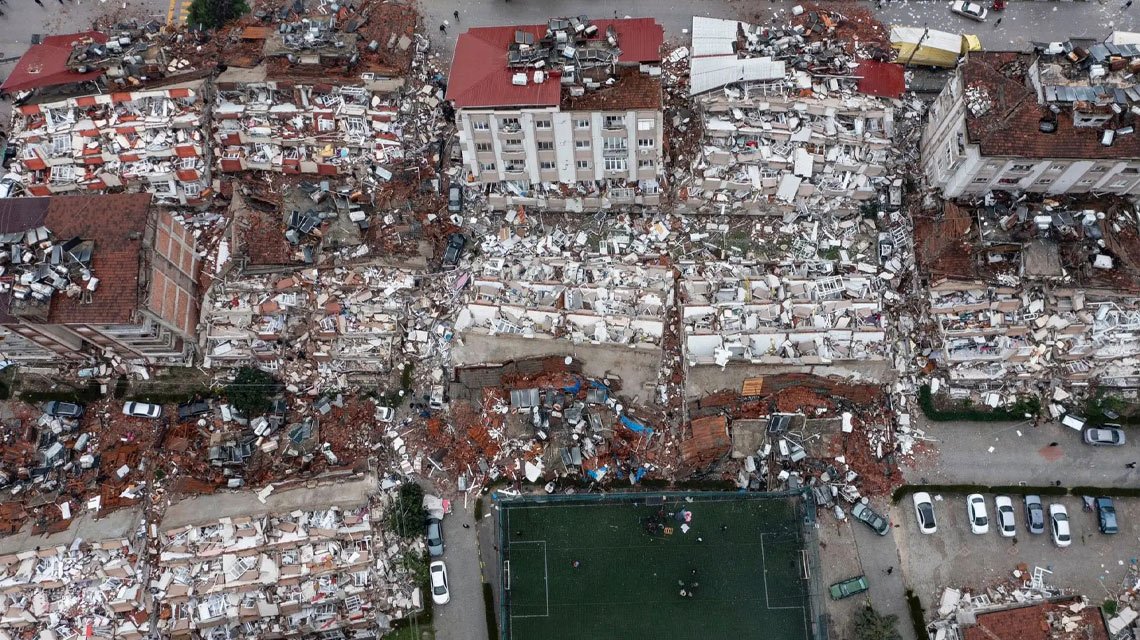
On February 6 devastating 7.8 and 7.5-magnitude earthquakes struck Turkey, claiming over 53,000 lives and leaving millions homeless in 11 provinces in the country’s south and southeast.
Poor construction and failure to enforce building codes even in Turkey’s earthquake-prone areas has been blamed for the extent of the destruction.
Hundreds of suspects were detained, some while trying to flee Turkey, following the earthquakes due to their role in the collapse of the buildings and loss of lives.
The first conviction in a post-earthquake trial was ruled in February 2024 in the southeastern province of Şanlıurfa when contractor Müslüm Demirer was given a prison sentence of 18 years on charges of “causing the death and injury of more than one person through conscious negligence.”
According to information available from open public sources, a total of 2,031 investigations have been launched in connection with the February 6 earthquakes. Indictments were drafted in 1,491 of those cases, leading to prosecutions. So far 149 cases have been concluded and trials are ongoing for 1,850 defendants in 1,342 cases. However, the justice ministry has not issued an official statement on the latest figures.
Only 148 suspects remain in pretrial detention.
Critics say the early-release provisions, particularly Article 27, will undermine the already fragile accountability process.
Bar association chairs from İstanbul, Adana, Hatay and Osmaniye say the article amounts to an amnesty for quake-related defendants and call on lawmakers to exempt such crimes before the bill reaches the full parliament.
The Adana Bar Association said mass-fatality cases cannot be evaluated alongside routine offenses, warning that such treatment risks creating a perception of impunity.
The Hatay Bar said many earthquake-related cases are still awaiting expert reports and technical inspections, while the Osmaniye Bar said excluding earthquake crimes would be essential for restoring public trust in the justice system.
Families who lost loved ones have delivered some of the sharpest criticism. Fatma Irmak, who lost relatives in the Ebrar housing complex in Kahramanmaraş where 1,480 people were killed, said the article would “bury justice under the rubble once again.”
Speaking on behalf of a platform representing the earthquake victims, she described the proposal as a “shield of impunity” that would erase accountability for thousands of deaths and warned that weakening consequences invites future disasters.
Cemile İncili, who remained under the rubble of the collapsed Rönesans Residence in Hatay for two days, told the BirGün daily she has “felt as if she were trapped under the debris for a second time” since hearing about the new regulation.
Turkey, which is located on major fault lines and is frequently hit by powerful earthquakes, has a poor record in the delivery of justice for those who are responsible for the death of thousands in earthquakes due to shoddy construction.
Lawyer Mert Doğan, who represents families in the Ebrar cases, said the article creates a “de facto sentence reduction” that would leave many convictions effectively unserved.
He warned that pushing the bill through without regard for the earthquake trials risks a “legitimacy problem” in a justice system already strained by uneven enforcement.
Turkey’s overcrowded prisons have been a persistent challenge, especially after politically charged investigations and mass arrests tied to protests, cases involving Kurdish political groups and proceedings targeting followers of the faith-based Gülen movement.
Rights groups criticized the 2020 COVID-era release scheme because terrorism-related convictions were excluded, leaving many political prisoners ineligible while thousands of others moved to supervised release.
Families of quake victims say they are bracing for a renewed battle if lawmakers do not amend Article 27. “We waited at the rubble for any signs of life,” Irmak said. “Since that night we have sought only one thing: real justice. We will not allow these deaths to be erased by a legal technicality.”
When more than 17,000 people were killed in a 7.4 magnitude temblor that struck the western city of İzmit in 1999, prosecutors drafted 2,100 indictments against contractors and other related parties due to their role in the death of people in collapsed buildings.
Among them, 1,800 trials could not proceed due to loopholes in the law, while defendants were convicted in 110 of the remaining 300 trials. They were released from prison after serving short sentences.
Some trials were dropped due to the expiration of the statute of limitations in February 2007, seven-and-a-half years after the earthquake.
There is little hope that Turkey’s judicial system will this time give a fair trial to those responsible for the collapsed buildings and satisfy the victims’ families’ quest for justice.