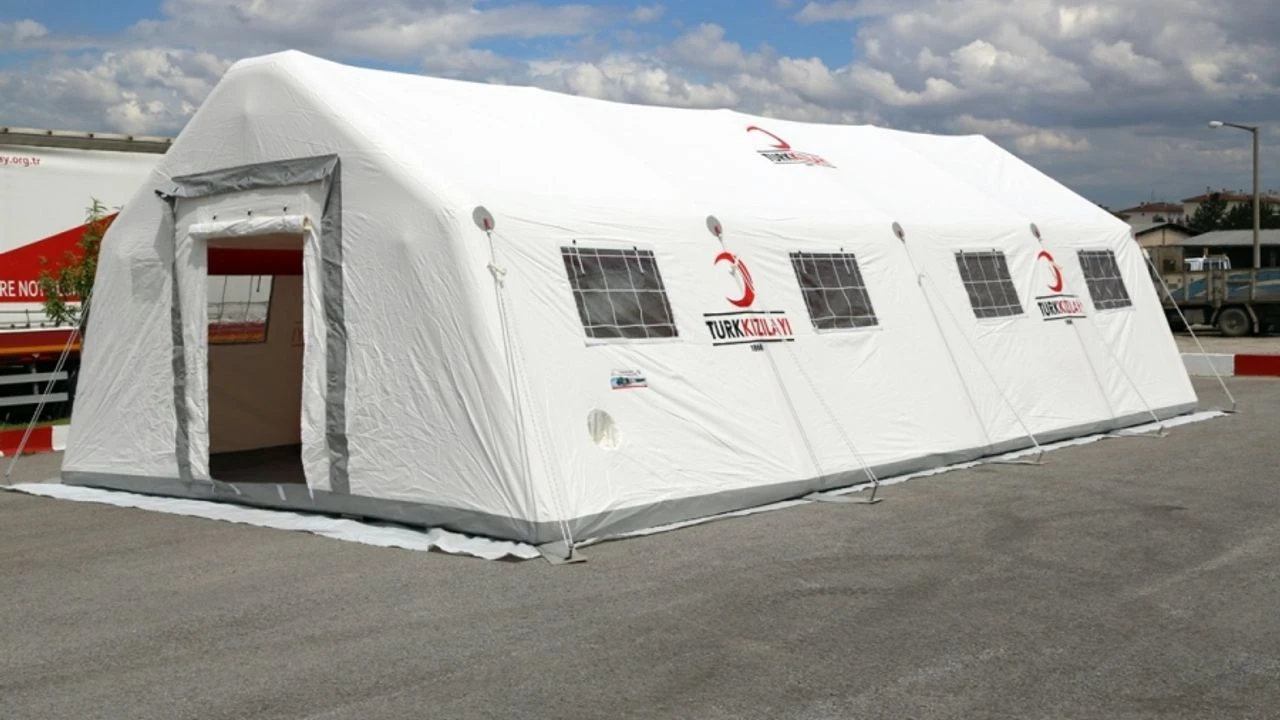
Official reports prepared for Turkish prosecutors confirm that the Turkish Red Crescent (Kızılay) sold tents in the aftermath of the two powerful earthquakes in 2023 that killed more than 50,000 people in Turkey, Turkish Minute reported, citing the BirGün daily.
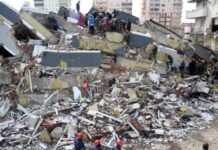
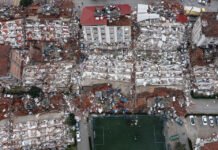
The earthquakes, described by the Turkish government as the “disaster of the century,” measured magnitudes 7.8 and 7.5 and struck 11 provinces in the country’s south and southeast on February 6, 2023.
They killed 53,725 people, injured more than 107,000 and left millions homeless after about 518,000 homes collapsed, according to official data.
The controversy surrounding the Turkish Red Crescent first erupted in February 2023, when opposition politicians and Turkish media reported that the Red Crescent had sold 2,050 tents to the Foundation of Anatolian People and Peace Platform (AHBAP) relief organization for 46 million Turkish lira ($2.4 million) rather than distributing them free of charge to earthquake survivors while tens of thousands of people waited for shelter in freezing winter.
Then-Red Crescent chairman Kerem Kınık confirmed at the time that the tents were sold “at cost” by the Red Crescent’s tent-producing subsidiary and defended the transaction as ethical. Several opposition leaders called for his resignation.

Following the revelations and the public outrage, numerous criminal complaints were filed against Red Crescent executives by political parties, bar associations, lawyers and individual citizens.
The investigation, launched by the Ankara Chief Public Prosecutor’s Office on allegations of abuse of office and causing death through negligence, has remained open for more than two-and-a-half years.
According to BirGün, prosecutors sent a formal request to the Interior Ministry in February 2024, asking for an inspection of the Red Crescent and the preparation of a report on specific issues to be submitted to the prosecutor’s office.
In September 2024 a 43-page report prepared by Interior Ministry inspectors was forwarded to prosecutors by Deputy Interior Minister Bülent Turan, a former lawmaker from the ruling Justice and Development Party (AKP).
The Interior Ministry report was subsequently submitted to a court-appointed expert. The expert, a certified public accountant, delivered a 28-page evaluation and assessment report to prosecutors on December 1.
The reports confirmed that tents were sold to the AHBAP charity and that the tents were held in the inventory of Kızılay Çadır A.Ş., a subsidiary of the Turkish Red Crescent. They said payment was made through banking channels and that the transaction was conducted within the framework of a commercial sales contract.
The reports noted, however, that complaints filed with prosecutors argued the sale violated the Red Crescent’s charter and principles of public benefit and contradicted its obligation to provide immediate and free assistance during disasters.
The expert report said that the determination of whether the elements of a criminal offense were met, the scope of legal responsibility and the decision on whether to proceed with prosecution rest entirely with the Ankara Chief Public Prosecutor’s Office.
Following the submission of the reports, attention has turned to whether prosecutors will move forward with indictments. If prosecutors take statements from suspects and file charges of abuse of office and causing death through negligence, Red Crescent executives could face prison sentences of up to 27 years.
Eighteen Red Crescent executives, along with Kızılay Çadır A.Ş., are listed as suspects in the case.
They include Kınık, who was serving as Red Crescent president at the time of the earthquakes, as well as senior executives and board members. Fatma Meriç Yılmaz, who later became Red Crescent president following Kınık’s resignation, is also among the suspects.
The Turkish government was itself accused of failing to distribute sufficient tents, humanitarian aid and relief teams in many locations in the days following the earthquakes.
The Turkish Red Crescent, the largest humanitarian aid organization in Turkey founded during the time of the Ottoman Empire in 1868, is accused of having turned into an AKP backyard with the appointment of pro-government bureaucrats, hence losing its capabilities to quickly intervene in disasters.