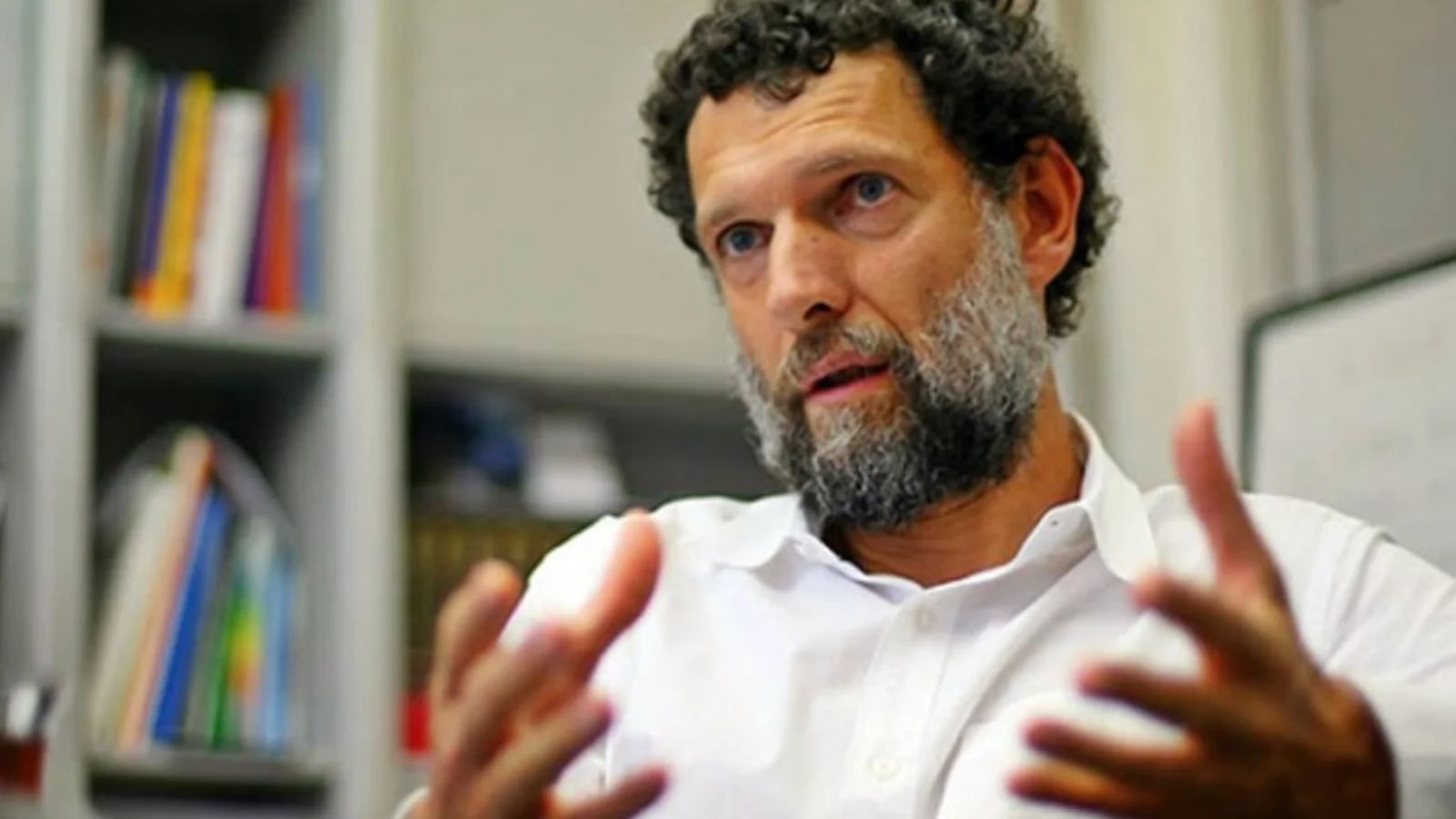
Jailed Turkish businessman and philanthropist Osman Kavala has asked an İstanbul court to reopen his trial and release him following a final European Court of Human Rights (ECtHR) judgment in August that found serious rights violations in his prosecution and conviction, Deutsche Welle’s Turkish service reported on Friday.
Kavala, 68, has been imprisoned since October 2017 and is serving an aggravated life sentence for allegedly attempting to overthrow the government by financing and organizing the anti-government Gezi Park protests in 2013.
He denies the charge and says his prosecution was politically motivated.
Kavala’s lawyer, Ahmet Köksal Bayraktar, filed the application with the İstanbul 13th High Criminal Court, which sentenced Kavala to aggravated life imprisonment in the Gezi Park trial.
The petition asks the court to suspend the enforcement of Kavala’s conviction, order his release and grant him a retrial based on the August 25 judgment of the ECtHR’s 17-judge Grand Chamber.
The application was filed under Article 311 of Turkey’s Code of Criminal Procedure, which allows a case to be reopened when a final ECtHR judgment finds that a conviction violated the European Convention on Human Rights.
The İstanbul court wrote to the Justice Ministry’s human rights department on September 9, asking whether the ECtHR had issued a judgment finding violations in Kavala’s case and requesting that a Turkish translation be sent to the court without delay.
The court is expected to examine the application on its merits after receiving the translation.
The ECtHR Grand Chamber ruled that Turkey must release Kavala immediately and eliminate all the consequences of his conviction.
The court found that Kavala’s prosecution, continued detention and conviction had been intended primarily to punish and silence him over his involvement in the Gezi Park protests and his work as a human rights defender.
It said Turkish courts had failed to establish any concrete link between Kavala and acts of violence during the protests and had convicted him for activities protected by the European Convention on Human Rights, including participation in public debate, support for civil society and advocacy for peaceful protest.
The judgment described Kavala’s conviction as a “flagrant denial of justice” that should be regarded as null and void under the convention. The ruling is final and cannot be appealed.
Kavala said after the decision that compliance with ECtHR judgments was a basic obligation of a state governed by the rule of law.
The Gezi Park protests began in İstanbul in May 2013 over government plans to redevelop Gezi Park near Taksim Square and spread across Turkey, becoming the largest wave of demonstrations against then-prime minister and current president Recep Tayyip Erdoğan’s government.
Kavala has denied financing or organizing the protests and says the case against him is politically motivated.
He was acquitted in the first Gezi trial in February 2020 but was taken into custody again before he could leave prison on separate allegations. His acquittal was later overturned, and he was convicted in a retrial. The Supreme Court of Appeals upheld his sentence in September 2023.
The ECtHR first ordered Kavala’s immediate release in December 2019, finding that his detention lacked reasonable grounds and pursued the ulterior purpose of silencing him as a human rights defender.
Turkey’s refusal to implement that ruling prompted the Council of Europe to launch infringement proceedings. In July 2022 the ECtHR found that Ankara had failed to meet its obligation to comply with the original judgment.
The latest ruling went further by examining the proceedings that led to Kavala’s conviction and finding that they, too, violated his rights.
The same İstanbul court rejected an earlier request for a retrial in May 2024. Unlike that application, the latest petition relies on a final ECtHR judgment directly addressing Kavala’s prosecution and conviction.
Erdoğan and members of his government have repeatedly denied accusations that Kavala’s imprisonment is politically motivated, insisting that Turkish courts operate independently.
International rights groups and European institutions have cited his continued imprisonment as a key example of Turkey’s failure to comply with binding human rights judgments.
This article is republished from Turkish Minute.