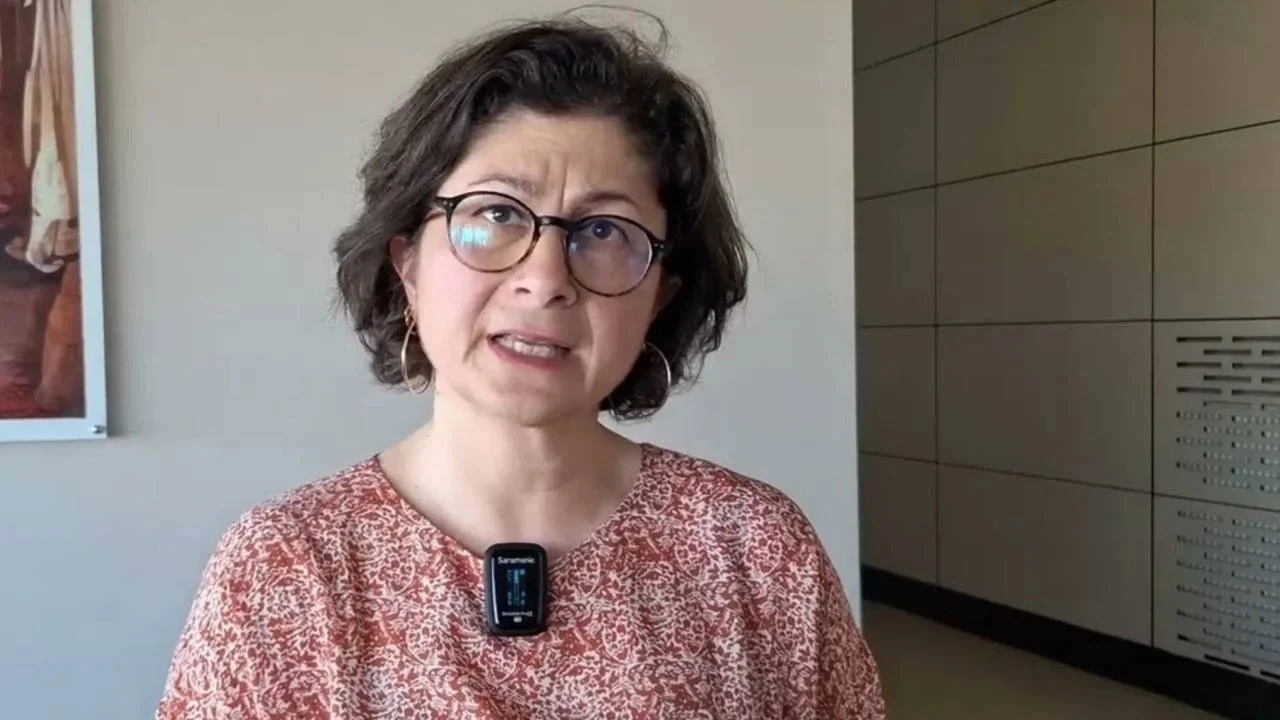
Turkish political scientist Elçin Aktoprak has been reinstated at Ankara University more than nine years after she was dismissed under a state-of-emergency decree, following an appeals court ruling that her signature on a 2016 peace petition did not establish ties to a terrorist organization, the Artı Gerçek news website reported.
Aktoprak had worked at Ankara University’s faculty of political science for 15 years and was an assistant professor in its international relations department when she was dismissed from public service in February 2017 under emergency decree No. 686. Now an associate professor, she was reinstated at the same faculty.
The Ankara Regional Administrative Court overturned a decision by the State of Emergency Procedures Investigation Commission, a special body established to review dismissals and other measures imposed under emergency decrees, as well as an earlier administrative court ruling that had rejected Aktoprak’s case.
In its unanimous September 16 decision, the appeals court ordered the restoration of Aktoprak’s employment rights and payment, with interest, of financial benefits she lost as a result of her dismissal.
The review commission had cited Aktoprak’s signature on the declaration titled “We Will Not Be a Party to This Crime” in rejecting her application, treating it as evidence of support for the Kurdistan Workers’ Party (PKK).
The PKK is an armed Kurdish group that has waged a decadeslong insurgency against the Turkish state and is designated a terrorist organization by Turkey and its Western allies.
The appeals court found that authorities had produced no concrete evidence beyond Aktoprak’s signature showing that she had organizational ties to the PKK or had acted on its instructions.
The court said Ankara University and other public institutions had been asked for information concerning possible links between Aktoprak and the group but had provided no evidence establishing such a connection.
Aktoprak was separately prosecuted on a charge of disseminating terrorist propaganda because she signed the petition. Aktoprak was separately prosecuted on a charge of disseminating terrorist propaganda over her signature on the petition but was ultimately acquitted.
The declaration was issued on January 11, 2016, by academics calling for an end to curfews and fighting during Turkish security operations in the predominantly Kurdish southeast. Initially signed by 1,128 academics, it criticized the government’s conduct of the operations and called for a return to peace negotiations.
The signatories became known as Academics for Peace. Hundreds subsequently faced criminal investigations, disciplinary proceedings or dismissal from their universities.
The petition came after a peace process between the Turkish government and the PKK collapsed in 2015, leading to renewed fighting in southeastern Turkey.
According to data released by Academics for Peace in September, 406 signatories were dismissed from public service under 10 emergency decrees issued between 2016 and 2018.
Those decrees were issued during the two-year state of emergency imposed following a failed military coup on July 15, 2016.
Following the coup attempt, the Turkish government declared a state of emergency (OHAL) that remained in effect until July 19, 2018. During this period, the government carried out a purge of state institutions under the pretext of an anti-coup fight by issuing a number of government decrees, known as KHKs. A total of 113,290 civil servants and 4,006 judges and prosecutors were dismissed over alleged links to terrorist organizations, while more than 26,206 members of the armed forces were expelled from the military for alleged membership in or relationships with “terrorist organizations” by emergency decree-laws subject to neither judicial nor parliamentary scrutiny.
Turkey’s Constitutional Court ruled in July 2019 that the convictions of academics prosecuted for signing the declaration violated their constitutional right to freedom of expression. That ruling affected the criminal prosecutions but did not automatically restore academics who had been dismissed from public employment, requiring them to pursue separate administrative cases.
Aktoprak’s reinstatement comes as many of those cases remain unresolved. Academics for Peace said in September that only 18 reinstatement decisions involving dismissed signatories had become final.