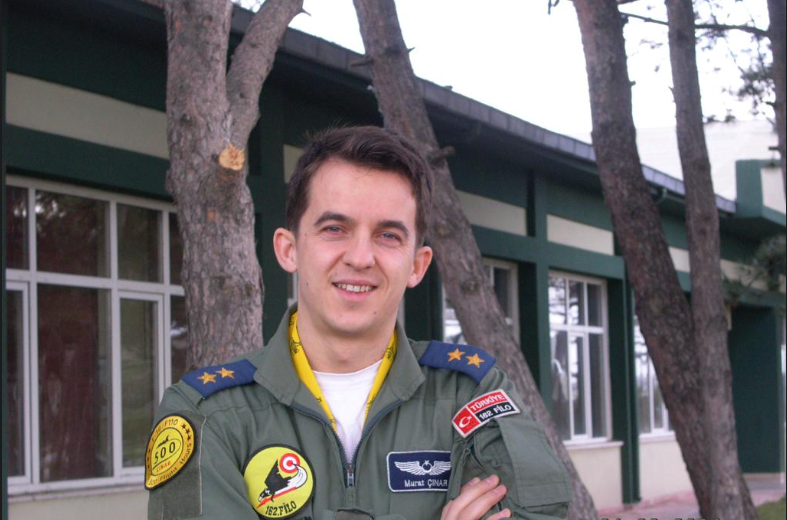
A former Turkish Air Force colonel serving an aggravated life sentence over a 2016 coup attempt has in a letter detailed his account of the day of the coup and his trial, sparking renewed attention to rights violations and unlawful practices during a post-coup crackdown.
In a letter to human rights defender and opposition lawmaker Ömer Faruk Gergerlioğlu, Murat Çınar said he spent July 15, 2016, at Middle East Technical University (ODTÜ) in Ankara, working with his academic advisor on publishing his doctoral thesis. Later that night, at around 10 p.m., he was summoned to Akıncı Air Base, a key location associated with the coup attempt, where he says he was deliberately lured into a trap.
Çınar said he was sentenced to aggravated life despite what he described as a lack of concrete evidence against him, following what he called an unlawful trial that relied on broad assumptions rather than his actions on the night of the coup attempt.
The former officer also criticized the authorities, saying they had waged an extensive propaganda campaign after the attempted coup that blurred the line between truth and falsehood, resulting in collective suffering for those punished and their families.
Gergerlioğlu shared an excerpt from Çınar’s letter on X, tagging Justice Minister Yılmaz Tunç and drawing attention to the former colonel’s allegations.
In his defense before the Ankara 4th High Criminal Court in June 2020, Çınar described the events of July 15 as a “civilian coup,” claiming that military personnel were set up and that incidents which could have been prevented within two hours were instead allowed to escalate. He said this was later used to justify the introduction of an extraordinary governing regime under a state of emergency that paved the way for what he called regime change.
Çınar is a former F-16 pilot who earned a master’s degree in computer engineering from The George Washington University in the United States. He completed a doctorate in Ankara and later served at NATO headquarters.
Turkey experienced a controversial military coup attempt on the night of July 15, 2016, which, according to many, was a false flag operation aimed at entrenching the authoritarian rule of President Recep Tayyip Erdoğan by rooting out dissidents and eliminating powerful actors such as the military in his desire for absolute power.
The abortive putsch killed 251 people and wounded more than a thousand others. The next morning, after announcing that the coup had been suppressed, the Turkish government immediately started a wide-ranging purge of military officers, judges, police officers, teachers and other government officials that ultimately led to the dismissal of more than 130,000 public servants, including 150 of the Turkish Armed Forces’ 326 generals and admirals, more than 24,000 members of the armed forces and 4,156 judges and prosecutors were summarily removed from their jobs for alleged ties to “terrorist organizations” by emergency decree-laws.