Recep Tayyip Erdoğan’s government turned a failed military uprising into the founding event of a new political order, using the events of July 15, 2016, to justify emergency powers, mass dismissals and prosecutions before completing Turkey’s transition from a parliamentary government to an executive presidency.
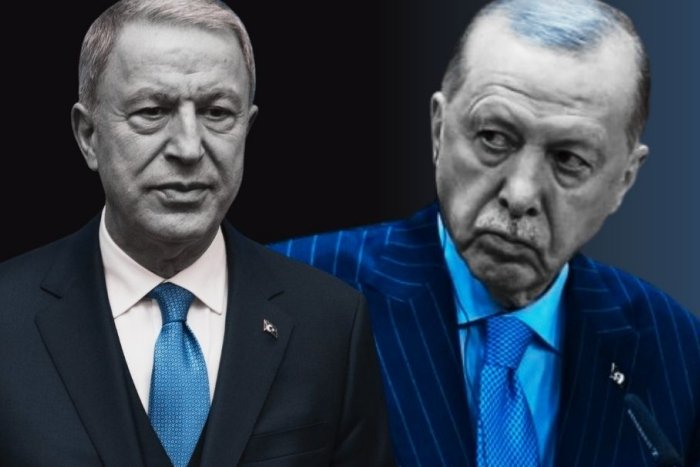
The official account blamed the faith-based Gülen movement and made then-chief of General Staff Gen. Hulusi Akar its indispensable military witness, presenting him as a loyal commander taken hostage after refusing to lead a conspiracy by rogue officers.
Erdoğan has targeted the Gülen movement, a worldwide civic initiative inspired by the ideas of Muslim cleric Fethullah Gülen, who died in 2024, since corruption investigations in December 2013 implicated him as well as some members of his family and inner circle. He dismissed the probes as a Gülenist conspiracy and designated the movement as a terrorist organization in May 2016, intensifying a sweeping crackdown after the coup attempt in July of the same year that he accused Gülen of orchestrating. The movement denies involvement in the coup attempt or any terrorist activity.
Testimony heard in Ankara in 2025 and 2026 now challenges the official coup story at its foundation, with officers who worked around Akar, military headquarters, Akıncı Air Base and the operation to capture Erdoğan alleging that Akar retained authority, issued instructions or moved through the night with far more freedom than the official hostage narrative allows.
The most far-reaching allegation came from retired Brig. Gen. Gökhan Şahin Sönmezateş, who admits leading the mission to seize Erdoğan and now says Akar and the service chiefs joined a plan before members of the senior command changed sides.
The certified transcripts of the witnesses’ latest testimony were not publicly available, so their accounts can be verified only against detailed courtroom reporting by journalist Müyesser Yıldız and the evidence that has entered the public record.
Akar testified as a complainant in a closed court session in March 2018, but the defendants and their lawyers were excluded and have never been permitted to question him, and on May 12 of this year the court unanimously rejected requests to bring him back.
That refusal leaves the government’s central military account shielded from examination by the men it condemned, even as new testimony depicts Akar as a commander who retained authority and freedom of movement throughout the night. It also prevents the courts from testing evidence that could establish whether Akar and Erdoğan allowed or redirected an operation that Erdoğan then used to remake the state.
The ‘hostage’ who remained in command
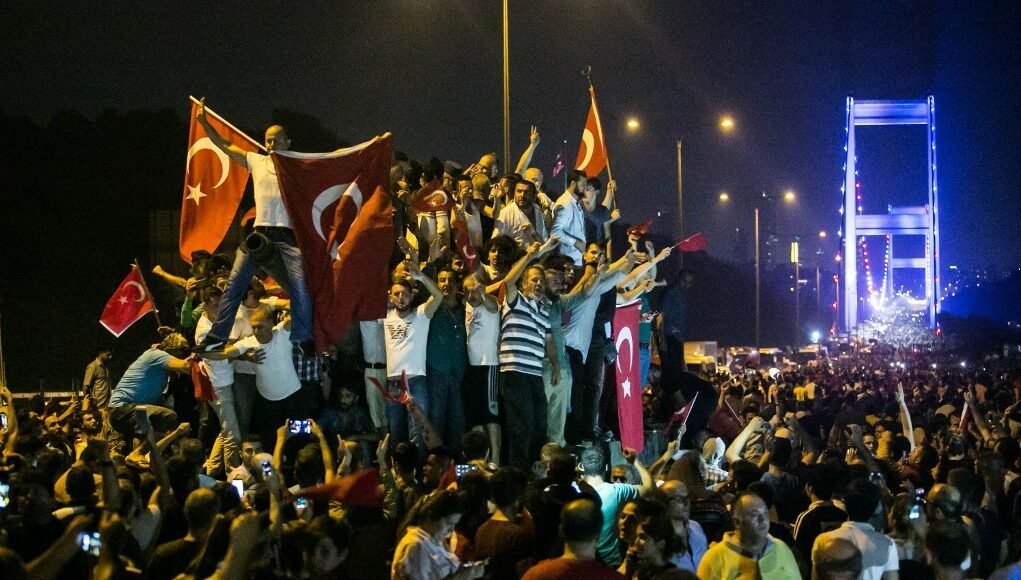
The coup surfaced July 15 as soldiers blocked Bosporus bridges, tanks entered streets and fighter jets flew over Ankara. A total of 253 civilians and security personnel died before the uprising was put down by morning.
The government says pilot O.K. warned the National Intelligence Organization (MİT) that afternoon of a plan to abduct intelligence chief Hakan Fidan, who then met with Akar at General Staff headquarters until about 8:30 p.m., although neither warned Erdoğan or then-prime minister Binali Yıldırım.
At around 9 p.m., Akar later told prosecutors, Maj. Gen. Mehmet Dişli entered his office, announced the coup and invited him to take charge.
Akar said he refused, after which officers handcuffed him, threatened him and tightened a strap around his neck before flying him to Akıncı Air Base outside Ankara.
At the base, Akar alleged, commander Brig. Gen. Hakan Evrim offered to connect him with Gülen, and Akar said he again refused before leaving the following morning with Dişli for the government crisis center at Çankaya mansion.
Akar remained chief of the General Staff until 2018, served five years as Erdoğan’s defense minister and entered parliament in 2023 as a lawmaker from the president’s Justice and Development Party (AKP).
In October 2025 retired staff colonel Orhan Yıkılkan, who had managed Akar’s private office and served as his chief adviser from 2011, said he went to the command floor after being told Akar wanted him.
Yıkılkan testified that Akar was not detained and that his command continued, naming Dişli, Akar’s aide-de-camp Levent Türkkan, Abdullah Bozkurt and Serdar Tekin as officers who received and followed his orders.
Yıkılkan supplied his most direct operational allegation when he said Akar telephoned Sönmezateş and warned that Erdoğan’s protection team was prepared, telling the unit assigned to seize the president in Marmaris to proceed with caution.
He also alleged that Akar voluntarily went to Akıncı after receiving false information that Erdoğan and Fidan had been captured, intending to manage a political transition involving former president Abdullah Gül, former prime minister Ahmet Davutoğlu, then-parliament speaker İsmail Kahraman and Fidan.
Evrim followed in November, disputing Akar’s claim that he offered to arrange a call with Gülen and pointing to Akar’s imprecise description that Evrim had said “something like” that.
Evrim testified that Akar spent the night in the base commander’s office proposing a political settlement involving Gül, Davutoğlu, opposition parties, civil society groups, unions and opinion leaders.
He said Akar issued orders, called his wife twice on a military line and joined then-air force commander Abidin Ünal in summoning former air force commander Akın Öztürk to Akıncı, which Evrim alleged positioned Öztürk to be blamed as the coup leader.
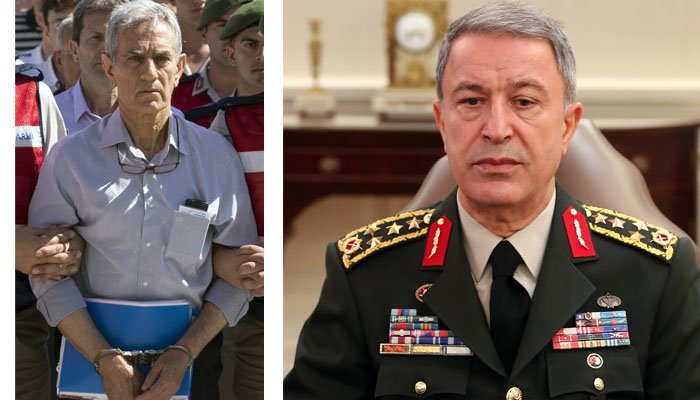
A 2024 opinion by the United Nations Working Group on Arbitrary Detention found Öztürk’s imprisonment arbitrary, citing violations in his arrest and trial that included private hearings of important witnesses from which defendants and their lawyers were excluded.
The opinion noted that the General Staff announced on July 21, 2016, that Öztürk had gone to Akıncı on the serving air force commander’s orders to stop the coup, yet prosecutors later called him a leader and a court sentenced him on 141 counts to aggravated life imprisonment.
The opinion also recorded that only 101 of 319 hours of unedited Akıncı surveillance footage were disclosed and that roughly 70 percent was deleted or never put in the case file.
It further recorded that independent experts retained by defendants reported manipulation of the footage and that the trial court did not address those reports in its reasoned decision.
The UN panel found the due process violations serious enough to make Öztürk’s imprisonment arbitrary and called for his release.
Amnesty International reported on July 24, 2016, that it had gathered credible accounts of beatings, sexual assault, prolonged stress positions, denial of food, water and medical treatment, and military officers appearing before prosecutors in bloodstained clothing.
The UN working group later said Turkey had failed to rebut allegations that witness statements obtained under duress were used in Öztürk’s conviction, which prevents the earliest custodial accounts from being treated as reliable.
Dişli offered a different sequence in April 2026, rejecting the allegation that he guarded Akar during the trip to Akıncı, pointing to video that he said shows Akar walking in front while he follows with his head lowered.
Dişli said that at Akıncı he continued to perform secretarial duties for Akar and personally saw and heard the chief of staff summon former air force commander Akın Öztürk to the base.
He disputed Akar’s account of being strangled, saying he remained nearby but saw no such assault, while claiming that he knew how the mark on Akar’s neck was made without revealing his explanation.
Dişli said Akar’s initial prosecutorial interview began three days after the coup attempt, was interrupted after questioning reached Dişli’s role and later accumulated 20 revisions or additions, and he asked the court to obtain Akar’s July 14 and 15 telephone records.
The general who led the mission to seize Erdoğan names the command
Sönmezateş is unusual among the senior defendants because he accepts joining the coup, denies belonging to the Gülen movement and says commanders assigned him to arrest, not kill, Erdoğan.
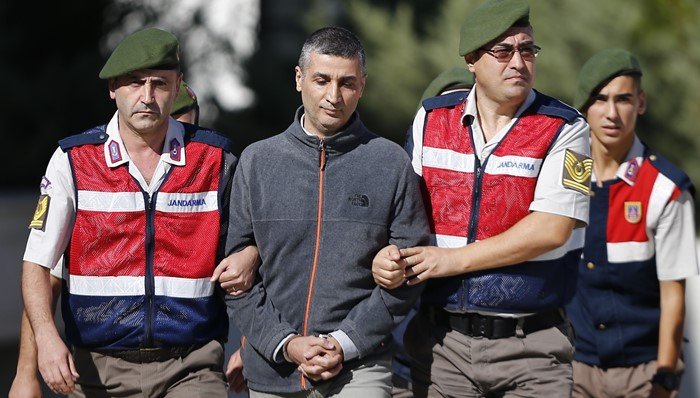
Sönmezateş testified in May that planning began in September 2015, when the air force and navy chiefs agreed to take part, while Akar was initially hesitant because of Gendarmerie Commander Galip Mendi.
He alleged that Akar and all four service chiefs had aligned before July 15 and that those five commanders, following the model of Turkey’s 1980 coup, formed the real Peace at Home Council behind the operation.
He described a limited operation centered on seizing Erdoğan and eight to 10 others, with Friday selected so the weekend could absorb the initial shock to financial markets.
Sönmezateş said the conspicuous bridge closure in İstanbul and fighter jets roaring over Ankara fell outside that plan, alerting the government and public before his team reached Erdoğan.
He blamed betrayal inside the senior command, alleging that Erdoğan’s circle and the National Intelligence Organization (MİT) learned of the operation months earlier and identifying Akar and figures around him as the likeliest source of the leak.
Retired staff colonel Ramazan Gözel added another account in June, describing frequent meetings between Akar and intelligence chief Hakan Fidan, including a two-and-a-half-hour meeting at headquarters on July 15, and alleging that Akar had profiled commanders at important Ankara units months earlier.
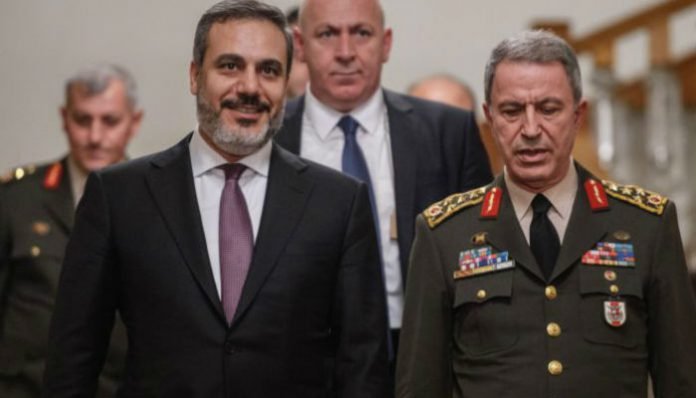
Gözel also said Akar knew Erdoğan’s location while his staff did not and, at Akıncı, sought the telephone numbers of former president Abdullah Gül, former prime minister Ahmet Davutoğlu, then-parliament speaker İsmail Kahraman and Fidan through Dişli.
Taken together, the accounts converge on Akar’s freedom of movement, continuing authority and contacts during the night.
In 2019 investigative outlet Nordic Monitor published a police expert report from the coup investigation file 2016/103566 concerning draft martial-law directives found at General Staff headquarters.
According to the report some Word drafts named Hulusi Akar as president of the Peace at Home Council, the alleged leading body of the putschists, while the transmitted version did not.
A central accuser heard without the defense present
Akar testified as a complainant before the Ankara 17th High Criminal Court on March 22, 2018, in a closed session from which the defendants, their lawyers and the media were excluded.
Turkish criminal procedure allows defense lawyers to question people heard at trial directly and defendants to put questions through the presiding judge, but neither avenue was available during Akar’s appearance.
Contemporary reports summarized parts of his testimony, but the defense could not question him about the alleged inconsistencies, missing records and competing descriptions of his conduct that later became central to the case.
The defendants asked the court to hear Akar, other security officials, informant O.K. and a secret witness, Abdullah, so the defense could test accounts of the warning and events at headquarters, but on May 12 the judges rejected requests unanimously.
Telephone records, complete video footage and the identities of the armed civilians described at headquarters could corroborate or destroy major portions of the defendants’ accounts, but those questions remain unanswered in public.
Retired Col. Murat Korkmaz also said ballistics reports dated November 2, 2016, showed that none of 41 weapons carried by 52 Special Forces personnel at General Staff headquarters had been fired, although the personnel were convicted on a theory of joint participation in shootings.
The testimony warrants investigating whether Akar joined an anti-Erdoğan plan, learned of it and redirected it, or preserved a route to either outcome while liability moved to officers below him.
An agreement between Akar and Erdoğan also remains a strong possibility, as the defendants’ testimony points to senior commanders having changed sides, and Erdoğan is renowned for co-opting ones who once opposed him into his orbit.
Akar did not respond to the specific allegations that have emerged since October.
The purge became the political order
After 10 years Ankara has not produced evidence of an organizational decision, instruction or chain of command linking Gülen or the movement’s leadership to the coup. It instead converted alleged association with a civic community into criminal responsibility, making an entire movement answer for conduct attributed to individuals.
A British parliamentary committee concluded in 2017 that the material offered to establish participation by individuals identified with the movement was mostly anecdotal or circumstantial, sometimes based on confessions or informants, and inconclusive as to the movement or its leadership. The committee also noted that defendants who admitted participating had denied acting for the movement and that the operation likely included Kemalists and other opponents of the AKP. The committee’s report found no evidence warranting Britain’s designation of the movement as a terrorist organization.
Turkey did not secure Gülen’s extradition from the United States despite claiming to have submitted 80 boxes of evidence, and neither the United States nor the European Union recognizes the movement as a terrorist organization.
Erdoğan did not wait for the authorship dispute to be resolved, calling the uprising “a gift from God” on the morning after the coup attempt because it would permit a cleansing of the military.
By the following day, authorities had moved against 2,745 judges and prosecutors, a speed and reach indicating that the government already possessed lists extending far beyond the soldiers, while Human Rights Watch later found that judges and prosecutors had been jailed without evidence of coup involvement.
One instrument of this collective criminalization was ByLock, an encrypted messaging application that Turkish courts treated as automatic proof that a user belonged to an armed terrorist organization, without requiring individualized evidence of violence or any other crime.
In 2023, the Grand Chamber of the European Court of Human Rights ruled in teacher Yüksel Yalçınkaya’s case that Turkey’s categorical reliance on ByLock created an effectively automatic presumption of guilt and violated the rights to a fair trial and to no punishment without law.
The ruling, despite its shortcomings, showed how the postcoup system converted the use of a messaging application and presumed association with the movement into criminal guilt without individualized evidence.
Those figures capture only the opening phase of a persecution that continued after emergency rule through prosecutions, asset confiscations, passport cancellations, family separation, social exclusion and operations reaching movement participants abroad.
The campaign remained centered on people accused of association with the Gülen movement and their families, even as the government extended the same methods to Kurdish politicians, journalists, academics, rights defenders and other opponents. Terrorism allegations, politicized prosecutions, media pressure and appointed trustees carried the practices of emergency rule into ordinary government.
Legal analyses have concluded that the campaign constitutes crimes against humanity. Alfred de Zayas, a former United Nations independent expert, assessed in 2021 that the persecution displayed eight of the 10 stages in Gregory Stanton’s genocide model.
In April 2017 voters approved constitutional amendments by 51.4 percent to 48.6 percent to abolish the prime minister’s office and concentrate executive power in the presidency, after a campaign that international observers said unfolded on an unlevel playing field under emergency rule.
Akar’s role therefore reaches beyond the potential guilt of one former general. The official account made him the chief military witness for the claim that the Gülen movement directed the coup through officers acting on its orders, while casting Erdoğan as the survivor entitled to remake the state.
The recent testimony brings together detailed allegations that Akar retained command and helped direct the operation, while Erdoğan’s government had enough advance knowledge to intervene but allowed it to unfold.
In the trials in which Akar’s account supported convictions, defendants still have not been allowed to question him, even as their latest testimony directly contests his version of the night.
Erdoğan’s government converted an accusation it never proved into collective guilt for an entire civic community, then used that manufactured certainty to remake Turkey. By shielding Akar from questioning and withholding records capable of testing his story, the courts have protected the narrative that made the persecution possible.
This article is republished from Turkish Minute.