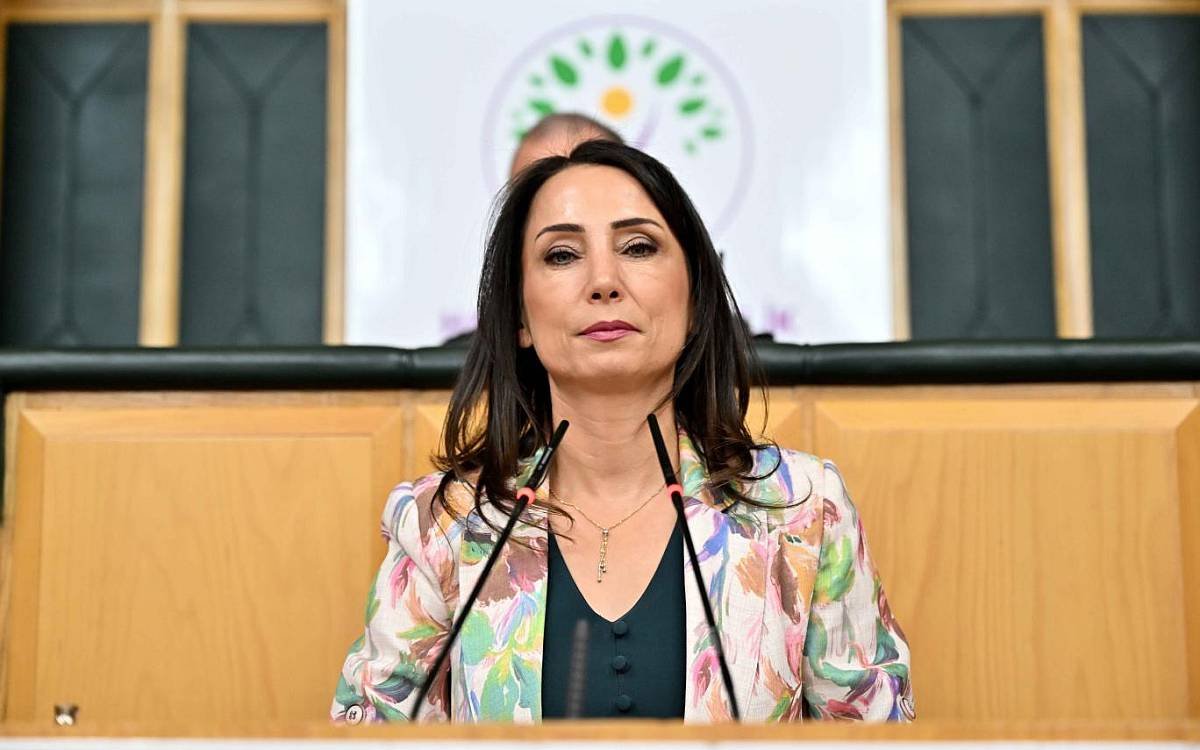
Turkey’s pro-Kurdish Peoples’ Equality and Democracy Party (DEM Party) Co-chair Tülay Hatimoğulları on Tuesday criticized a recent court ruling that ousted main opposition Republican People’s Party (CHP) leader Özgür Özel and reinstated former leader Kemal Kılıçdaroğlu, calling it an example of democratic politics being redesigned through the judiciary.
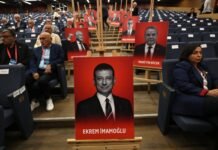
Her remarks referred to the crisis that erupted in the CHP after an appeals court in Ankara on May 21 annulled the party’s 38th Ordinary Congress held in November 2023, when Özel defeated Kılıçdaroğlu and became party chairman.
The court ruled that the congress was legally invalid and ordered Kılıçdaroğlu and the party bodies elected under his leadership to return to office as an interim measure.
Speaking at her party’s parliamentary group meeting, Hatimoğulları said the ruling went far beyond an internal dispute in Turkey’s main opposition party and threatened the country’s entire democratic and civilian political sphere.
“The court ruling [concerning the CHP 2023 congress] is one of the examples of democratic politics being redesigned,” Hatimoğulları said, adding that the debate over the CHP is far more than an internal party crisis, a fight over seats or a passing political dispute.
“The real issue is not who will sit in which seat. The real issue for Turkey is where democracy will stand,” she said.
“Will political competition be established at the ballot box or in courthouse corridors? Will the will of the people, members, delegates and voters be taken as the basis, or will politics be redesigned through the judiciary?”
The decision, many say, amounts to one of the most dramatic judicial interventions in Turkey’s main opposition party in recent years.
The case stems from allegations of irregularities in the 2023 leadership vote, including claims of vote buying and manipulation. The CHP denies wrongdoing and says the lawsuits are part of a broader judicial campaign to weaken the party after its gains in the March 2024 local elections, when it finished ahead of President Recep Tayyip Erdoğan’s ruling Justice and Development Party (AKP) for the first time in decades.
Hatimoğulları said the court had exceeded its authority and warned that the decision could not be treated as an ordinary legal dispute.
“The courts have exceeded their authority. These are not issues that can simply be brushed aside. With such practices, a dagger has been plunged into the heart of the little that remains of democracy.”
Her remarks came as the CHP faces rival claims to leadership, with Özel’s side pointing to the 2023 congress result, support from lawmakers and the party base, while Kılıçdaroğlu’s camp relies on the court decision and allegations that the congress was tainted by irregularities.
The crisis has also unfolded amid an ongoing peace process between Turkey and the outlawed Kurdistan Workers’ Party (PKK), raising concerns among Kurdish political actors that pressure on the main opposition could undermine efforts to achieve peace.
Separately, Mustafa Karasu, a senior figure in the PKK, also criticized the court ruling concerning the CHP 2023 congress, saying it showed that the government was seeking to create an opposition more acceptable to itself.
The PKK is designated as a terrorist organization by Turkey and its Western allies.
Speaking to Medya Haber TV, Karasu said the ruling amounted in one respect to “designing the CHP,” adding that the AKP government was seeking to shape the opposition according to its own needs.
“What is the right opposition? Will it be what you say? Will it be the way you want?” Karasu said. “No one can look for an opposition according to their own wishes. The opposition will not be what you say. It will oppose you.”
Karasu said the issue was not limited to the CHP and claimed that the judiciary should not intervene in democratic politics.
“The problem is not the CHP. The judiciary should not be involved in politics like this,” he said.
Karasu also linked the controversy to the ongoing peace efforts, saying the failure to secure the support of the main opposition party in efforts to address what he called Turkey’s most fundamental problem raised doubts about the government’s intentions.
“You are solving Turkey’s most fundamental problem, or you say you want to solve it. Then get the support of the main opposition,” Karasu said. “That is what raises the most doubt for us.”
The renewed peace initiative was launched after the country’s far-right leader, Nationalist Movement Party (MHP) Chairman Devlet Bahçeli, urged jailed PKK leader Abdullah Öcalan in October 2024 to call for an end to violence. Öcalan issued such a call in February 2025, and the PKK later announced it would lay down its arms and dissolve.
Turkey subsequently established a cross-party parliamentary commission tasked with preparing a legal framework for the process, but the body has yet to produce concrete proposals addressing longstanding Kurdish demands, including recognition of their identity in the constitution and education in their mother tongue.
It is not known whether this new process will succeed this time since another attempt launched in 2013 collapsed two years later, sparking renewed clashes between the PKK and the Turkish armed forces.
Founded by Öcalan in 1978, the PKK has led a bloody war in Turkey’s southeast since 1984.
This article is republished from the Turkish Minute.