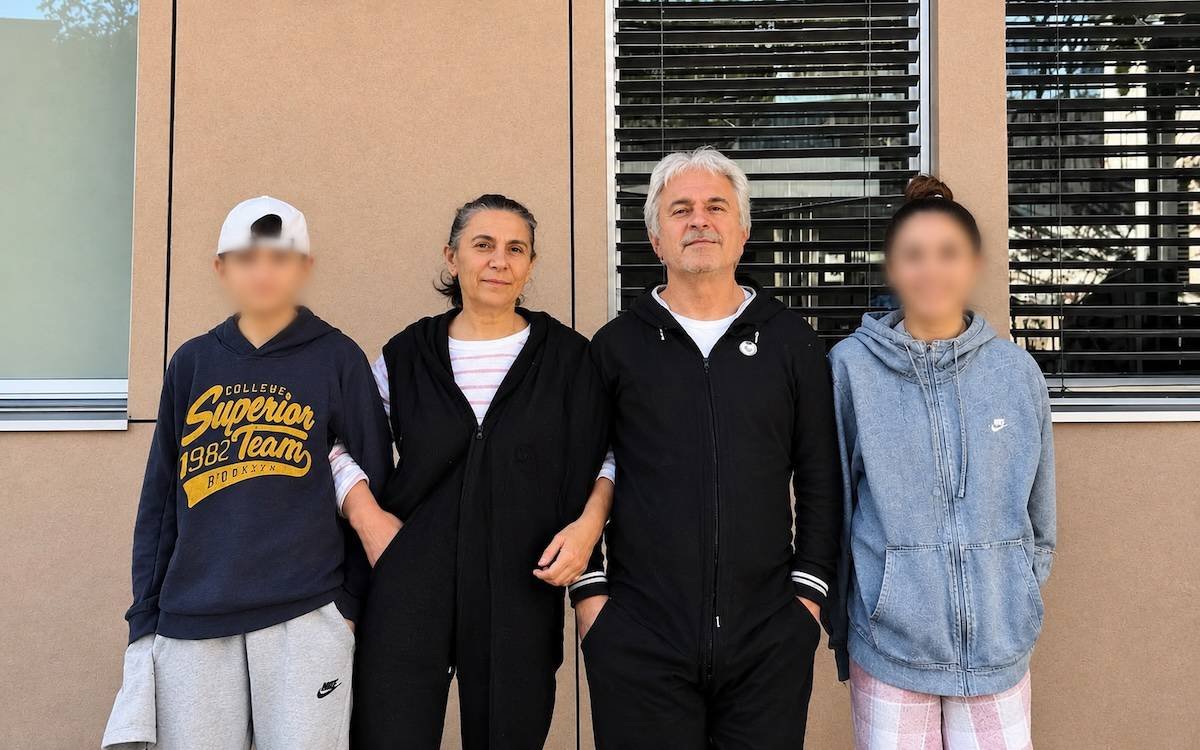
A Kurdish journalist who fled Turkey after allegedly facing persecution for his reporting is at risk of deportation from Switzerland along with his wife and two children after a Swiss court upheld the rejection of his asylum application, the Bianet news website reported Thursday.
Mehmet Kılıç, who previously worked for the pro-Kurdish Özgür Gündem and Azadiya Welat newspapers, sought asylum in Switzerland with his family in September 2023, citing threats, detention and prosecution related to his media work in Turkey.
Switzerland’s State Secretariat for Migration rejected his application in 2025, concluding that he would not face politically motivated prosecution or threats to his safety if returned to Turkey. The Swiss Federal Administrative Court upheld the decision last week, leaving Kılıç, his wife, Gülşen, and their children, Deniz and Delal, at risk of deportation.
Kılıç, who lives with his family in the Swiss capital of Bern, disputes the authorities’ assessment, saying he could face renewed detention, arrest and threats if returned to Turkey. He has called for the deportation process to be halted and for his family to be granted residency.
His concerns come after at least two asylum seekers deported from Switzerland were jailed pending trial shortly after arriving in Turkey in recent months.
On September 21 Swiss authorities deported Nihat Özgün, a Kurdish asylum seeker who had lived in Switzerland for more than four years. He was detained upon arrival at İstanbul Airport and jailed pending trial the following day on charges of spreading propaganda for an armed terrorist organization. He was subsequently transferred to Silivri Prison near İstanbul. His wife and five children remained in Switzerland, where they also faced possible deportation.
In another case, Bahar Yalçınkaya, a Kurdish woman seeking asylum in Switzerland, was detained upon arrival in Turkey in August and jailed pending trial with her 15-month-old baby over allegations of spreading terrorist propaganda linked to her pro-Kurdish political expression. Her Swiss lawyer had warned authorities before her deportation that she faced a high risk of imprisonment because of ongoing criminal investigations and court proceedings in Turkey.
Kılıç worked for Özgür Gündem and Azadiya Welat between 2000 and 2010 in the southeastern Turkish provinces of Adıyaman, Şanlıurfa and Diyarbakır. His responsibilities included newspaper distribution and administrative work, but he also occasionally worked as a field reporter covering developments in the region, including alleged human rights violations.
He told Bianet that he faced threats while covering the 2009 killing of Medine Memi, a 16-year-old girl who was found buried in a henhouse in Adıyaman. Kılıç said his reporting on the case made him a target of some local religious groups.
Kılıç said his work for the newspapers also brought him into frequent conflict with security forces, who repeatedly stopped, detained and threatened him, particularly while he was distributing newspapers.
He said he was detained and threatened by gendarmes in Adıyaman and subsequently filed a criminal complaint against a local commander.
Kılıç also said he was prosecuted in 2009 on charges of spreading propaganda for an illegal organization and received a five-year prison sentence following a trial at a court in Malatya. The report did not specify which organization was involved or whether the sentence was upheld on appeal.
During the proceedings, Kılıç said, security officials repeatedly pressured him to become an informant, promising that he would face no further problems if he cooperated.
Kılıç also alleged that a surveillance device had been secretly installed in his vehicle and was discovered during maintenance. After the device was removed, police stopped him and confronted him about it, he said.
After abandoning his work for the newspapers, Kılıç opened a children’s clothing store in Adıyaman, but he said the pressure from authorities continued. He alleged that officials repeatedly inspected his business and imposed fines, which he believed were connected to his previous media activities.
The earthquakes that struck southern Turkey on February 6, 2023, severely damaged the home his family was renting and destroyed his two-story business premises.
Kılıç said police continued to threaten him when he attempted to participate in relief efforts, searching his belongings and warning him against speaking to television stations or reporting on conditions in the disaster zone.
He said the combination of continuing threats and the loss of his livelihood prompted the family to leave Turkey later that year.
Kılıç said his children have since adapted to life in Switzerland, learning the local language and attending school. His daughter Deniz won first place at the 2025 Swiss Taekwondo Championships but was unable to participate in a European competition because of restrictions related to her identity documents and residency status.
“We did not leave our country on a whim. We had to leave because our lives were not safe,” Kılıç told Bianet, according to an English translation of his remarks.
The family’s case comes amid criticism of Switzerland’s handling of asylum applications from Turkish nationals who say they face politically motivated prosecution if returned to their home country.
In an October report, the Swiss Refugee Council, Democratic Lawyers Switzerland and the Swiss Observatory for Asylum and Foreigners Law examined the experiences of nine people who returned or were deported to Turkey between December 2024 and April 2026.
According to the findings, five of the nine were detained, questioned or referred to judicial authorities upon arrival at Turkish airports. Some subsequently faced criminal proceedings, detention or arrest.
The organizations said Swiss authorities were underestimating the dangers facing rejected Turkish asylum seekers, particularly those whose political activities, social media posts or participation in Kurdish cultural events could expose them to prosecution.
They called on Switzerland to suspend deportations to Turkey and reassess the risks facing asylum seekers whose applications had been rejected.
The Swiss Refugee Council said the country’s asylum assessments should take greater account of politically motivated prosecutions in Turkey and consider factors such as Kurdish identity, previous political activities and pending criminal investigations when evaluating the risks of return.
Kılıç has criticized the Swiss authorities for failing to adequately consider the dangers he says his family would face in Turkey and is seeking permission for them to remain in Switzerland.