
A US umbrella group for organizations inspired by the late Islamic scholar Fethullah Gülen on Monday accused Turkey’s government of reviving investigations into deaths to target the movement, divert attention from corruption allegations and shield those responsible.
The Alliance for Shared Values (AfSV) denied attempts to connect the Gülen movement to violence in an October 5 statement, arguing that prosecutors were pursuing a political agenda rather than establishing what happened.
The statement appears to respond to investigations into the 2009 helicopter crash that killed nationalist politician Muhsin Yazıcıoğlu and the 2011 prison death of intelligence officer Kaşif Kozinoğlu, although it names neither case. Both investigations have led to detentions and accusations involving alleged Gülen movement links.
“We categorically deny these baseless accusations,” AfSV said, describing the movement’s nearly half-century of work in education, dialogue and peace initiatives and its commitment to protecting human life.
Reopening unresolved cases to implicate the movement was intended to target innocent people and divert public attention from corruption allegations, the group argued.
“More importantly, it is to shield the actual perpetrators of the murders from prosecution,” AfSV said.
The group accused Turkey’s government of deciding the guilt of movement participants in advance and reducing prosecutors and judges to processing those decisions. It contended that the judiciary had become an instrument of political punishment that protected those responsible for crimes.
A court jailed 36 people pending trial on September 29 in the Yazıcıoğlu investigation, following a series of raids that began on September 25. Prosecutors accuse suspects of participating in premeditated murder and obstructing efforts to establish the circumstances of the crash.
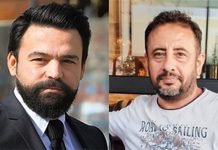
Journalists Emre Soncan and Mehmet Yaşar Durukan were among those imprisoned. Soncan, a former defense and presidential correspondent for the now-closed Zaman newspaper who wrote two books about Yazıcıoğlu’s death, was accused in pro-government media accounts of efforts to bring footage related to the case to the media.
Yazıcıoğlu founded and led the nationalist Grand Unity Party (BBP). His chartered helicopter crashed near Göksun in Turkey’s southern province of Kahramanmaraş on March 25, 2009, killing him, three party officials, the pilot and a journalist.
Rescuers took about 47 hours to locate the wreckage despite an emergency call from journalist İsmail Güneş, whose body was found separately five days later. Failures in the search, the removal of navigation equipment and allegations of interference by officials prompted demands from relatives for an assassination investigation. No court has conclusively established that the helicopter was deliberately brought down.
Kozinoğlu, an officer with Turkey’s National Intelligence Organization (MİT), died in İstanbul’s Silivri Prison on November 12, 2011, while awaiting trial on accusations of disclosing state secrets and belonging to an alleged network plotting against the government.
His death was attributed to cardiovascular disease, and the original autopsy found no signs of poisoning or physical violence. A court overturned a 2012 decision not to prosecute anyone over the death in August, and forensic experts exhumed his remains in September for further testing.
Former intelligence officer Enver Altaylı was jailed pending trial in the case on September 22 on suspicion of inciting Kozinoğlu’s killing. Altaylı was already serving a sentence for espionage and membership in a terrorist organization over alleged Gülen movement ties. His daughter and lawyer, Dilara Yılmaz, denied that the new accusation had a factual or legal basis.
Turkish President Recep Tayyip Erdoğan has targeted the Gülen movement, inspired by Gülen, who died in 2024, since corruption investigations in December 2013 implicated Erdoğan as well as some members of his family and inner circle. He dismissed the probes as a Gülenist conspiracy and designated the movement as a terrorist organization in May 2016, intensifying a sweeping crackdown after a coup attempt in July of the same year that he accused Gülen of orchestrating. The movement denies involvement in the coup attempt or any terrorist activity.
United Nations bodies have documented arbitrary detention, denial of due process and torture in cases brought during the post-coup crackdown. The European Court of Human Rights has also faulted Turkish courts for treating association with the movement and lawful activities as evidence of terrorism.
AfSV urged the public to scrutinize the investigations and demand that those responsible for the deaths, along with anyone who ordered them, be identified and brought to justice.
This article is republished from Turkish Minute.