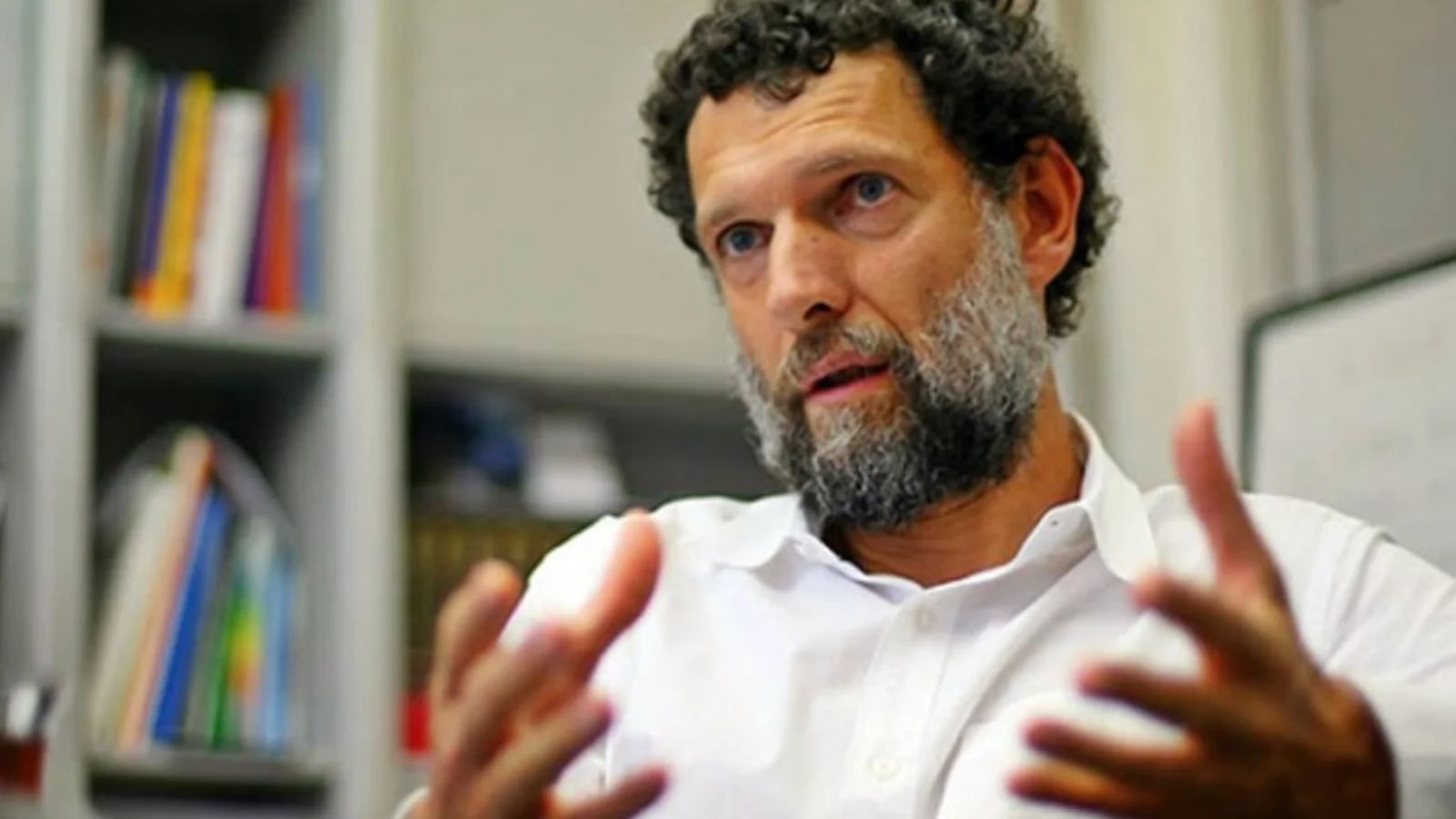
Amnesty International has called on the Council of Europe to step up pressure on Turkey to release jailed philanthropist Osman Kavala, warning that Ankara’s repeated failure to comply with European human rights rulings threatens the credibility of the continent’s rights protection system.
The group made the appeal after the European Court of Human Rights (ECtHR) issued a third ruling in Kavala’s case this week, ordering his release and finding that his prosecution and conviction were intended to punish and silence him. Amnesty said Kavala’s nearly nine years in prison reflected a broader deterioration in human rights in Turkey, including prosecutions of opposition figures and civil society activists, restrictions on protests and what it described as increasing political influence over the judiciary.
“Kavala’s case is a litmus test for the European system of human rights protection,” Amnesty International’s Stefan Simanowitz said. The group urged the Council of Europe (CoE), its Parliamentary Assembly (PACE) and its secretary-general to use the measures available to them to secure compliance with the court’s rulings.
The Council of Europe, a 46-member organization responsible for the European Convention on Human Rights (ECHR), is separate from the European Union. Its Committee of Ministers oversees whether member states comply with judgments from the ECtHR.
Amnesty argued that the measures taken so far have failed to secure Kavala’s release despite binding judgments against Turkey. It warned that another refusal by Ankara to comply would weaken a system that depends on member governments carrying out the Strasbourg court’s decisions.
In Tuesday’s ruling, the court’s 17-judge Grand Chamber found violations of Kavala’s rights to liberty, a fair trial, freedom of expression and freedom of assembly and association. It also found that authorities had used the criminal proceedings for an improper purpose and ruled that his aggravated life sentence, which offers no possibility of parole, amounted to inhuman or degrading punishment.
The court said Kavala’s conviction should be considered null and void under the ECHR and that Turkey must release him at the earliest possible date and eliminate the consequences of the conviction. It also identified broader structural problems affecting judicial independence and pointed to a systemic pattern involving the prosecution of political opponents, human rights defenders and journalists.
Turkey rejected the judgment. The Justice Ministry described it as the latest example of what it called the court’s biased approach toward the country and said parts of the ruling were inconsistent with the court’s own established case law. Turkey’s government has repeatedly denied accusations that its judiciary is under political control.
Amnesty said the problems highlighted by Kavala’s case extend well beyond his imprisonment. It pointed to former co-chairs of the pro-Kurdish Peoples’ Democratic Party (HDP), Selahattin Demirtaş and Figen Yüksekdağ, who remain imprisoned despite European court rulings, as well as previous prosecutions of prominent human rights defenders.
The group also cited restrictions on the Saturday Mothers, relatives of people who disappeared in custody or in politically motivated circumstances in the 1980s and 1990s. Forty-five members of the group were acquitted in 2025 of charges stemming from a peaceful vigil in Istanbul, but Amnesty said restrictions on its weekly demonstrations have continued despite Constitutional Court decisions.
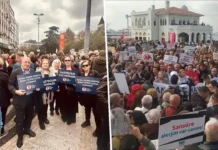
Amnesty also pointed to the detention of more than 200 lawyers, academics and activists ahead of a NATO summit in Ankara in July, when authorities imposed a 13-day ban on demonstrations, and to the arrest of hundreds of people during protests following the detention of Istanbul Mayor Ekrem İmamoğlu in March 2025. İmamoğlu, President Recep Tayyip Erdoğan’s most prominent political rival, is now on trial along with hundreds of other defendants.
The organization said many restrictions introduced after a failed military coup in July 2016 outlasted the two-year state of emergency that followed. Some emergency measures were later incorporated into ordinary law, while authorities continued to restrict peaceful assembly, expression and civil society activity.
Kavala, 68, has been imprisoned since October 2017. He was prosecuted over the 2013 Gezi Park protests, which began as a demonstration against plans to redevelop an Istanbul park and turned into nationwide anti-government protests.
A court acquitted Kavala and several co-defendants in February 2020 and ordered his release. He was taken into custody again before leaving prison and subsequently faced additional charges. The acquittal was later overturned, and in April 2022 he was convicted of attempting to overthrow the government over the Gezi protests and sentenced to aggravated life imprisonment without parole.
The European Court of Human Rights had already ruled in December 2019 that Kavala’s detention lacked sufficient grounds and was intended to silence him as a human rights defender, ordering his immediate release.
After Turkey failed to carry out that judgment, the Council of Europe’s Committee of Ministers initiated infringement proceedings, a rarely used procedure for states that refuse to comply with European court rulings. The Grand Chamber ruled in 2022 that Turkey had failed to meet its legal obligation to implement the 2019 judgment.
PACE renewed pressure on Ankara after Tuesday’s judgment. Sergiy Vlasenko, the assembly’s rapporteur responsible for monitoring implementation of European court rulings, called the decision a “wake-up call” and noted that Kavala had remained imprisoned despite years of demands for his release.
Amnesty said the outcome now extends beyond Kavala himself: Whether Turkey complies, and how other Council of Europe governments respond if it does not, will test the ability of Europe’s human rights system to enforce its own binding judgments.