Rights groups, opposition politicians and legal scholars on Tuesday called for the release of philanthropist and businessman Osman Kavala after Europe’s human rights court found that Turkey had convicted and imprisoned him to punish and silence him.
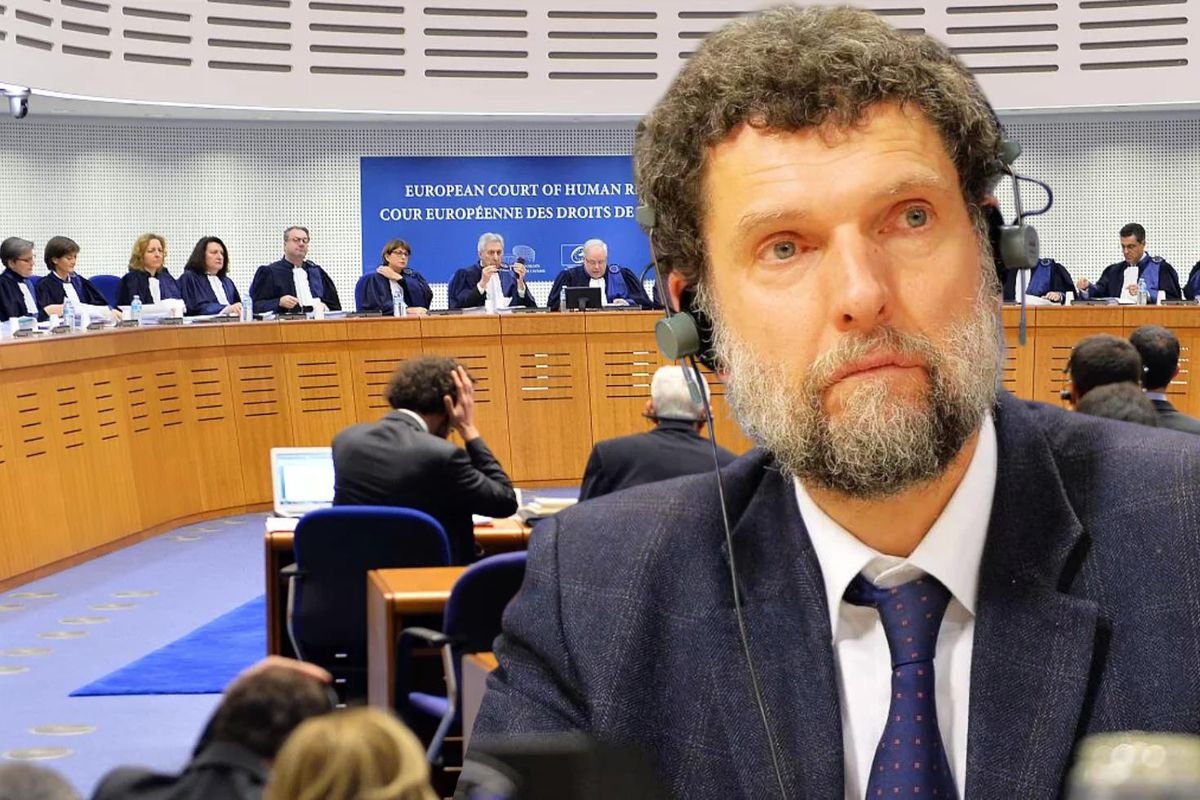
The European Court of Human Rights (ECtHR) ruled by 15 votes to two that Turkey had violated six provisions of the European Convention on Human Rights. The violations concerned the prohibition of inhuman or degrading treatment, the right to liberty, the right to a fair trial, freedom of expression, freedom of assembly and association and the misuse of restrictions on rights.
The court described Kavala’s trial as a “flagrant denial of justice” and said his conviction must be regarded as “null and void” under Convention law. It ordered Turkey to release him at the earliest possible date and void the consequences of his conviction.
The Grand Chamber also awarded Kavala €70,000 ($81,600) in nonpecuniary damages and €43,342.57 for legal costs.
Sergiy Vlasenko, the Parliamentary Assembly of the Council of Europe (PACE) rapporteur for the implementation of ECtHR judgments, called the ruling a “wake-up call” not only for Kavala’s case but also for the rule of law in Turkey.
Vlasenko said the judgment required Turkey to address the systemic misuse of criminal proceedings against human rights defenders, political opponents and journalists as well as structural shortcomings affecting judicial independence and impartiality. He urged Turkish authorities to fully comply with the ruling, immediately release Kavala and implement its other requirements.
European Parliament rapporteur for Turkey Nacho Sánchez Amor called the judgment a “crushing blow” to the credibility of Turkey’s judiciary. Writing from Silivri Prison, where he was following another trial, Sánchez Amor demanded that Kavala be freed and reunited with his wife, Ayşe Buğra.
“Precisely from infamous Silivri prison, where #OsmanKavala has been unlawfully kept for almost 9 years now, I read the latest @ECHR_CEDH ruling on his case,” Sánchez Amor wrote on X.
Main opposition leader Özgür Özel also called for Kavala’s release. He said ECtHR judgments take precedence over conflicting Turkish laws and accused President Recep Tayyip Erdoğan of keeping Kavala imprisoned.
“The ECtHR has ruled for a second time, yet they are still resisting,” Özel said. “They are ruining Turkey with what they are doing.”
The Human Rights Defenders Solidarity Network (İHSDA), which comprises 38 organizations, demanded Kavala’s immediate and unconditional release. The network also called for the effects of his conviction to be removed.
“Human rights advocacy is not a crime,” the network said, adding that rights defenders must not be silenced or punished through the courts.
Amnesty International called for Kavala’s immediate and unconditional release in a statement that also included reactions from Human Rights Watch, the International Commission of Jurists and the Turkey Litigation Support Project.
They called on Turkish judges and prosecutors to secure Kavala’s release and set aside his conviction.
Amnesty’s Eve Geddie said Turkey had defied two previous binding judgments and that the “obstruction of justice” must end. Ayşe Bingöl Demir of the Turkey Litigation Support Project said the judgment confirmed that Kavala’s arrest, detention, prosecution and conviction were politically driven and flawed from beginning to end.
Aisling Reidy of Human Rights Watch noted that the ECtHR had now demanded Kavala’s release three times. She called on the Council of Europe and its member states to ensure Turkey’s compliance. Temur Shakirov of the International Commission of Jurists also called for action from the Council of Europe.
Legal scholars and lawyers also focused on the judgment’s findings about Turkey’s court system.
Posting on X, Lawyer Kerem Altıparmak said the judgment found that Turkey had ruined a man’s life through eight-and-a-half years of imprisonment and a life sentence without a proper trial. He called on Turkey to end the same treatment in other political cases and release Kavala.
Lawyer Tolga Şirin wrote on X that the judgment addressed many of Turkey’s current legal problems and would be discussed for years. He drew attention to the ECtHR’s decision not to require Kavala to wait any longer for Turkey’s Constitutional Court, where his applications have remained pending for years.
Şirin also pointed to the ECtHR’s criticism of lower courts for refusing to implement Turkish Constitutional Court rulings concerning jailed lawmaker Can Atalay and urban planner Tayfun Kahraman. He called the judgment “a document of shame.”
Lawyer Hüseyin Ersöz posted on X that the failure to enforce ECtHR and Constitutional Court judgments violated Turkey’s constitution. He called for the implementation of the rulings concerning Kavala, Atalay and Kahraman.
French legal scholar Nicolas Hervieu said the court regarded Kavala’s detention as an effort to silence a human rights defender and as an example of political repression in Turkey.
Constitutional law expert Volkan Aslan called the ruling another stain on Turkey’s legal record and called for penalties against public officials who refuse to enforce court judgments.
Lawyer Levent Mazılıgüney also called for Kavala’s immediate release under the final Grand Chamber ruling.
Kavala, 68, has been imprisoned since October 2017. He was sentenced in April 2022 to aggravated life imprisonment without parole on charges of attempting to overthrow the government by financing the Gezi Park protests, which began in İstanbul in 2013.
He was acquitted in February 2020 but was rearrested before leaving prison. Turkey’s Supreme Court of Appeals upheld his conviction in September 2023.
The ECtHR first ordered Kavala’s release in 2019 after finding that his detention lacked reasonable grounds and sought to silence him. Turkey’s refusal to comply prompted the Council of Europe’s Committee of Ministers to launch infringement proceedings. The ECtHR ruled in 2022 that Turkey had failed to carry out the binding judgment.
This article is republished from Turkish Minute.