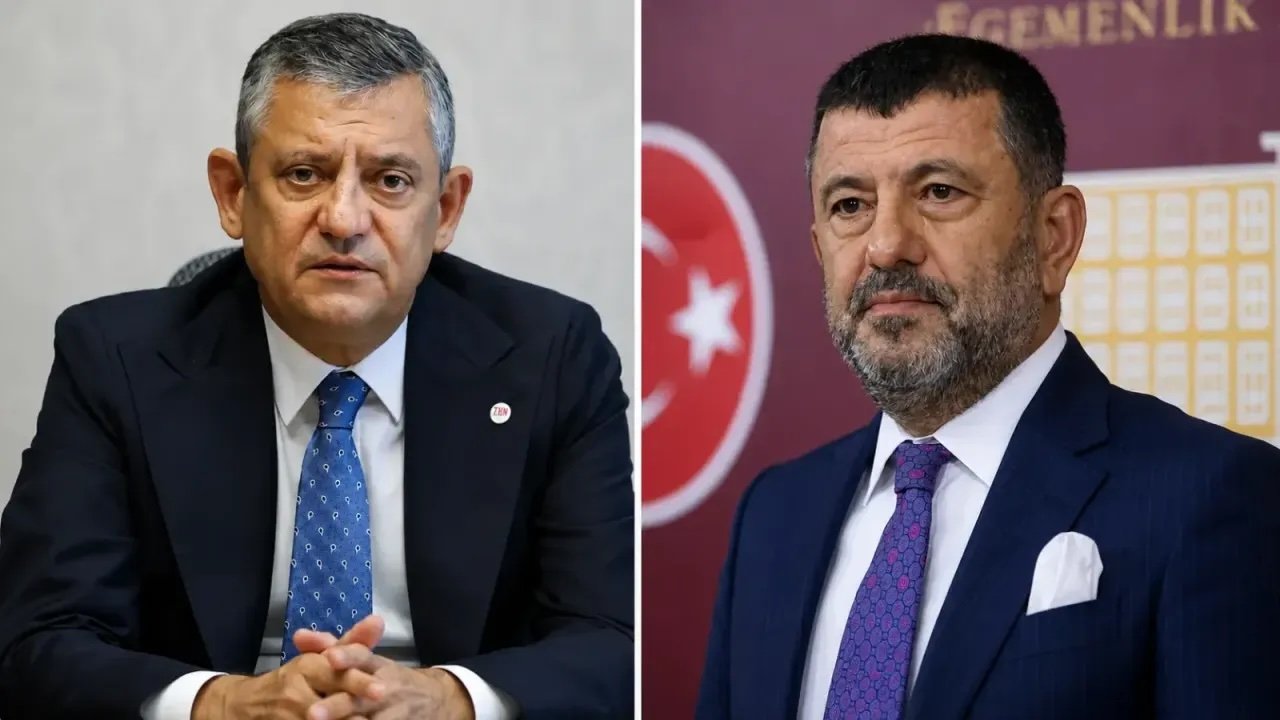
Turkish prosecutors have asked parliament to lift the immunity of New Party leader Özgür Özel and lawmaker Veli Ağbaba over allegations that they accepted bribes on multiple occasions while they were senior members of the main opposition Republican People’s Party (CHP), Turkish Minute reported.
The Ankara Chief Public Prosecutor’s Office said it had sent two case summaries to the Justice Ministry requesting authorization to prosecute Özel, a lawmaker from Manisa, and Ağbaba, who represents Malatya.
Both are accused of repeatedly accepting bribes, an offense covered by Article 252 of the Turkish Penal Code.
The prosecutors’ request does not automatically remove their immunity. It must pass through several stages before parliament can decide whether the two lawmakers can be prosecuted while in office.
Prosecutors allege that Özel used his influence as CHP chairman to secure the renomination of Antalya Mayor Muhittin Böcek in the March 2024 local elections in return for benefits provided by Böcek and his son, Mustafa Gökhan Böcek.
The alleged benefits were provided directly to Özel or through Ağbaba on several occasions, according to the prosecutor’s office. No details were given about the nature or value of the alleged payments.
Özel is also accused of receiving financial benefits from Uşak Mayor Özkan Yalım in connection with the CHP congress held on November 4 and 5, 2023, when Özel defeated longtime chairman Kemal Kılıçdaroğlu to become party leader.
Prosecutors separately allege that Ağbaba, acting on Özel’s instructions, received benefits from Böcek’s son during the process that led to the Antalya mayor’s renomination.
Ağbaba is also accused of using his influence over the mayor of Ankara’s Çankaya district to have a waste collection contract awarded through a negotiated procedure to a company he favored.
Prosecutors further allege that Ağbaba collected money from municipal officials and local council members in İzmir and nearby provinces for use during the 2024 local election campaign.
The prosecutor’s office did not disclose evidence supporting the allegations in its public statement. There was no immediate public response from Özel or Ağbaba.
The allegations concern the period when both politicians were members of the CHP. Özel established the New Party last month following a court-ordered change in the CHP leadership in May.
How parliamentary immunity works
Under Article 83 of the Turkish Constitution, lawmakers generally cannot be detained, questioned, arrested or prosecuted without parliament’s approval, unless they are caught committing a serious crime or the case concerns offenses against the constitutional order and authorities began investigating before the lawmaker was elected.
The protection, known as parliamentary immunity, is intended to prevent the government and prosecutors from using criminal proceedings to obstruct elected lawmakers.
Prosecutors seeking to bring charges prepare a case summary requesting that immunity be lifted. The file is sent through the Justice Ministry and the presidency to parliament, where it is reviewed by a joint committee comprising members of the constitution and justice committees.
The committee may recommend lifting immunity or postponing prosecution until the lawmaker’s term ends. The final decision is made by the full parliament.
If parliament lifts immunity, the lawmaker can be questioned, prosecuted and held in pretrial detention but does not automatically lose his or her seat. A lawmaker may challenge parliament’s decision before the Constitutional Court within seven days.
The Turkish parliament receives a large number of immunity requests, many of which remain pending for years. In practice, decisions to take up particular cases can depend heavily on the parliamentary majority.
President Recep Tayyip Erdoğan’s ruling Justice and Development Party (AKP) and its nationalist allies control enough seats to determine whether the cases against Özel and Ağbaba will advance.
Özel’s removal and the New Party
Özel became CHP chairman in November 2023 and led the party to a sweeping victory in the March 2024 local elections, when it defeated the AKP in the nationwide popular vote and retained control of major cities including İstanbul, Ankara and İzmir.
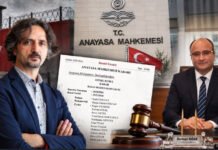
An appeals court on May 21 annulled the CHP congress that elected Özel, removed him and the party’s executive board and reinstated Kılıçdaroğlu and his former leadership team.
The court cited alleged irregularities in the congress vote. Özel and his supporters described the ruling as political interference in the affairs of the country’s largest opposition party.
Human Rights Watch called the decision a serious blow to democracy and the rule of law, saying it was part of an escalating campaign against the CHP.
After weeks of turmoil, Özel resigned from the CHP and established the New Party in July with 90 other lawmakers including Ağbaba.
The defections gave the New Party 91 seats, making it the largest opposition group in parliament, while reducing the CHP’s representation to 44 lawmakers.
Crackdown on CHP municipalities
The immunity requests come amid a continuing crackdown on CHP-run municipalities following the party’s gains in the 2024 local elections.
Dozens of CHP mayors, municipal officials and businesspeople have been detained or arrested in investigations involving allegations of bribery, bid-rigging, embezzlement, extortion and terrorism-related offenses.
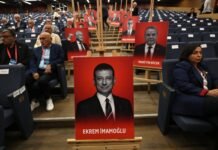
The most prominent figure targeted is İstanbul Mayor Ekrem İmamoğlu, who has been jailed since March 2025 and faces numerous corruption charges. İmamoğlu and his supporters deny the allegations.