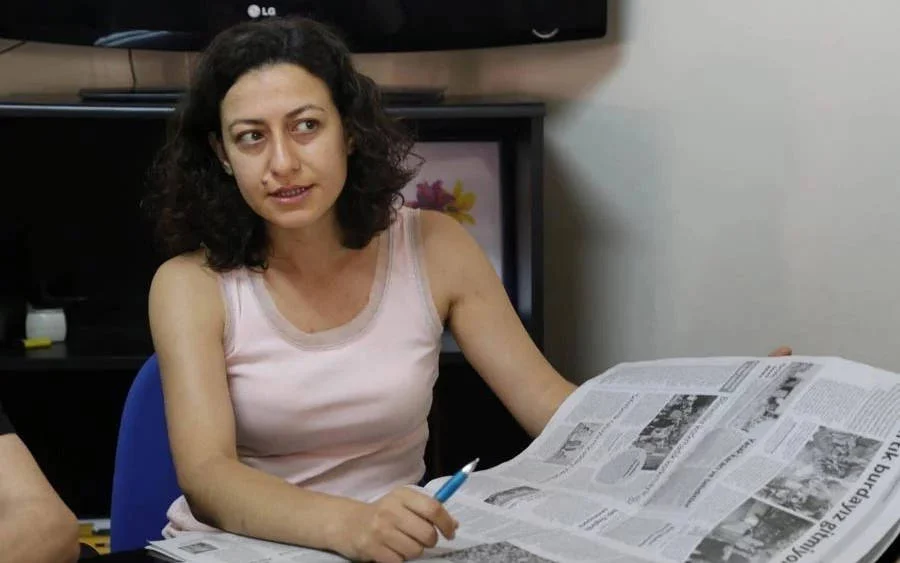
The Committee to Protect Journalists (CPJ) on Tuesday called on Turkish authorities to immediately release journalist Derya Okatan and conduct a proper forensic examination of the hard drive at the center of her case, saying the evidence used to jail her pending trial was flimsy.
CPJ raised particular concern about the digital evidence against Okatan because police had previously seized the same hard drive in 2019 and made a forensic copy of it, while Okatan says she does not know when or by whom the files cited in the current investigation were placed on the device.
Özgür Öğret, CPJ’s Turkey representative, said Okatan should be “freed without delay” while the hardware undergoes a proper forensic examination. He said CPJ was deeply concerned about what the organization described as an intensifying campaign by Turkish authorities against independent journalists.
Okatan, a veteran journalist who most recently worked for the TELE1 broadcaster, was detained at her home in Ankara on October 2 and taken to İstanbul, where a court ordered her jailed pending trial that same day on suspicion of obtaining classified state documents.
Authorities questioned her about 293 files found on the external hard drive — 20 PowerPoint presentations, 214 Word documents, 49 Excel files and 10 PDFs — that investigators said contained classified material. Okatan has denied knowingly possessing the documents.
Her lawyer, Ziya Ergin, said the hard drive had been seized during a previous investigation in 2019 and examined at the time. He has called for the forensic image taken then to be compared with the drive now at issue to determine whether the disputed files were already present and whether the device was subsequently altered.
Ergin said the documents concern intelligence activities and records from the 1990s and early 2000s, primarily involving the central Turkish province of Çorum, and that available metadata showed the files were last modified or accessed in 2010. The defense has also questioned whether documents that old still retain the classified status required for the alleged offense.
Okatan told the court she first saw the documents when questioned by the gendarmerie and had no connection to them. She said she had used the external drive as an archive for movies and did not know how the files came to be stored on it.
If convicted under Article 327 of the Turkish Penal Code, which criminalizes obtaining information that must remain confidential for reasons related to state security or domestic or foreign political interests, Okatan could face three to eight years in prison.
CPJ said Okatan’s case comes amid what it described as escalating pressure on independent journalism in Turkey, citing recent access-blocking orders targeting the social media accounts of journalists and human rights defenders. The organization called for transparency in Okatan’s case and for the release of journalists it says are unjustly imprisoned.
CPJ said it had contacted the İstanbul Chief Public Prosecutor’s Office for comment but received no response.