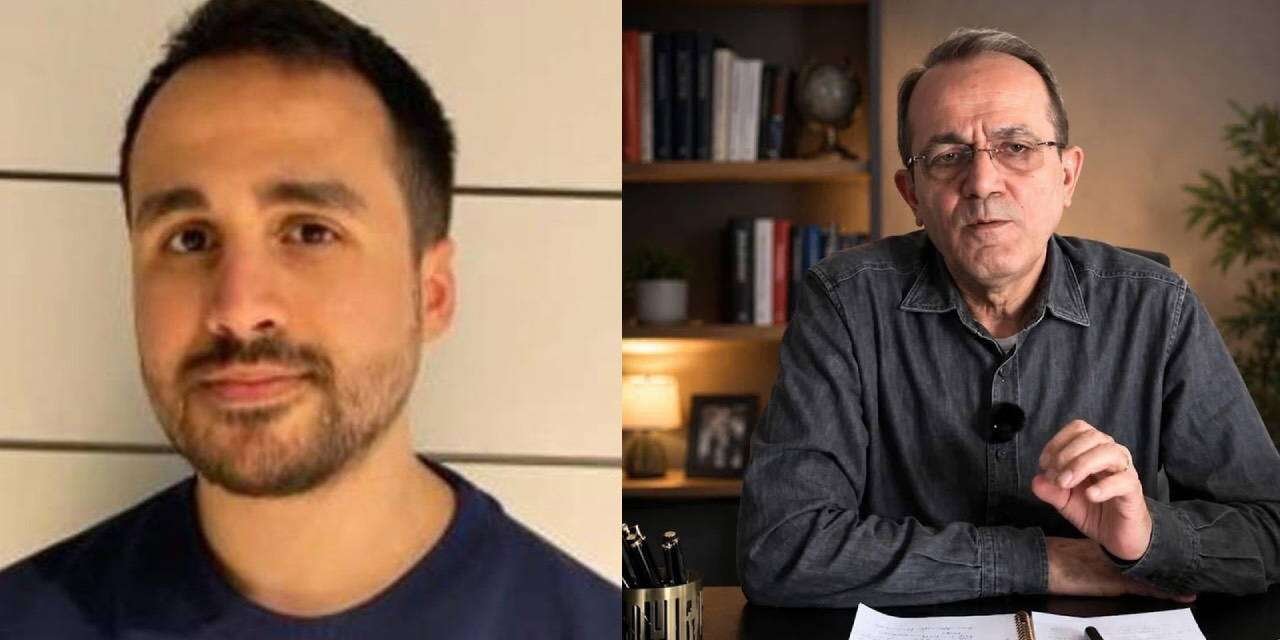
Turkish authorities detained two journalists on suspicion of spreading misleading information about the spokesman for President Recep Tayyip Erdoğan’s ruling party in connection with an investment fund scandal, the Kısa Dalga news website reported Friday.
Mustafa Balcı, an editor at the pro-opposition Sözcü newspaper, and Şaban Sevinç, editor-in-chief of the online news channel Bizim TV, were detained Thursday night after the İstanbul Chief Public Prosecutor’s Office accused them of publicly disseminating misleading information about Ömer Çelik, spokesman for President Recep Tayyip Erdoğan’s ruling Justice and Development Party (AKP).
Both journalists were transferred to an İstanbul courthouse Friday after police questioning.
The prosecutor’s office also summoned journalists İsmail Saymaz and Murat Ağırel for questioning as suspects in a related investigation following a criminal complaint by Trade Minister Ömer Bolat. The two were not among those detained.
The investigations concern statements about alleged connections between senior government figures and an investment fund scandal that has prompted allegations of market manipulation and preferential treatment for politically connected investors.
Before his detention, Balcı shared a photograph on X that he said showed Çelik attending a concert in the southwestern resort town of Bodrum on August 22, seated one row ahead of Osman Arıkan Nacar, whose name has surfaced in allegations surrounding the financial scandal.
In his post Balcı referred to allegations by Özgür Özel, leader of the recently established New Party and former chairman of the Republican People’s Party (CHP), that Nacar had vacationed with Çelik in the southwestern resort town of Bodrum. Nacar, a former government official, has also been accused of withdrawing a large sum of money from investment funds before leaving Turkey. The allegations have not been independently verified.
Balcı said Thursday that he had been summoned to give a statement at an İstanbul courthouse the following day and believed the summons was related to his social media post. He subsequently announced on X that he was being detained.
The prosecutor’s office accused Balcı and Sevinç of publicly disseminating misleading information under Article 217/A of the Turkish Penal Code, commonly known as the disinformation law. Authorities did not publicly identify the specific statements attributed to Sevinç that they considered false.
The separate investigation involving Saymaz and Ağırel followed allegations concerning Bolat’s possible involvement in investment fund transactions.
During an October 7 broadcast on Sözcü TV, Ağırel discussed allegations that Bolat had been among privileged investors in funds linked to the scandal and had withdrawn his investments before authorities intervened. Ağırel said he was relaying allegations rather than presenting the claims as established facts.
Bolat denied the allegations, describing them as defamatory and denying claims that he had benefited from questionable transactions. He subsequently filed a criminal complaint against Saymaz and Ağırel, accusing them of making false statements that damaged his reputation and that of his ministry.
Saymaz, who appeared on the same television program, said he had not personally made the allegation involving Bolat.
The journalists’ detention and questioning orders come amid a growing financial scandal involving investment funds suspected of manipulating stock prices and generating artificially inflated valuations.
Turkey’s Capital Markets Board (SPK), the country’s financial markets regulator, ordered the liquidation of 131 investment funds managed by seven portfolio management companies on September 17.
According to a September 23 statement by the regulator, the funds had 455,758 individual investors.
The scandal has prompted questions from opposition politicians about whether government officials or their relatives benefited from transactions involving the funds.
Opposition lawmaker Ümit Özlale has also raised allegations involving Family and Social Services Minister Mahinur Özdemir Göktaş’s father. Göktaş denied the claims, saying they resulted from mistaken identity and that the person named in the disputed transactions was not her father.
The journalists face investigation under Turkey’s disinformation law, introduced in October 2022, which criminalizes publicly disseminating false information concerning national security, public order or public health with the intention of creating fear, anxiety or panic in a manner capable of disturbing public peace. The offense carries a prison sentence of one to three years.
Press freedom organizations have criticized the legislation, warning that its broad wording allows authorities to investigate and prosecute journalists over reporting and commentary on matters of public interest.
In an analysis published October 5, the Committee to Protect Journalists (CPJ) said Turkish authorities had repeatedly used the law against journalists and called for its repeal.
Citing research by the independent data journalism platform Veriler Ne Diyor (What Does Data Tell Us), CPJ said at least 83 journalists had faced a total of 114 charges under the legislation between its introduction in October 2022 and April 2026.