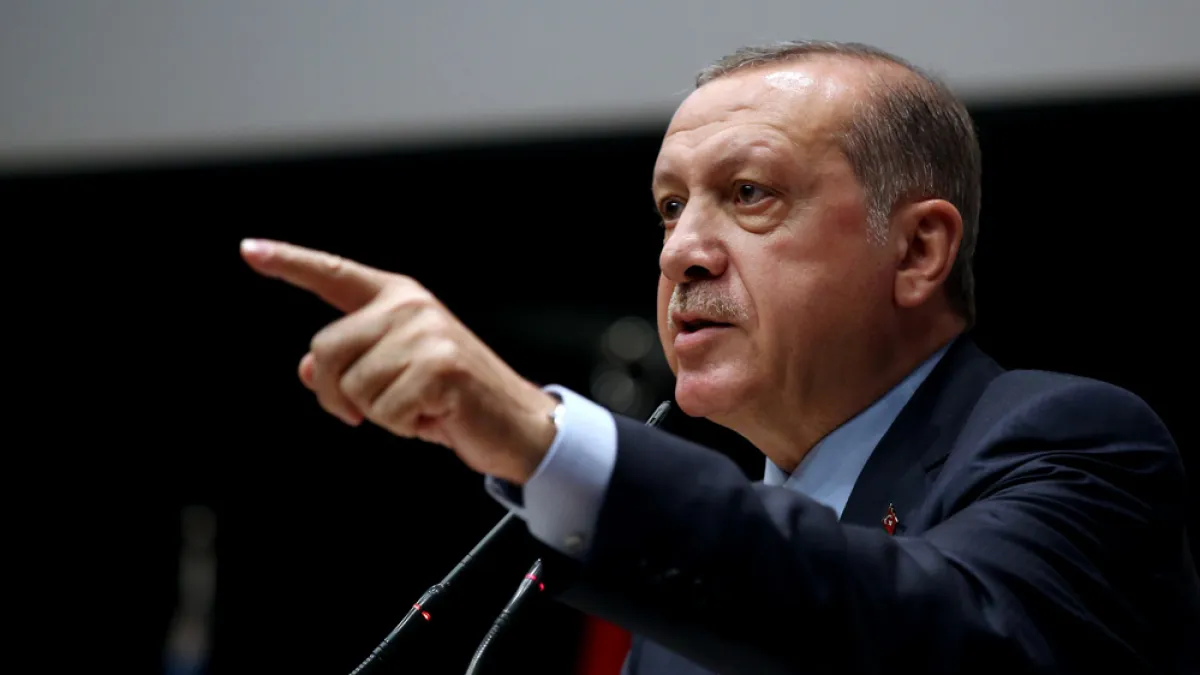
Turkish prosecutors have opened an investigation into an opposition lawmaker on suspicion of insulting and threatening President Recep Tayyip Erdoğan in remarks she made at a political rally, the Kısa Dalga news website reported.
The investigation targets Sera Kadıgil, an Istanbul lawmaker and spokesperson for the Workers’ Party of Turkey (TİP), over a speech she delivered at a rally in the western city of İzmir on July 31. Prosecutors did not specify which statements they considered insulting or threatening but said the inquiry was launched under provisions of the Turkish Penal Code covering both offenses. No charges have yet been filed.
During the speech Kadıgil said removing Erdoğan from office was her party’s foremost political objective but argued that replacing him alone would not solve Turkey’s broader political and economic problems.
“Getting rid of Tayyip Erdoğan is, of course, our biggest and first priority,” Kadıgil said. “And I swear we will get rid of him. I promise we will.”
She then asked whether Erdoğan was Turkey’s only problem and argued that the opposition should also confront what she described as the political and economic system that had enabled his more than two decades in power.
TİP condemned the investigation as an attempt to criminalize political criticism, accusing prosecutors of targeting elected opposition politicians instead of addressing what it described as widespread injustice. The party called the investigation part of a broader “witch hunt” against government critics.
Kadıgil, a lawyer, has served in parliament since 2018 and has represented TİP since 2021. She is one of the party’s most prominent public figures and serves as its spokesperson.
Under Article 299 of Turkey’s penal code, insulting the president carries a sentence of one to four years in prison. The sentence can be increased by one-sixth when the alleged offense is committed through the media. Thousands of people in Turkey have been investigated, prosecuted or convicted under the provision.
Human rights organizations have long criticized the provision, saying it is used to prosecute politicians, journalists and other government critics for speech protected under international human rights standards.