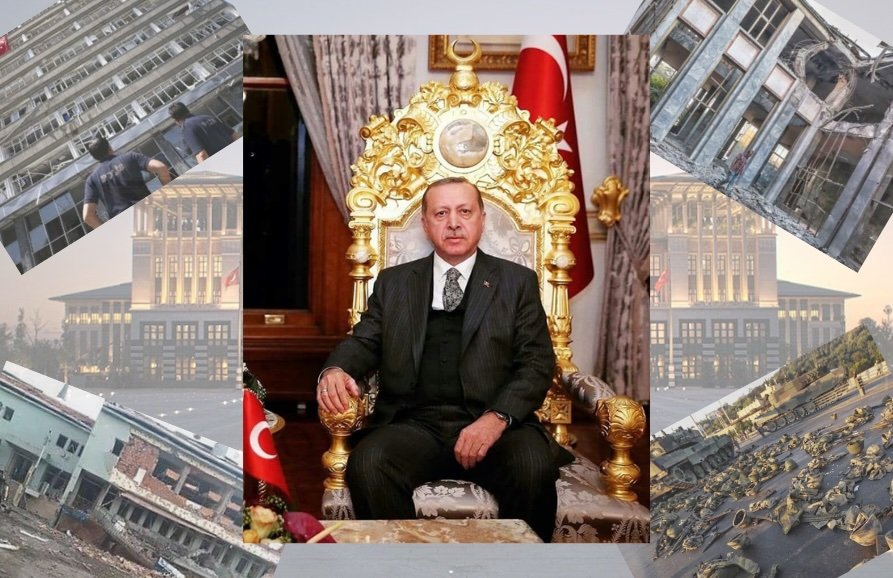
Ten years after a coup attempt on July 15, 2016, the coup and the sweeping crackdown launched in its aftermath continue to shape Turkey’s politics, state institutions and civil society, while the human rights consequences of the government’s response endure.
The coup attempt killed 251 people and wounded more than 2,000. Turkish President Recep Tayyip Erdoğan immediately accused the faith-based Gülen movement of orchestrating it, an accusation the movement strongly denies. A decade later, key aspects of the coup, including the operational planning and chain of command, remain unresolved.
Many military personnel later testified that they received mobile phone alerts warning of a possible terrorist attack and instructing them to report to their assigned units. The warnings appeared credible because personnel had been on heightened alert following a series of terrorist attacks in major Turkish cities, including the June 28 assault on İstanbul’s Atatürk Airport. They said they reported in line with military protocol, unaware that they were being drawn into the coup attempt. Some believed they had been deliberately lured into a trap.
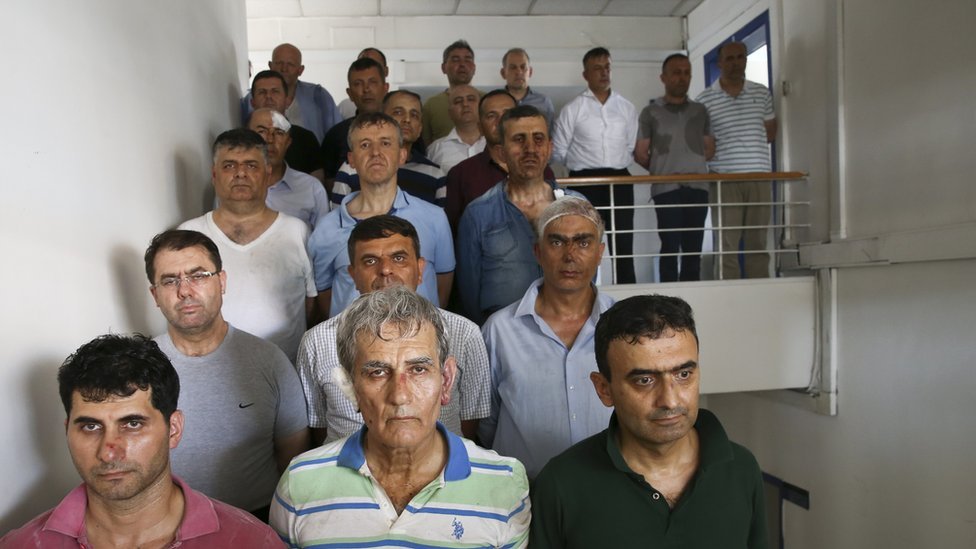
By the following day, authorities had begun mass detentions and suspensions across the military and judiciary. The country’s top judicial board suspended 2,745 judges and prosecutors, and detention warrants were issued for them, while thousands of military personnel were detained or placed under investigation. The state-run Anadolu news agency published images of detained generals and other senior officers with visible injuries, including bruised and bloodied faces, providing some of the earliest public evidence of abuse. Detainees later described widespread torture and ill-treatment, including beatings, sexual threats and denial of access to toilets and medical care.
Despite the scale and lasting consequences of the coup attempt, Turkish authorities have not produced a comprehensive and transparent public investigation into what happened. Senior officials were not questioned, testimony challenging the official account was sidelined, and journalists who examined unresolved aspects of the coup faced prosecution.
A parliamentary commission established to investigate the coup completed its work, but its final report was never published and its whereabouts remain unknown. Then-chief of General Staff Gen. Hulusi Akar and then-intelligence chief Hakan Fidan did not testify before the commission or in related court proceedings.
Questions have also persisted over Fidan’s knowledge of unusual military activity and his meetings with senior commanders before the coup attempt. In subsequent trials, courts largely rejected defendants’ requests for additional evidence and forensic examinations that might have tested parts of the official account.
Five days after the coup attempt, the government declared a state of emergency that remained in force until July 19, 2018. Emergency decrees allowed the executive to impose sweeping measures without effective parliamentary or judicial oversight, laying the legal foundation for mass dismissals, arrests, institutional closures and asset seizures.
During the state of emergency, over 121,000 civil servants, including 4,156 judges and prosecutors were dismissed due to alleged links to terrorist organizations, while more than 26,000 members of the armed forces were expelled from the military. Authorities also revoked the teaching licenses of 22,474 teachers at Gülen-affiliated schools.
The Turkish government has targeted followers of the Gülen movement, inspired by the late Muslim cleric Fethullah Gülen, since corruption investigations in December 2013 implicated then-prime minister Recep Tayyip Erdoğan as well as some members of his family and inner circle. Erdoğan dismissed the probes as a Gülenist conspiracy, and his government designated the movement as a terrorist organization in May 2016, intensifying the crackdown after the coup attempt.
Speaking to a group of international journalists immediately after the abortive putsch, Gülen strongly denied the allegations and called for the establishment of an international commission to investigate who was behind the events of July 15.
Although the state of emergency formally ended in July 2018, parliament enacted legislation that carried several emergency-era powers into the post-emergency period. Law No. 7145 allowed public institutions to dismiss public employees through an expedited process outside of the ordinary safeguards of civil service law. The authority was initially granted for three years, and later extended to four years.
Criminal prosecutions continued on a vast scale. According to figures announced by Justice Minister Akın Gürlek ahead of the anniversary, authorities have initiated legal proceedings against 720,338 people over alleged Gülen links since 2016 and secured convictions of 127,102. Investigations or trials involving another 83,404 people remain ongoing, while 10,485 people accused or convicted of involvement in the coup attempt or membership in the movement are still in prison.
The government closed more than 2,000 educational institutions, including 15 universities, and 1,727 associations and foundations under emergency decrees. The overwhelming majority were accused of links to the Gülen movement, while others were associated by authorities with Kurdish, far left or other groups designated as threats to national security.
Authorities also seized the assets of 784 companies, valued at an estimated $14 billion at the time of their takeover.
Turkish courts have upheld thousands of terrorism convictions based on ordinary or previously lawful activities, including having an account at Bank Asya, working at Gülen-affiliated schools, subscribing to movement-linked publications and belonging to associations or labor unions viewed by authorities as connected to the movement. The European Court of Human Rights found in Yalçınkaya and Yasak that such ties could not establish terrorism offenses without an individualized assessment of knowledge and intent. The UN Working Group on Arbitrary Detention has likewise repeatedly found that Turkish authorities failed to explain how ordinary conduct constituted criminal activity or provide individualized evidence linking detainees to violence or terrorism.
The coup attempt also marked the beginning of a broader political transformation. Constitutional amendments approved in a 2017 referendum replaced Turkey’s parliamentary system with an executive presidency that took effect in 2018, expanding presidential authority and weakening institutional checks and balances.
Over time, mechanisms normalized during the post-coup crackdown were extended beyond alleged Gülen movement supporters to Kurdish politicians, journalists, lawyers, human rights defenders and other government critics. More recently, prosecutors have increasingly targeted figures from the main opposition Republican People’s Party (CHP), including elected mayors and senior party officials.
The post-coup measures reshaped the country’s media, academia and civil society, with hundreds of journalists, academics and civil society actors facing prosecution, dismissal, censorship or other restrictions.
International indicators reflected the depth of Turkey’s democratic and rule of law decline. At the end of 2025 Turkey was the source of 18,450 applications pending before the European Court of Human Rights, accounting for 34.5 percent of the court’s total caseload. The World Justice Project ranked Turkey 118th among 143 countries in its 2025 Rule of Law Index, including 136th for constraints on government powers and 134th for fundamental rights. Transparency International ranked the country 124th among 182 countries in its 2025 Corruption Perceptions Index, while Freedom House classified it as “Not Free,” with a score of 32 out of 100. Turkey also fell to 163rd among 180 countries in Reporters Without Borders’ 2026 World Press Freedom Index.
A decade later, fundamental questions about the events of July 15 remain unanswered, and thousands of related legal proceedings continue. The emergency measures introduced after the coup attempt, meanwhile, developed into a lasting system that transformed Turkey’s institutions, weakened safeguards against executive power and broadened the state’s capacity to suppress dissent and political opposition.