The European Court of Human Rights’ (ECtHR) Grand Chamber ruled on Tuesday that Turkey violated the rights of a man convicted of membership in a terrorist organization over alleged links to the faith-based Gülen movement, reversing an earlier chamber judgment in 2024 that had found no violation, Turkish Minute reported.
According to Fatma Zibak’s report, in the case of Yasak v. Türkiye, the court found, by 11 votes to six, a violation of Article 7 of the European Convention on Human Rights, which prohibits punishment without law, and by nine votes to eight, a violation of Article 3, which bans inhuman or degrading treatment.
The case concerns 39-year-old Şaban Yasak, a Turkish national who is currently living in Germany.
Yasak, who was among the tens of thousands of people arrested in Turkey in the aftermath of a failed coup on July 15, 2016, was convicted in 2018 under Article 314 of the Turkish Penal Code (TCK) of membership in an armed terrorist organization due to his alleged links to the Gülen movement.
Turkish President Recep Tayyip Erdoğan has targeted followers of the Gülen movement, inspired by the US-based cleric Fethullah Gülen, who died in 2024, since corruption investigations in December 2013 implicated him as well as some members of his family and inner circle. He dismissed the probes as a Gülenist conspiracy and later designated the movement as a terrorist organization in May 2016, intensifying a sweeping crackdown after a coup attempt in July of the same year that he accused Gülen of orchestrating. The movement denies involvement in the coup attempt or any terrorist activity.
He lodged his application with the Strasbourg court on April 2, 2020, after exhausting domestic legal remedies in Turkey.
Prosecutors accused Yasak, who was a graduate student at the time, of membership in an armed terrorist organization based on witness statements claiming that before 2014 he had been responsible for students linked to the movement in a certain region of Turkey, as well as his account at the now-closed Gülen-linked Bank Asya, his employment at a private tutoring center considered to be affiliated with the movement and mobile phone records suggesting contact with another suspect facing Gülen-linked charges.
At the second hearing in the case in February 2018, the Çorum High Criminal Court in central Turkey convicted Yasak and sentenced him to seven-and-a-half years in prison. The court largely relied on the evidence in the indictment and also noted that he had been a member of two associations allegedly affiliated with the movement.
His appeal was dismissed by a regional appeals court in Samsun province, and his conviction was later upheld by the Supreme Court of Appeals. Turkey’s Constitutional Court also rejected his individual application.
In its 2026 Grand Chamber judgment, the Strasbourg court said Turkish courts had failed to show that Yasak’s earlier work in the movement’s education network, years before Turkish authorities and courts designated it a terrorist organization, proved he knew of its alleged “terrorist nature and aims” or had intentionally joined and actively supported it.
Turkey designated the Gülen movement as a terrorist organization in May 2016, shortly before the July 15 coup attempt, referring to it as “Fetö,” a label the movement rejects.
The court said the absence of any assessment of Yasak’s intent, the mental element of the offense of membership in a terrorist organization, amounted to a fundamental failure to make an individualized assessment of criminal responsibility.
It noted that the acts attributed to Yasak related to roles he had allegedly performed in the movement’s educational branch at a time when the movement had long operated in several sectors of Turkish society, particularly education.
The Grand Chamber said the Turkish courts focused mainly on Yasak’s alleged role in the movement’s education network but failed to show that he had any direct link to its leadership or strategic branches, knew of any allegedly terrorist aims or had responsibilities that would prove intentional membership in a terrorist organization.
The court said mere involvement in a structure that was perceived at the time as a religious group could not, on its own, justify the conclusion that Yasak had the intent required for conviction of membership in a terrorist organization.
Antonio Stango, president of the Italian Federation for Human Rights, which intervened in the case as a third party, welcomed the judgment, saying it confirmed the group’s assessment of “the frequent politically motivated criminalization of lawful activities in Türkiye.”
“As the European Court found clear violations of Articles 3 and 7 of the European Convention of Human Rights, Türkiye should now comply with the sentence, ensuring its proper, effective and timely implementation and not only on this specific case, but applying the principles of ‘nulla poena sine crimine’ and ‘nullum crimen sine lege’ without exceptions,” Stango told Turkish Minute.
The Latin legal principles cited by Stango mean there can be no crime or punishment without a prior law clearly defining the offense, a safeguard against arbitrary prosecution.
Turkish lawyers who commented on the ruling said the Grand Chamber’s reasoning went to the heart of thousands of post-coup terrorism convictions based on alleged Gülen links.
Lawyer Gizay Dulkadir said on X that the ruling showed that evidence such as a Bank Asya account, witness statements and phone records could not be considered sufficient to establish intent for membership in a terrorist organization unless domestic courts concretely prove that the defendant knew of the organization’s allegedly terrorist nature and acted with that awareness.
Levent Mazılıgüney, another lawyer, said the Grand Chamber’s decision summarized both “the terrible state of the judiciary” in Turkey and the grievances caused by post-coup prosecutions.
According to the latest figures from the justice ministry, more than 126,000 people have been convicted of alleged links to the movement since 2016, with 11,085 still in prison.
Legal proceedings are ongoing for over 24,000 individuals, while another 58,000 remain under active investigation nearly a decade later.
In addition to the thousands who were jailed, scores of other Gülen movement followers had to flee Turkey to avoid the government crackdown.
Yasak also complained under Article 3 that overcrowding in custody and detention facilities amounted to inhuman and degrading treatment.
The Grand Chamber found that Yasak had been held for nearly four years in severe and persistent overcrowding at Çorum Prison. It said the prison’s capacity had been raised to 1,592 by adding bunk beds, while the actual number of inmates reached between 1,950 and 2,000.
The court also noted inadequate sanitary facilities, a lack of privacy, limited access to outdoor exercise and the fact that Yasak had been deprived of an individual bed for about 14 months.
The cumulative effect of those conditions, the court said, exceeded the unavoidable level of suffering inherent in detention and reached the minimum level of severity required to fall under Article 3 of the convention.
The Grand Chamber ordered Turkey to pay Yasak 2,800 euros in non-pecuniary damages for the Article 3 violation and 9,050 euros in costs and expenses.
The ruling reversed the court’s August 27, 2024, chamber judgment, which had found no violation of either Article 3 or Article 7.
In that earlier ruling the chamber held that Yasak’s detention conditions had not reached the severity threshold required to amount to inhuman or degrading treatment and that his conviction had been foreseeable because the offense had a basis in Turkish law and was sufficiently clearly defined.
The chamber ruling sparked criticism from lawyers and rights observers because it was seen as difficult to reconcile with the ECtHR’s 2023 Grand Chamber judgment in the case of Yalçınkaya v. Türkiye, in which the court found violations over the conviction of a teacher for alleged Gülen links.
The legal commentary website Strasbourg Observers later named the chamber ruling in Yasak v. Türkiye the “Worst Judgment of 2024” in its annual readers poll.
Yasak requested referral to the Grand Chamber in November 2024, and the request was accepted in December of that year.
A hearing was held on May 7, 2025.
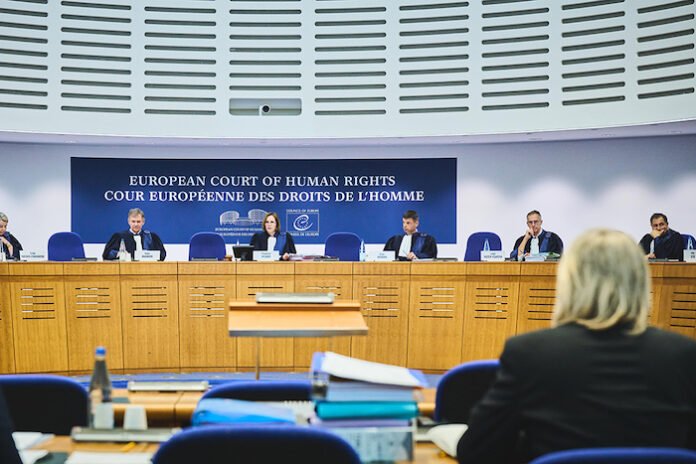
The 17-judge Grand Chamber announced its ruling at a public hearing in Strasbourg on Tuesday. The delivery was also broadcast on the court’s YouTube channel.
Grand Chamber judgments are final.