Turkey has put three organizations situated overseas and three individuals on an asset freeze list over alleged ties to the faith-based Gülen movement, a measure that formally applies to assets in Turkey but has caused banking and payment problems abroad in previous cases.
The organizations include the International Journalists Association e.V. (IJA), a nonprofit located in Germany, as well as the Austria-based Free Journalists Association and Kalyon Inc., situated in the United States.
The IJA was founded in Frankfurt by Turkish journalists living in Germany who fled Turkey after a failed coup in 2016. Bringing together journalists from a variety of countries, the association supports independent journalism and promotes online platforms.
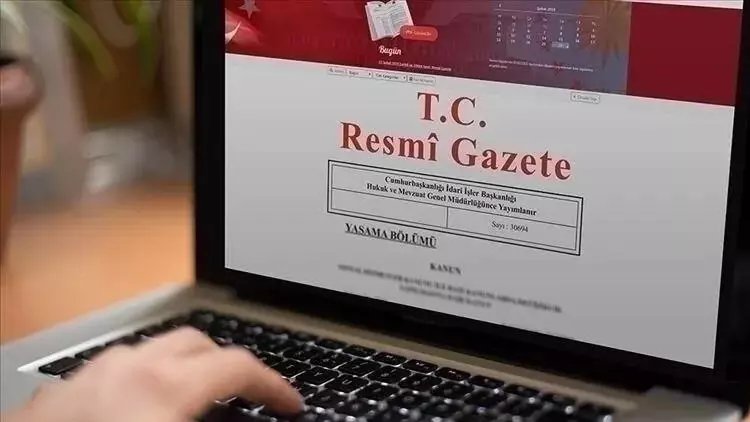
The decision, signed by Interior Minister Mustafa Çiftçi and Treasury and Finance Minister Mehmet Şimşek, took effect after its publication in the Official Gazette on Tuesday.
Authorities cited “reasonable grounds” to believe that those listed had committed acts covered by Turkey’s terrorism financing law. The decision provided no information about an alleged transaction, financial transfer or other conduct involving the organizations.
It also did not identify any assets in Turkey belonging to the three foreign-based entities.
Turkish President Recep Tayyip Erdoğan has targeted the Gülen movement, a worldwide civic initiative inspired by the ideas of Muslim cleric Fethullah Gülen, who died in 2024, since corruption investigations in December 2013 implicated him as well as some members of his family and inner circle. He dismissed the probes as a Gülenist conspiracy and later designated the movement as a terrorist organization in May 2016, intensifying a sweeping crackdown after the coup attempt in July of the same year that he accused Gülen of orchestrating. The movement denies involvement in the coup attempt or any terrorist activity.
How the listing can travel abroad
A Turkish asset freeze does not legally require a bank in Germany, Austria or the United States to close an account.
However, official terrorism financing notices can enter commercial databases used by banks, payment companies and other financial institutions to screen customers.
These databases can cause a Turkish designation to appear during customer checks even when the person or organization has no assets in Turkey and has not been sanctioned by the United Nations, the European Union or the country where the bank operates.
A match can prompt demands for documents, reviews of transactions, restrictions on transfers or a decision to end the relationship rather than spend time and money assessing the allegation.
The Financial Action Task Force (FATF), the international body that sets standards against money laundering and terrorism financing, calls that practice “de-risking.” It defines the term as terminating or restricting customer relationships to avoid risk rather than manage it. The FATF has warned that de-risking can lead to financial exclusion and reduce access to regulated financial services.
For an association, losing access to banking can disrupt donations, salary payments, rent, subscriptions, card processing and payments to suppliers. Even when an account remains open, repeated compliance reviews can delay transfers and cause banks or payment companies to reject new services.
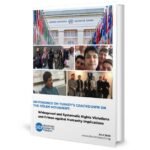
A 2022 report authored by Brussels-based lawyer Ali Yıldız and British barrister Michael Polak examined the effect of Turkey’s 2021 asset freeze decisions on 34 people living abroad.
Seventeen respondents had no assets in Turkey. Of the remaining 17, 12 had already had their Turkish assets frozen under court orders, meaning the later administrative decree had little additional domestic effect, according to the report.
Nineteen respondents experienced at least one financial consequence after their names appeared in the decrees.
Nine were refused bank accounts, three had existing accounts closed, two had credit cards canceled and three lost accounts with online payment platforms. Five were asked by their banks to provide explanations before a decision was made on whether to retain them as customers.
Most respondents learned that their bank or payment provider had found the Turkish designation through the Refinitiv World Check or LexisNexis compliance databases, according to the report. Some also alleged that Turkish Embassy officials had contacted banks in their countries of residence.
The report, which was published by IJA, cited reporting by the German newspaper Die Welt that Deutsche Bank had closed accounts belonging to Turkish government critics whose names appeared in a Turkish asset freeze decree and were later entered in World Check.
Yıldız and Polak returned to the issue in written evidence submitted to a British parliamentary inquiry in 2025.
They argued that commercial due diligence companies had become conduits for the international effects of domestic Turkish decisions by collecting the notices as public information and distributing them to financial institutions.
People seeking to remove the resulting profiles often received responses that the companies had merely reproduced information from public sources, according to the submission. Challenging those records through data protection complaints or litigation could take years and exceed the financial resources of people already excluded from banking services.
The submission also cited the case of the British charity Time to Help UK, which Turkey included in an asset freeze decision despite the organization never having operated in Turkey.
The Royal United Services Institute documented the wider pattern in a 2024 study on the misuse of FATF standards.
The study found that politically motivated domestic terrorism lists could be incorporated into compliance data sold to banks, amplifying the original designation and leading to account closures. It also found that affected people may be unable to learn what information caused a refusal, leaving them with no clear way to challenge it.
Financial exclusion can prevent people from receiving salaries, obtaining loans or mortgages and conducting work through the formal economy, the institute found. For organizations, the same restrictions can prevent them from carrying out their work.
The Parliamentary Assembly of the Council of Europe (PACE) recognized the practice as a form of transnational repression in a 2023 report and resolution.
PACE found that Turkey had used renditions, extradition proceedings, INTERPOL notices and anti-terrorism financing measures to pursue alleged Gülen movement members abroad. It specifically cited people who encountered problems with bank accounts and credit cards after the 2021 decrees.
The assembly warned that politically motivated use of anti-money laundering and terrorism financing mechanisms can lead to the financial exclusion of individuals and nongovernmental organizations, preventing them from participating in economic life or carrying out human rights work.
Yıldız raised the same concern after Turkey listed nine US-based organizations in January 2025. He told Turkish Minute that the groups probably had no assets in Turkey and that the measure appeared designed to damage their compliance records and create problems in their dealings with American banks.
Turkish government also listed Hilal Kalyoncu, Celil Kalyoncu and Doğan Ertuğrul over alleged links to the Gülen movement in the latest decision.
The same decision froze assets in Turkey belonging to Ali Ercan Gökoğlu, Zeliha Koyupınar and Erdal Gökoğlu over alleged ties to the Revolutionary People’s Liberation Party/Front (DHKP/C), a far-left armed group.
A separate decision lifted an earlier asset freeze imposed on Syrian national Omar Alwaki after authorities concluded that the grounds for the measure no longer existed.
This article is republished from Turkish Minute.