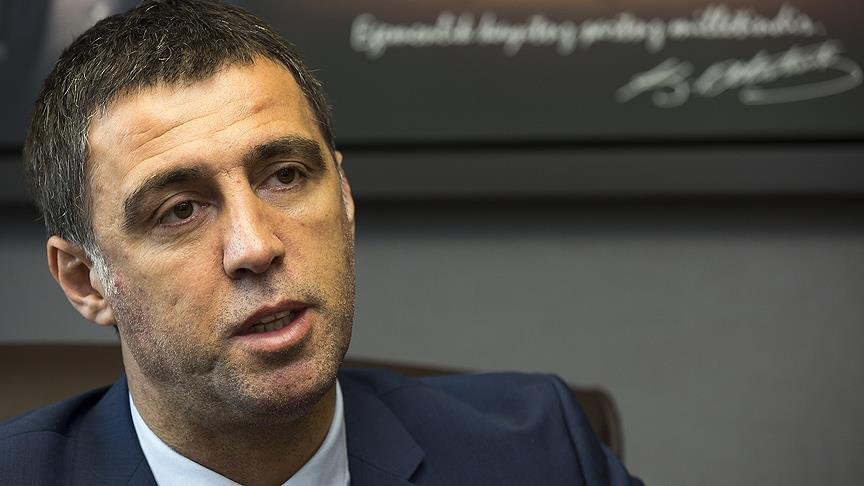
Hakan Şükür, Turkey’s all-time leading scorer and a former lawmaker now living in exile in the United States, said Instagram and YouTube prevented him from livestreaming during Turkey’s match against the United States, in what he described as an effort by Ankara to keep Turkish audiences from seeing him at the stadium, Turkish Minute reported.
Şükür, who was reportedly hosted by FIFA at the stadium for the match, said the problem became clear when he tried to post during the game. He suggested that Turkish authorities were disturbed by the growing audience for his recent broadcasts, which he said had begun attracting hundreds of thousands of viewers.
He said he had not expected social media platforms to restrict such broadcasts in the United States.
Şükür said he was able to stream on X but could not tell whether the broadcast was visible internationally. He added that his Instagram and YouTube accounts did not allow him to go live during the match.
“I had no internet problem,” Şükür said. “Many people around me opened live broadcasts from different accounts. I could not go live from either of my two accounts.”
Şükür said he then gave his account passwords to a trusted friend in Europe, who was able to start a livestream without difficulty. But when Şükür tried to use the link created by his friend to resume the broadcast from the United States, he said he again could not go live.
“There is a problem related to country locations,” he said. “I think I was prevented from livestreaming in the environment where I was hosted in the United States.”
He claimed that Turkish authorities had instructed social media platforms to prevent him from livestreaming during the match, saying the aim was to stop Turkish society from seeing “certain realities.”
He also referred to Turkey’s pressure on social media platforms, saying Ankara had already pushed platforms to open offices in Turkey in order to have accounts it disapproved of shut down.
Turkey has introduced sweeping internet regulations over the past decade, granting authorities broad powers to demand content removals, restrict access and require social media companies to appoint legal representatives in the country.
Press freedom advocates have long warned that such measures are often used not only to address crime or protect minors but also to tighten government control over online speech.
Over the past years Turkish courts have temporarily blocked access to social media platforms and websites including Instagram, Facebook, X and Wikipedia, in addition to the video-gaming platform Roblox and streaming sites Kick and Twitch.
The bans are part of a broader trend of increasing scrutiny and regulation of online platforms by Turkish authorities.
The government of President Recep Tayyip Erdoğan has been regularly accused of suppressing freedom of expression and access to information, with Turkey ranked among the “not free” countries in terms of internet freedom by Freedom House.
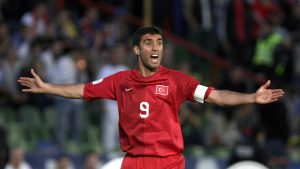
Şükür, Turkey’s all-time leading goal scorer, has been living in self-exile in the United States because he is targeted by the Turkish government over his alleged links to the Gülen movement.
The Turkish government accuses the Gülen movement, inspired by the late Turkish cleric Fethullah Gülen, of masterminding a failed coup on July 15, 2016, and labels it as a terrorist organization, although the movement strongly denies involvement in the coup attempt or any terrorist activity.
An arrest warrant was issued for Şükür as part of a large-scale crackdown on the movement’s members, and Turkish authorities confiscated his homes, businesses and bank accounts in Turkey. He had moved to the United States in 2015.
Şükür, a former deputy from Erdoğan’s ruling Justice and Development Party (AKP), was one of the most prominent figures in Turkish football before becoming a government target over his alleged Gülen links.
He scored 51 goals in 112 appearances for Turkey and remains the national team’s top scorer. He was also a key player for Galatasaray, which won the UEFA Cup in 2000 under coach Fatih Terim.
Despite his role in that success, Şükür has been largely erased from official and mainstream references to Turkish football history in recent years.
In 2022 a Netflix documentary series about Terim drew criticism for omitting Şükür, although he had played a major role in Galatasaray’s UEFA Cup victory. Şükür said at the time that the omission reflected “the state of the country” and suggested he had been excluded because he criticized the Turkish government.