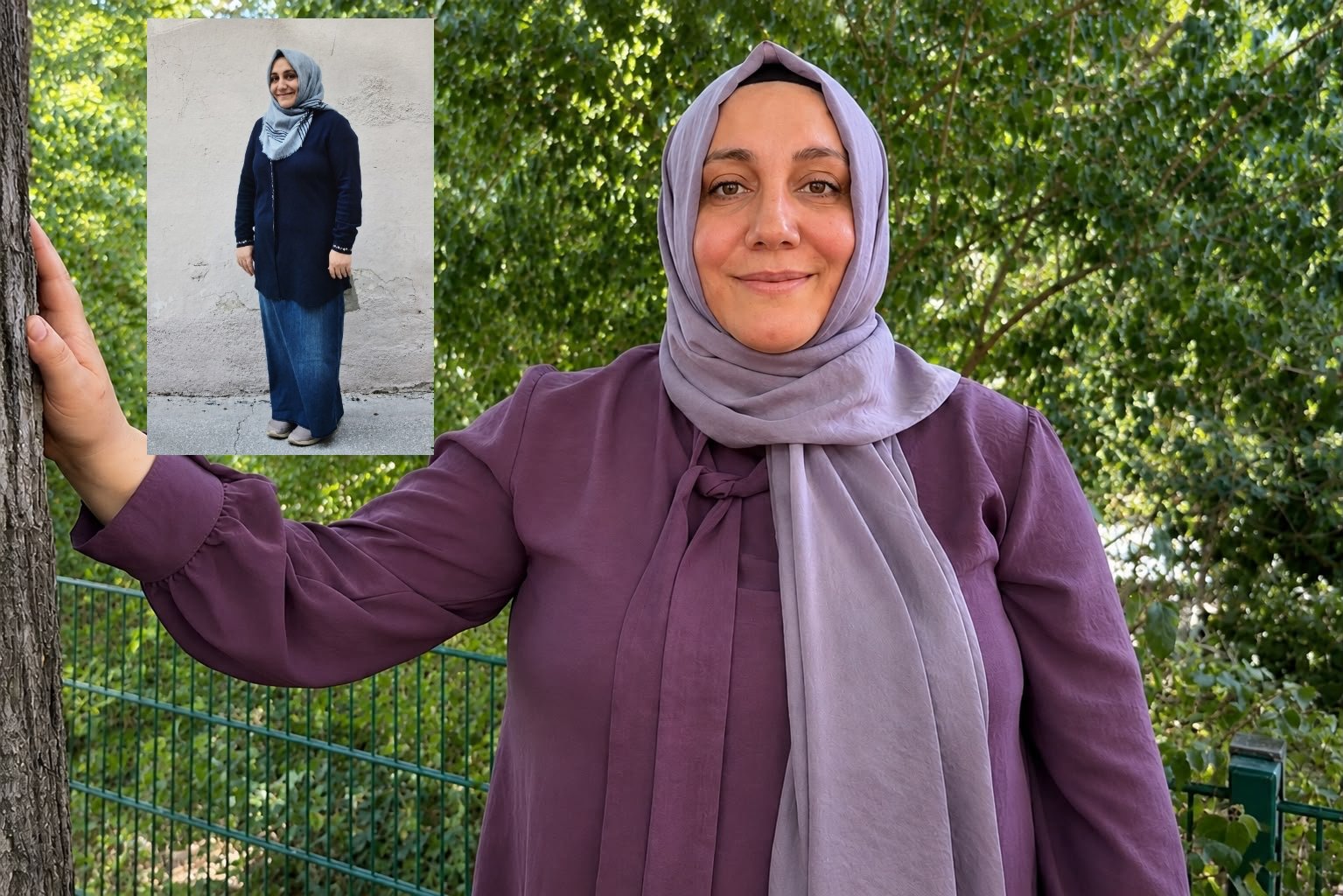
A Turkish housewife convicted of links to the faith-based Gülen movement says police detained her while she was caring for her 40-day-old baby, threatened to separate her from the child and later held her for weeks in a filthy prison cell, in an account that highlights the civilian reach of Turkey’s post-2016 coup purge.
According to the TR724 news website, Gurbet Karabağ from the western province of Afyonkarahisar described her detention, prosecution and imprisonment at the fifth annual Justice March in Strasbourg on Wednesday, an event focused on victims of Turkey’s post-coup emergency decrees and related prosecutions.
Karabağ said officers at the counterterrorism branch in Afyonkarahisar pressured her to give names during a nightlong interrogation on March 8, 2017, when she and her husband were first detained. Police officers allowed her to breastfeed her 40-day-old baby only once.
She said police officers surrounded her, shouted at her and demanded that she identify others in the movement.
“One of them said, ‘I will take you away and throw you somewhere. You will see your child again when he is 12,’” Karabağ said.
She said she covered her ears and told officers she did not know anything and had committed no crime.
Turkish President Recep Tayyip Erdoğan has targeted followers of the Gülen movement, inspired by the late Muslim cleric Fethullah Gülen, since corruption investigations in December 2013 implicated him as well as some members of his family and inner circle. He dismissed the probes as a Gülenist conspiracy and later designated the movement as a terrorist organization in May 2016, intensifying a sweeping crackdown after a coup attempt in July of the same year that he accused Gülen of orchestrating. The movement denies involvement in the coup attempt or any terrorist activity.
Karabağ said she was taken to court on March 11, 2017. She said officials initially refused repeated requests to breastfeed her son, who was crying, before allowing her to feed him on the fourth request. She was then released pending trial under judicial supervision with a travel ban and was required to report regularly to authorities for about two-and-a-half years until her trial in 2020, when she was sentenced by the Afyon 2nd High Criminal Court to eight years in prison.
She said she was initially put in a one-person cell used for serious offenders. The cell had no electricity, smelled of sewage and had human feces on the walls, she said.
“I stayed in that cell for 75 days,” she said. “It was such a filthy and terrifying place that my hands and feet were shaking from fear.”
Karabağ said she lost nearly 28 kilograms, dropping from 86 to 58 kilograms while in custody. For 45 days, she said, she was not taken outside even for fresh air.
She said she filed a petition asking prison authorities for more humane conditions. The next day, she said, a senior guard came to her cell, crumpled the petition and threw it in her face.
“If you write another petition like this, I will take you to the padded room. Be smart,” she quoted the guard as saying.
Karabağ described the “padded room” as a place prisoners feared as a site of abuse.
She said she suffered panic attacks in prison and once became so distressed after receiving a letter from her family that she began vomiting and struggled to breathe. Prison staff later gave her a sedative injection, she said.
Karabağ said an appeals court later overturned the sentence and ordered her release after eight months in prison.
Karabağ’s conviction was based on allegations that she attended and later led informal religious study meetings, used the ByLock messaging app and had a small account at Bank Asya, a lender that Turkish authorities linked to the Gülen movement before closing it after the coup attempt in 2016.
Since the failed coup the Turkish government has accepted such activities as having an account at the now-shuttered Bank Asya, one of Turkey’s largest commercial banks at the time; using the ByLock messaging application, an encrypted messaging app that was available on Apple’s App Store and Google Play; and subscribing to the now-shut-down Zaman daily or other publications affiliated with members of the movement as benchmarks for identifying and arresting alleged followers of the Gülen movement on charges of membership in a terrorist organization.
Although the European Court of Human Rights (ECtHR) has in many cases made clear that use of the ByLock messaging app does not constitute a criminal offense, detentions and arrests of individuals continue in Turkey for their alleged use of the application.
Karabağ, who said she spent most of her adult life as a homemaker, denied any role in the coup attempt or any effort to overthrow the government.
She said the experience left her living in fear even after her release. For two years, she said, she kept a bag ready by the door with diapers, baby formula and clothes in case the police came again.
“Every time the doorbell rang, I thought the police had come,” she said.
Karabağ said she left Turkey with her family in 2023 and sought asylum in Germany. Her son is now 9 and her daughter is 4, she said.
“There are still thousands of people in Turkey living through this oppression in the same filthy cells, wanting not to be forgotten,” she said.
According to the latest figures from the justice ministry, more than 126,000 people have been convicted for alleged links to the movement since 2016, with 11,085 still in prison. Legal proceedings are ongoing for over 24,000 individuals, while another 58,000 remain under active investigation nearly a decade later.
In addition to the thousands who were jailed, scores of other Gülen movement followers had to flee Turkey to avoid the government crackdown.