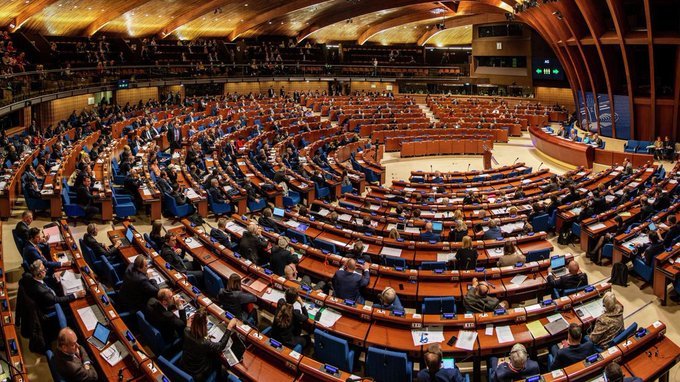
The Parliamentary Assembly of the Council of Europe (PACE) has listed Turkey among the world’s top 10 perpetrators of transnational repression, while an accompanying report detailed alleged Turkish intelligence operations and attacks targeting journalists living in exile and people linked to the faith-based Gülen movement abroad.
The resolution, adopted Thursday, calls for a coordinated international response to governments that pursue critics beyond their borders, including through abductions, surveillance, threats, misuse of international police and legal systems, and pressure on relatives who remain in the home country.
PACE called on states to adopt laws or equivalent measures to prevent and punish transnational repression, prosecute perpetrators, impose targeted sanctions on foreign officials involved in such acts and expel or restrict diplomats implicated in repression abroad.
It also urged states to consider a country’s record of transnational repression when reviewing extradition requests or other forms of legal cooperation, and to investigate possible repression risks in asylum cases involving people fleeing countries known to misuse counterterrorism tools against political opponents.
PACE is the parliamentary body of the Council of Europe. Its resolutions are not legally binding, but they carry political weight and often help shape human rights policy among member states.
The resolution cited Freedom House data documenting 1,375 cases of physical transnational repression since 2014 carried out by 54 origin states and affecting people in 107 host states. It listed China, Turkey, Russia, Tajikistan, Egypt, Turkmenistan, Cambodia, Uzbekistan, Iran and Belarus as the top 10 perpetrators.
PACE defines transnational repression as state-linked efforts to intimidate, silence, harass, coerce, abduct, harm or kill people abroad, including political dissidents, activists, human rights defenders, journalists, political opponents, academics, members of diaspora communities and their relatives.
The resolution said such repression can include killings, threats or violence, abductions, unlawful surveillance, harassment of relatives in the country of origin, misuse of INTERPOL notices and extradition requests, abusive terrorism or extremism designations, passport restrictions, denial of consular services, lawsuits aimed at silencing critics and financial repression.
An accompanying June 4 report by PACE’s Committee on Legal Affairs and Human Rights included several Turkey-related cases. It cited the 2021 abduction of Orhan İnandı, a Turkish-Kyrgyz educator and founder of the Sapat school network in Kyrgyzstan who was abducted in Kyrgyzstan, blindfolded, driven for several hours and taken to Turkey by Turkey’s National Intelligence Organization (MİT). Turkish President Recep Tayyip Erdoğan later acknowledged that MİT had brought İnandı to Turkey.
İnandı was sentenced in June 2023 to 21 years in prison by the Ankara 23rd High Criminal Court over alleged links to the Gülen movement. The photos of İnandı in custody showed visible weight loss and a swollen right hand, prompting torture allegations. İnandı told a court at his first hearing that he had been tortured for 37 days and denied adequate medical treatment.
Turkish President Recep Tayyip Erdoğan has targeted followers of the Gülen movement, inspired by the late Muslim cleric Fethullah Gülen, since corruption investigations in December 2013 implicated him as well as some members of his family and inner circle. He dismissed the probes as a Gülenist conspiracy and later designated the movement as a terrorist organization in May 2016, intensifying a sweeping crackdown after a coup attempt in July of the same year that he accused Gülen of orchestrating. The movement denies involvement in the coup attempt or any terrorist activity.
The report also cited attacks on Turkish journalists living in exile in Europe. It said Erk Acarer, a Turkish journalist residing in Germany, was attacked with a knife outside his Berlin home in 2021 after criticizing Turkey’s ruling Justice and Development Party (AKP), and its ally, the far-right Nationalist Movement Party (MHP). German police said the attack could be linked to his journalism, according to the report.
The PACE report also cited attacks on Ahmet Dönmez, a Turkish journalist living in exile. Dönmez, who was known for reporting on alleged links between mafia figures and Turkish government officials, was attacked by two men in Stockholm in March 2022 in front of his 6-year-old daughter.
Dönmez lost consciousness and was in intensive care for about 20 days. Before the attack, he had said he received death threats after alleging in a YouTube video that then-interior minister Süleyman Soylu had protected a mob boss. Dönmez later said that he no longer felt safe in Sweden.
The report said a leaked Turkish government document dated January 18, 2024, alleged that Turkish intelligence services operating from the Turkish Embassy in Stockholm had spied on journalists in Sweden, including other Turks who had been granted political asylum.
The resolution comes amid growing international concern over authoritarian governments using intelligence agencies, police cooperation mechanisms, courts, financial systems and diplomatic networks to pursue critics overseas.
Organizations such as Human Rights Watch and Freedom House have identified Turkey as a leading perpetrator of cross-border suppression of dissent, citing a pattern of politically motivated extradition requests, surveillance and pressure on host governments. The U.S. State Department and the United Nations have also raised concerns about Ankara’s misuse of international mechanisms to pursue critics abroad, warning that such practices undermine international legal norms and endanger the rights of exiled individuals.