A Turkish court on Friday handed down an 11-month suspended sentence to a young activist on charges of publicly insulting President Recep Tayyip Erdoğan by chanting a slogan during a rally, the Media and Law Studies Association (MLSA) reported.
The İstanbul 27th Criminal Court of First Instance convicted Yunus Kılıç but suspended the sentence, meaning he will not serve time in prison unless he reoffends within the next five years.
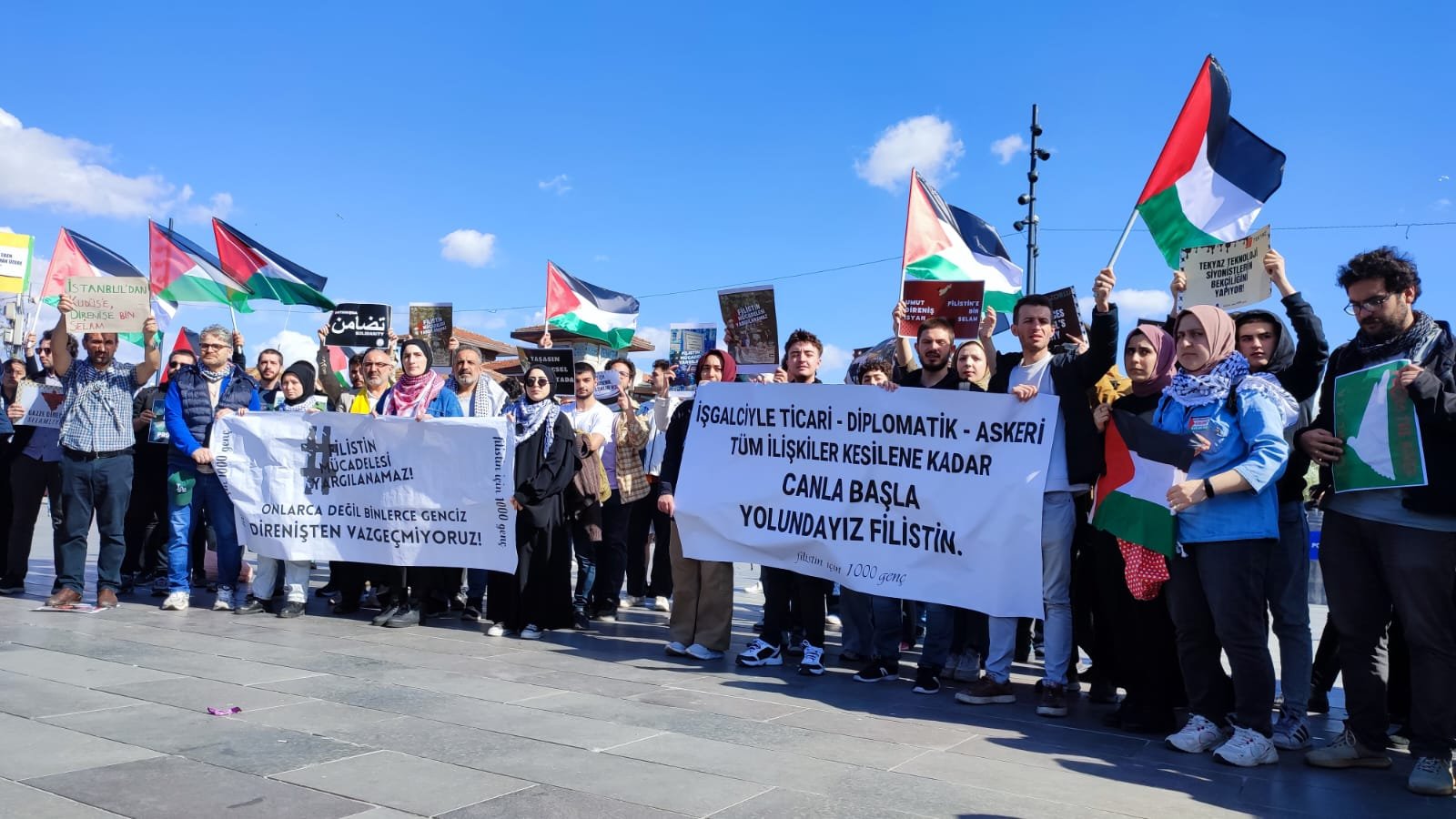
The case stemmed from Kılıç’s participation in a pro-Palestine rally organized by “A Thousand Youth for Palestine” at İstanbul’s Şişhane Square on March 30, 2024, where he allegedly chanted the slogan “Murderer Erdoğan, collaborator AKP [Justice and Development Party].”
In his defense Kılıç denied chanting the slogan, saying he had participated in the rally to voice criticism and did not recall hearing such a slogan, requesting his acquittal.
His lawyer argued that no evidence existed to prove he had chanted it and that the statements in question should in any case be considered within the bounds of criticism under the case law of the Supreme Court of Appeals, the Constitutional Court and the European Court of Human Rights (ECtHR).
Thousands of people in Turkey are investigated, prosecuted or convicted each year for insulting the president, a criminal offense under Article 299 of the Turkish Penal Code. Those found guilty can face up to four years in prison, with sentences increased by one-sixth if the offense is committed through the media.
The law has long been criticized by human rights and press freedom advocates, who say it is used to prosecute journalists, politicians and ordinary citizens for expressing views critical of the president or even satirizing him indirectly.
In 2021 the European Court of Human Rights ruled that the law should be amended or repealed, stating that giving special protection to the president stifles public debate and chills dissent. International human rights organizations have also repeatedly urged the Turkish government to review the law, which they describe as incompatible with democratic norms and international free speech standards.