
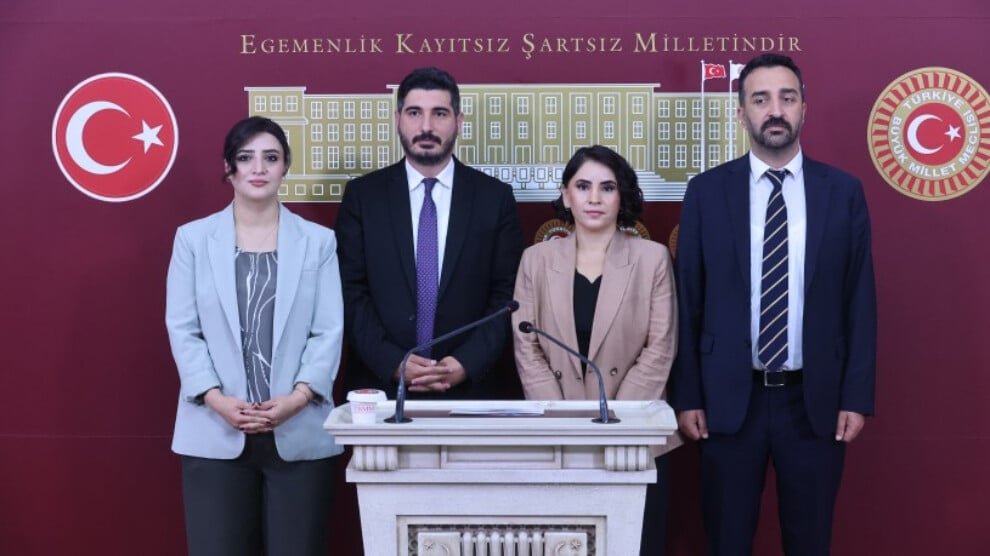
A delegation from Turkey’s pro-Kurdish Peoples’ Equality and Democracy Party (DEM Party) has reported overcrowding, obstacles to medical care and limits on social contact in prisons in the Black Sea region, Turkish Minute reported, citing the Anka news agency.
The delegation, comprising DEM Party lawmakers Nevroz Uysal, Sabahat Erdoğan Sarıtaş, Ömer Faruk Hülakü and Onur Düşünmez, visited eight prisons in Tokat, Samsun, Giresun, Rize and Trabzon provinces between June 8 and 12.
At a press conference in parliament, Düşünmez, a DEM Party lawmaker from Hakkari, said the delegation spoke directly with 148 inmates during the five-day series of visits.
He described them as political prisoners who were held in overcrowded cells, denied timely medical care and kept from regular contact with other inmates.
The complaints of the inmates included long waits for doctors, canceled trips to the hospital, limits on sports and other group activities, restrictions on phone calls and visits and problems obtaining Kurdish-language books and publications.
One of the most serious complaints concerned forced oral cavity searches before hospital transfers, a security measure that inmates and rights groups describe as degrading.
According to Düşünmez, the searches have been used especially against political prisoners in recent years. Inmates who refused them were denied treatment or had their hospital appointments canceled.
Inmates with heart disease, epilepsy, diabetes, high blood pressure and cancer risks were among those unable to receive regular medical care, the delegation reported. Some were waiting for surgery, while others had been unable to see a doctor for years.
The delegation also reported that inmates with the same political views were kept apart from one another and prevented from meeting for conversation, sports or other activities.
Requests for Kurdish-language books were rejected in some prisons; access to Kurdish publications remained limited; and some writings by inmates had been confiscated, according to Düşünmez.
Inmates also complained of unequal access to newspapers and television stations.
“In some prisons, the number of prisoners is far above capacity. There are places where 10 people are kept in cells designed for three,” Düşünmez said.
Overcrowding had left inmates with too little living space and made it harder for them to take part in social activities or receive medical care, according to the delegation.
The findings add to years of complaints by rights groups that Turkey’s prisons hold far more inmates than their official capacity and that sick prisoners often struggle to access doctors, hospitals and medication.
According to Justice Ministry data, Turkey’s prison population reached 421,583 as of June 1, more than 116,000 above the official capacity of 304,390.
The ministry figures showed that 356,878 of those held were convicted inmates, while 64,705 were in pretrial detention. The data also showed that 4,673 minors were being held in Turkish detention facilities.
Opposition politicians and human rights groups say the prison population in Turkey has grown because of the frequent use of pretrial detention, prosecutions launched after a failed coup in 2016, cases against opposition figures and the continued imprisonment of people convicted under disputed terrorism charges.