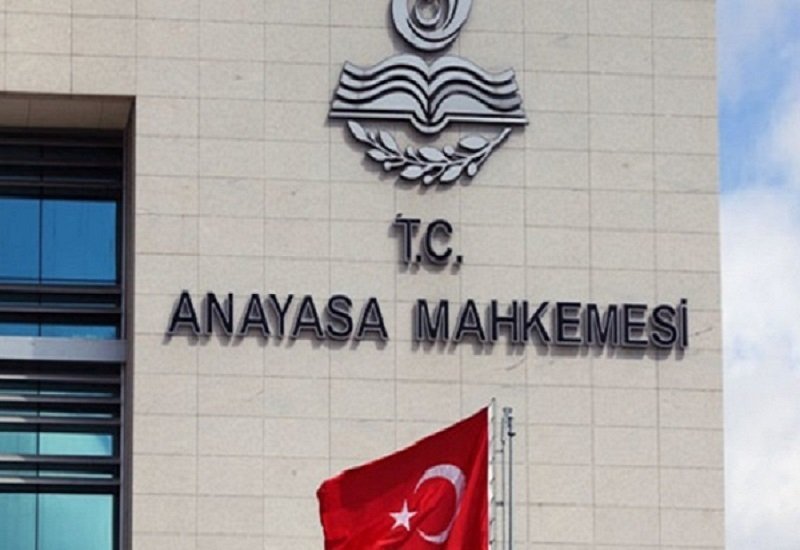
The Turkish Constitutional Court has ruled that a teacher who was barred from working under an emergency decree in the aftermath of a 2016 failed coup suffered rights violations after he was prevented from engaging in his profession for nearly three years and received only limited compensation for the income he lost during that period.
In a decision published Monday in the Official Gazette, the court found that authorities failed to adequately compensate Abdülhakim Alperen Sarı for lost earnings after a court later overturned the measure that had stripped him of his authorization to work. The Constitutional Court said the compensation awarded by lower courts fell far short of addressing the economic damage he suffered. It also found that the prolonged inability to pursue his profession harmed his professional identity and personal development, violating his right to respect for private life.
The Constitutional Court ordered that the case be sent back to the Ankara 14th Administrative Court for a new examination aimed at remedying the violations.
The teacher’s authorization to work was revoked under Emergency Decree No. 667, one of a series of measures introduced following the coup attempt in Turkey in July 2016.
Turkey experienced a controversial military coup attempt on the night of July 15, 2016, which, according to many, was a false flag operation aimed at entrenching the authoritarian rule of President Recep Tayyip Erdoğan by rooting out dissidents and eliminating powerful actors such as the military in his desire for absolute power.
After successfully challenging the decision in administrative court, Sarı was able to return to teaching. He later filed a lawsuit for compensation, arguing that he had suffered both financial and non-financial damages during the period he was unable to work. Lower courts awarded him 5,000 Turkish lira ($127) in damages.
The Constitutional Court found that amount insufficient to compensate for the losses caused by the unlawful administrative action. The court noted that previous judicial rulings had already established that authorities had wrongly prevented the applicant from working as a teacher for approximately three years.
The ruling could have broader implications for similar cases involving individuals who successfully challenged employment restrictions imposed under the emergency decrees but received only limited compensation for lost earnings and other damages.
Following the coup attempt, the Turkish government declared a state of emergency (OHAL) that remained in effect until July 19, 2018. During this period, the government carried out a purge of state institutions under the pretext of an anti-coup fight by issuing a number of government decrees, known as KHKs. Over 130,000 public servants, including 4,156 judges and prosecutors, as well as more than 24,000 members of the armed forces were summarily removed from their jobs for alleged membership in or relationships with “terrorist organizations” by emergency decree-laws subject to neither judicial nor parliamentary scrutiny.
Many of those dismissed were accused of alleged links to the faith-based Gülen movement.
Turkish President Recep Tayyip Erdoğan has targeted followers of the Gülen movement, inspired by the late Muslim cleric Fethullah Gülen, since corruption investigations in December 2013 implicated him as well as some members of his family and inner circle. He dismissed the probes as a Gülenist conspiracy and later designated the movement as a terrorist organization in May 2016, intensifying a sweeping crackdown after the coup attempt in July of the same year that he accused Gülen of orchestrating. The movement denies involvement in the coup attempt or any terrorist activity.