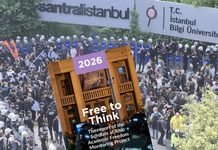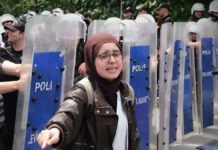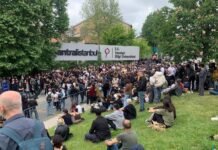
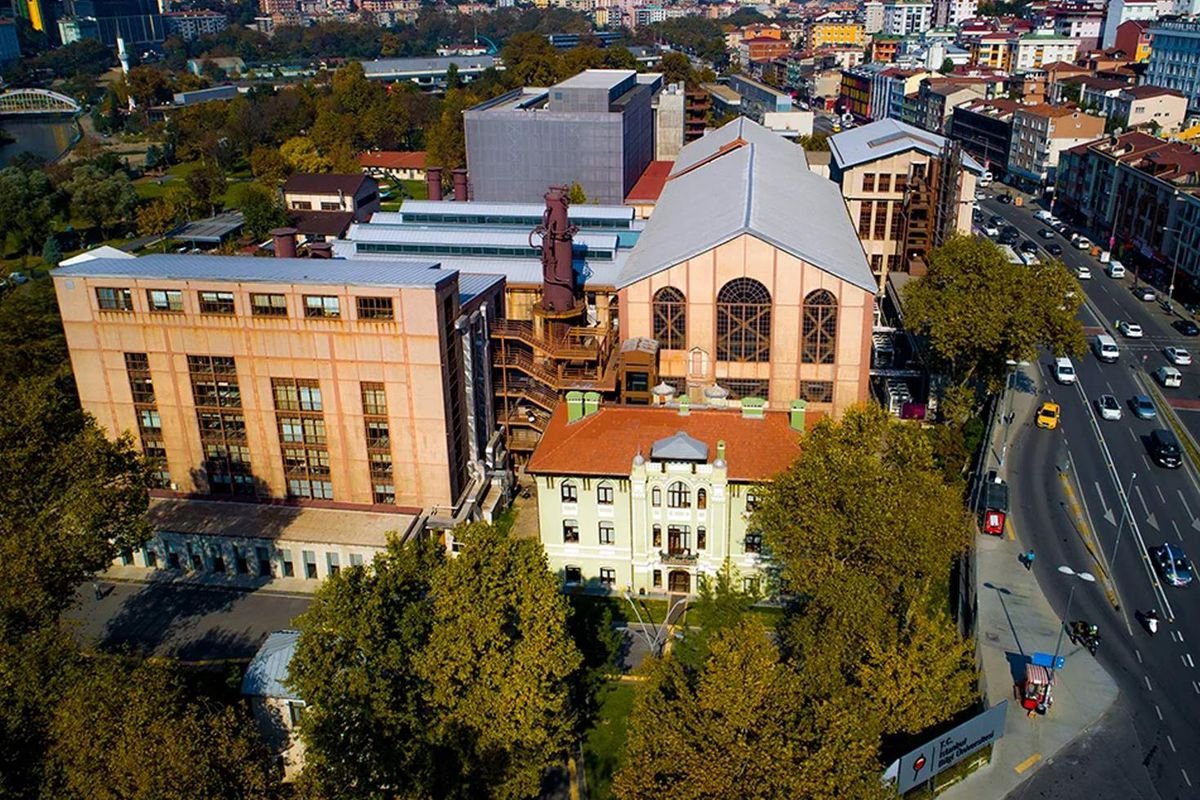
Turkey has closed İstanbul Bilgi University, a major private university long known for its liberal academic environment and international programs, by presidential decree, leaving more than 20,000 students and some 1,000 academics uncertain about transfers, exams, graduation procedures and jobs, Turkish Minute reported.
The decision, signed by President Recep Tayyip Erdoğan and published in the Official Gazette on Friday, revoked İstanbul Bilgi University’s operating license. It cited the relevant provision of the Higher Education Law but did not provide further justification.
The closure was effective immediately.
The university was part of Can Holding, whose assets were seized by Turkey’s Savings Deposit Insurance Fund (TMSF) in September 2025 as part of an investigation into allegations including fraud, tax evasion and money laundering. The university had been run by a court-appointed trustee since 2025.
İstanbul Bilgi University was founded in 1996 and had become one of Turkey’s better-known private universities. It took part in the European Union’s Erasmus exchange program and hosted European and other international students.
Bilgi operated through seven faculties, three institutes and more than 150 programs and had around 45,000 graduates.
The closure immediately raised questions about the future of more than 20,000 students and some 1,000 academics at the university.
Under the law, students enrolled at a private university whose operating license is revoked are to be transferred by the Higher Education Board (YÖK) to a guarantor university or to a public university designated by the board.
In a statement on Friday, YÖK promised to take “the necessary measures” to ensure the students at the social sciences university, who were due to sit end-of-year exams in June, “suffer no harm.”
YÖK did not say whether the students would be taken in by other institutions in the coming weeks, nor how they would be able to complete their academic year.
Turkish media reported that Bilgi’s guarantor university is Mimar Sinan Fine Arts University.
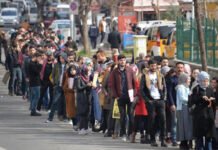
The decision caused immediate anxiety among students, particularly those close to graduation.
One final-year psychology student said on social media that the university where she had studied for five years and expected to graduate from in two weeks had been shut down without clear guidance.
“I was looking for a graduation dress. Now I don’t know how I will take my exams, whether I will be able to graduate or where I will graduate from,” the student wrote, adding that students had been unable to reach the university.
The decision also means that the university’s board of trustees, managers and other administrative bodies will automatically lose their positions.
The university’s assets are also expected to be sold or transferred as part of a liquidation process. Officials from the Treasury and Finance Ministry and YÖK will oversee the process.
The closure drew sharp criticism from lawyers, academics, journalists and former students, who said the move went far beyond the investigation into Can Holding and directly affected thousands of students, academics and staff.
“An institution built with 30 years of effort was effectively shut down overnight,” Yaman Akdeniz, a Bilgi professor of law, wrote on X.
“The constitution is clear — universities are established by law and their closure can only occur by law as well.
“But who cares?” he said.
“In an era without justice or fair trials, it seems the next item on the agenda was to shut down an entire university. … We will never remain silent in the face of this lawlessness.”
Journalist Banu Güven also criticized the decision, saying the closure of Bilgi by presidential decree was unconstitutional when Article 130 and the principle that an institution should be closed by the same procedure by which it was established are taken into account.
“A university opened by law can be closed only by a law passed by the legislature,” she said.
Writer Yekta Kopan said the closure showed how universities in Turkey, already associated with debates over autonomy, trustees, rector appointments and freedom of expression, were now facing outright closure.
“Investigating a foundation is one thing,” Kopan said. “But closing an entire university directly affects the lives of thousands of students and academics. A university is not just a company or an administrative structure; it is a space of knowledge with students, academics, research, memory and public impact.”
Academic Onur Alp Yılmaz, who said he had both studied and taught at Bilgi, described the decision as devastating.
“The real issue is much bigger,” he said.
“We are facing a picture that shows the intellectual barrenness toward which Turkey is being pushed. Universities are not merely institutions that issue diplomas; they are spaces where thought, criticism, debate and free reason are produced. Bilgi was one of the strongholds of that.”
The decision comes amid concerns about the erosion of university autonomy in Turkey under Erdoğan, whose government has repeatedly clashed with students and academics over rector appointments, campus protests and academic freedom.
The most visible confrontation took place at Boğaziçi University after Erdoğan appointed a pro-government rector in 2021, triggering months of protests by students and academics who said the appointment violated university autonomy.
Police detained hundreds of students during the protests, while faculty members continued symbolic demonstrations for years, turning their backs on the rector’s office in protest.
The downward trajectory in Turkey’s academic freedom is primarily linked to events following a 2016 coup attempt. In the wake of the abortive putsch, the Turkish government carried out a sweeping crackdown on the academic sector.
This crackdown resulted in the dismissal of over 30,000 teachers and 7,000 academics, with many facing serious consequences such as legal action, loss of employment or imprisonment for criticizing government policies.
A significant factor in this decline was President Erdoğan’s 2016 decision to abolish intra-university elections for the selection of university rectors, a move that replaced a traditionally democratic process with direct presidential appointments.
This policy has faced widespread criticism for undermining the independence of institutions of higher learning and centralizing control in the hands of the government.