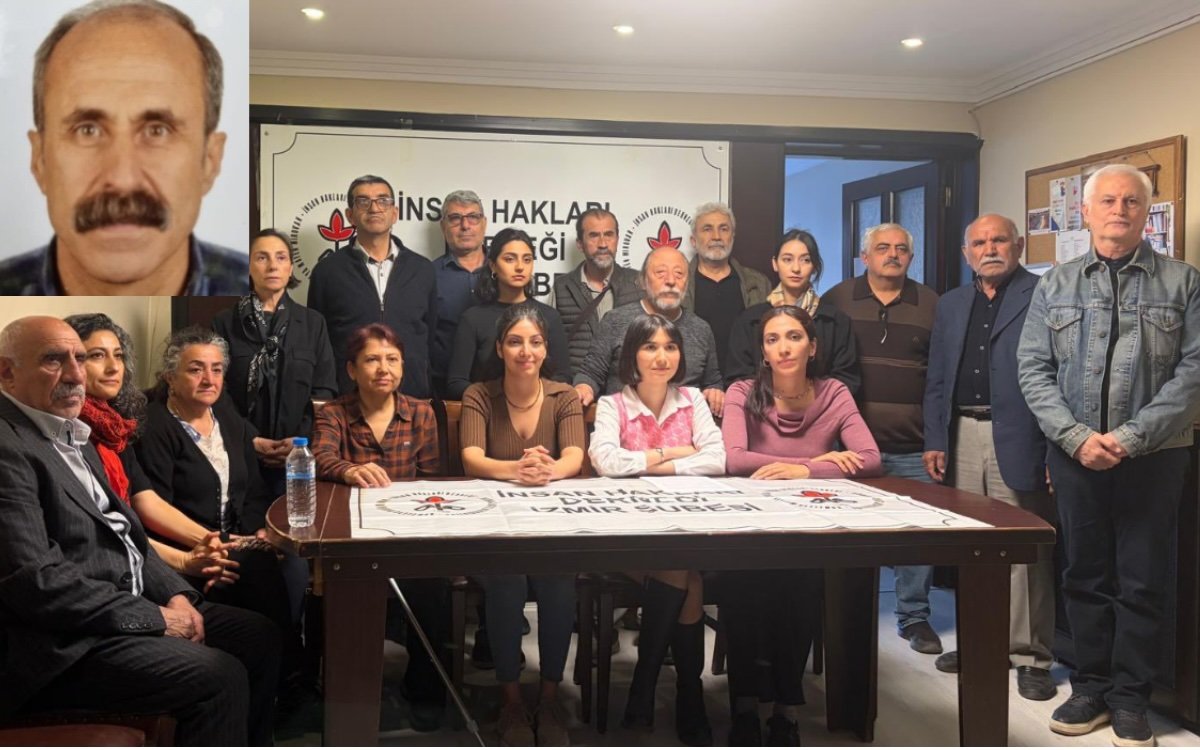
Five human rights organizations have called for the immediate release of critically ill Kurdish prisoner Enver Yanık, saying prison authorities obstructed his access to medical treatment and that his continued incarceration violates international standards on the treatment of prisoners.
In a joint statement the groups said Yanık has suffered from years of medical neglect and physical trauma linked to hunger strikes and injuries sustained during prison operations in the late 1990s. They said his health further deteriorated in solitary confinement due to Wernicke–Korsakoff syndrome, a serious brain disorder, and progressive neurological disorders.
Yanık was first imprisoned in 1994 for alleged links to the banned Revolutionary People’s Liberation Party/Front (DHKP/C). He took part in hunger strikes in 1996 to protest the transition to high security F-type prisons, solitary confinement practices and increasing rights violations and was seriously injured during prison operations in 1999. Although he was released in 2003 to continue treatment, he was re-arrested in 2005 in a house where materials used to make explosives were discovered, with authorities alleging — based on witness testimony — that he was being prepared for a suicide attack. He was later released again in 2009.
In 2024 he was sentenced to aggravated life and transferred to İzmir’s Menemen Prison in 2025. His case is currently under review by the Supreme Court of Appeals.
His wife, Şükriye Yanık, said her husband has been fainting six times a day and was referred to Turkey’s Council of Forensic Medicine following his transfer to Menemen Prison, but no report has been issued for four months and treatment has effectively stalled.
The rights groups said his continued detention violates the Nelson Mandela Rules — the United Nations Standard Minimum Rules for the Treatment of Prisoners — and other international standards on the treatment of prisoners. They urged his immediate release, saying he must be allowed to receive life-saving medical care in an appropriate clinical setting.
Civil Society in the Penal System (CİSST) and the İzmir branches of the Contemporary Lawyers Association (ÇHD), the Human Rights Association (İHD), the Lawyers for Freedom Association (ÖHD) and the Human Rights Foundation of Turkey (TİHV) issued the statement.
Under Turkey’s Law on the Execution of Sentences and Security Measures, courts may suspend the sentence of a prisoner who, due to a serious illness or disability, cannot sustain life under prison conditions and who is not considered a serious or concrete danger to society. Rights groups say the provision is very rarely applied in practice.
According to İHD data, at least 1,412 sick prisoners are currently being held in Turkish prisons, 335 of them in serious condition, 230 unable to manage daily life independently and 105 requiring constant care.