President Recep Tayyip Erdoğan said Wednesday that Turkey would continue a peace initiative aimed at ending the outlawed Kurdistan Workers’ Party’s (PKK) armed campaign, after Turkey’s main pro-Kurdish party accused the government of taking hesitant steps and failing to match the pace of the opportunity before it, Turkish Minute reported.
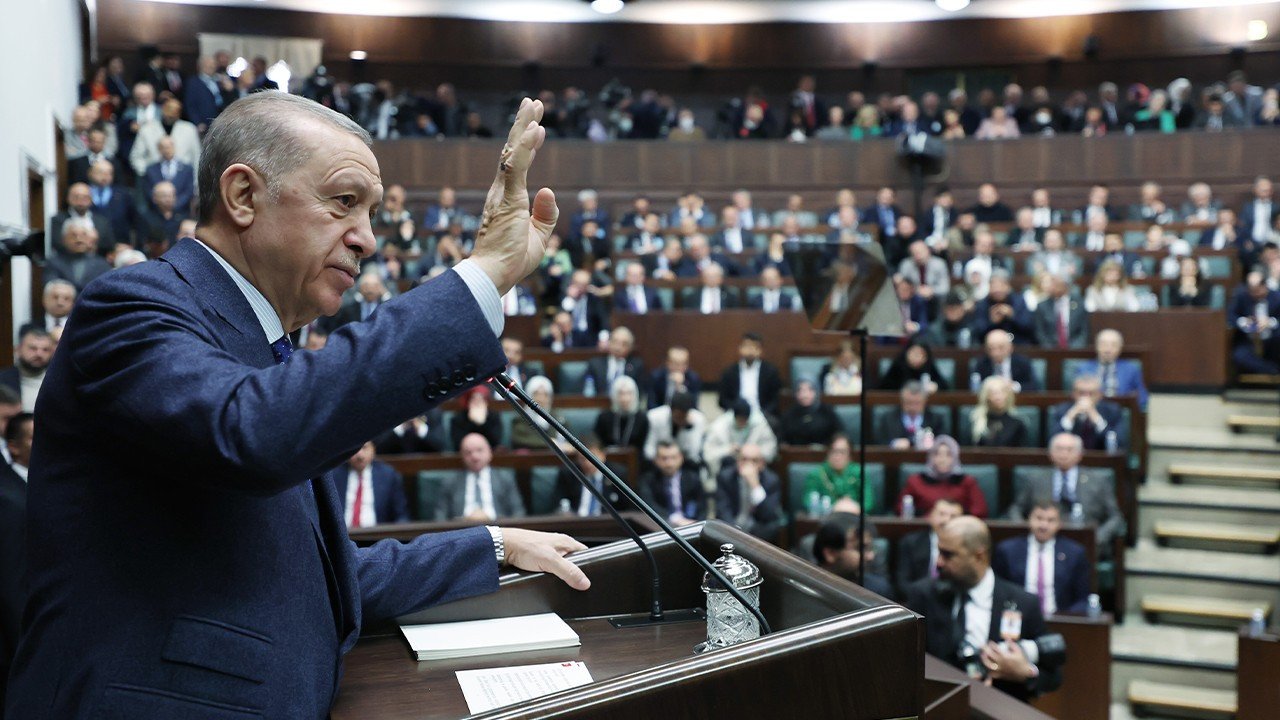
Speaking at a parliamentary group meeting of his ruling Justice and Development Party (AKP), Erdoğan said the process, which the government calls “a terrorism-free Turkey,” had completed its 18th month and passed “many critical thresholds.”
“When we solve the terrorism problem, which has cost our country more than $2 trillion, our march toward the Century of Turkey will accelerate even more,” Erdoğan said, using his government’s slogan for Turkey’s second century as a republic. “With the approval of the commission report, we are in a process that must be managed much more carefully.”
Erdoğan said the government would not listen to what he called “noise” from circles seeking to undermine the process.
“We set out on this road. We will walk patiently until we reach the destination,” he said.
The remarks came a day after the pro-Kurdish Peoples’ Equality and Democracy Party (DEM Party) Co-chair Tülay Hatimoğulları issued one of the party’s strongest criticisms of the government’s handling of the process, accusing Ankara of acting in a “hesitant, timid and stalling manner.”
The DEM Party, the third-largest party in parliament, has played a role in contacts linked to the process. The party has argued that the government has not taken the legal and political steps needed after jailed PKK leader Abdullah Öcalan’s February 2025 call for the group to lay down arms.
The PKK, which is designated as a terrorist organization by Turkey and its Western allies, said in May 2025 that it had decided to dissolve itself and end its armed campaign. The conflict between the Turkish state and the PKK has killed more than 40,000 people since 1984.
Ankara says the PKK’s decision must be verified before broader legal and political steps are taken. The DEM Party says the government is delaying reforms despite the opening created by Öcalan’s call and the PKK’s announcement.
A parliamentary commission led by Parliament Speaker Numan Kurtulmuş approved a report in February setting out a roadmap for legal reforms linked to the process. Erdoğan said Wednesday that the approval of the report had brought the process to a more sensitive stage and that political parties’ support would help Turkey get through the next phase “without accident or trouble.”
Kurtulmuş also said Wednesday that the process was going well but that a critical threshold remained.
“There is one critical threshold that concerns us,” Kurtulmuş told reporters, referring to the section of the commission report that focuses on confirming that the PKK has laid down its arms. He said a weapons handover in Sulaymaniyah had created a positive atmosphere and that a similar step was needed.
Asked whether a framework law could come early, Kurtulmuş said, “That will be discussed. First the process needs to be seen.”
“The work is on track. There is no turning back from here,” he said. “God forbid, if it remains unfinished, the price will be very heavy. Turkey should not pay such a price again.”
Kurtulmuş said he believed the process would end positively, citing the efforts of Erdoğan, Nationalist Movement Party (MHP) leader Devlet Bahçeli and political parties involved in the parliamentary work.
AKP deputy parliamentary group chairman Abdulhamit Gül signaled that legislation could follow the commission’s work. Speaking in parliament, Gül said the commission had completed its work under Kurtulmuş and that the next stage would involve legal processes shaped by the policy framework in the report.
Gül described the process as a “national project” and said there was “a positive atmosphere” and a broad political consensus for a Turkey free of terrorism.
The DEM Party, however, said the same period has also seen new operations against left-wing and socialist groups, which it said narrowed the space for democratic politics while the peace process was supposed to strengthen rights and dialogue.
In a statement after detentions ahead of May 1, the DEM Party said pressure on political activity and freedom of expression damages democracy and makes the construction of social peace harder.
“The path to a real solution does not pass through policies of pressure and detention, but through an open, transparent and inclusive atmosphere of dialogue,” the party said.
The current initiative began in October 2024 when MHP leader Bahçeli, Erdoğan’s far-right ally, made an unexpected call for jailed PKK leader Abdullah Öcalan to declare an end to the group’s armed campaign, opening the way for renewed contacts between Öcalan and the DEM Party.
It gained momentum after a DEM Party delegation visited Öcalan on İmralı Island in December 2024, followed by Öcalan’s landmark February 2025 call for the PKK to lay down arms and the group’s May 2025 announcement that it would dissolve itself and end its armed campaign.
A parliamentary commission later approved a report setting out a roadmap for legal and political steps tied to the process, but the latest statements show it remains caught between the government’s insistence on verified PKK compliance before legislation and the DEM Party’s demand for faster reforms to build trust.