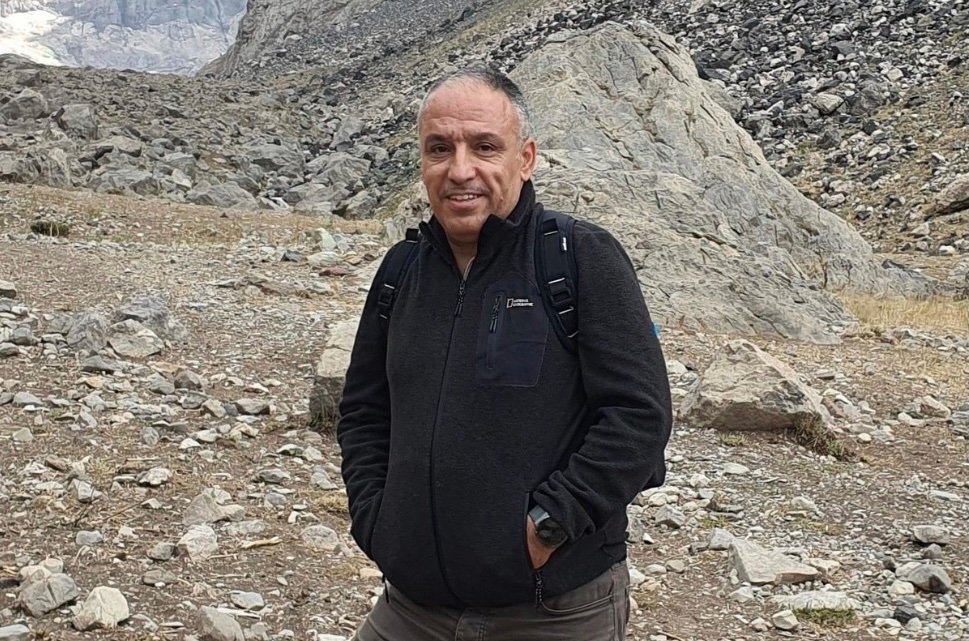
Turkish authorities have blocked access in Turkey to the X account of Agence France-Presse correspondent Mahmut Bozarslan, a journalist based in the predominantly Kurdish southeast, in the latest move raising concerns about censorship and press freedom, Agence France-Presse reported.
The account of Bozarslan, who reports from Diyarbakır, the largest city in Turkey’s Kurdish-majority southeast, was blocked on grounds of protecting national security and public order, according to EngelliWeb, a platform that monitors online censorship in Turkey.
“I have no idea of the reasons that led to this block,” Bozarslan said.
Bozarslan’s recent reporting included coverage of Newroz celebrations on March 21, the annual festival marking the Kurdish new year, which has political significance for Turkey’s Kurds.
Reporters Without Borders (RSF) condemned the move and described it as censorship.
The block comes as Ankara has been engaged since October 2024 in talks aimed at ending its long conflict with the Kurdistan Workers’ Party (PKK), an outlawed militant group that has waged an insurgency against the Turkish state for more than four decades.
The peace effort gained momentum in 2025 when Abdullah Öcalan, the imprisoned founder of the PKK, called on the group to disband and urged supporters to pursue the Kurdish issue through democratic politics. The conflict has killed more than 50,000 people since the 1980s.
The Kurdish issue, a term prevalent in Turkey’s public discourse, refers to the demand for equal rights by the country’s Kurdish population and their struggle for recognition.
The move also follows broader restrictions on social media in Turkey. In March 2025, during protests that erupted after the arrest of İstanbul Mayor Ekrem İmamoğlu, X said Turkish authorities had ordered the blocking of more than 700 accounts, including those of journalists, politicians and students.
X criticized the sweeping orders at the time but complied by restricting access to the accounts inside Turkey.