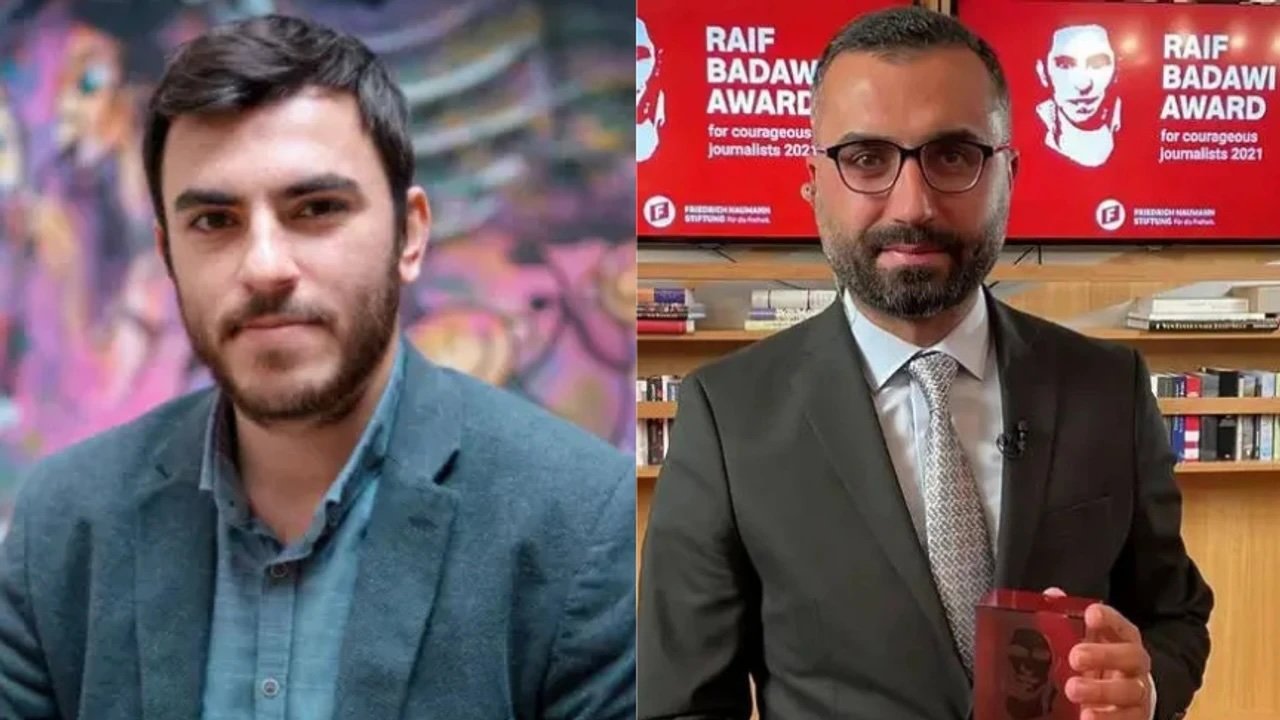
Bar associations and press freedom groups in Turkey have condemned the arrest of journalists Alican Uludağ and İsmail Arı, warning that their jailing poses a serious threat to press freedom and freedom of expression, Turkish Minute reported.
Uludağ, a reporter for Deutsche Welle’s Turkish service, was arrested on February 20, while Arı, a journalist for the left-wing BirGün newspaper, was detained on March 21 and later jailed pending trial.
Fifteen bar associations, including those from Diyarbakır, Van and Şanlıurfa, said in a joint statement that the arrests paint a “deeply concerning picture” for fundamental rights in the country.
“The arrest of journalists presents an extremely alarming picture in terms of press freedom and freedom of expression,” the bar associations said.
They stressed that journalism is essential in a democratic society and warned that penalizing reporting undermines the public’s right to access accurate information. The arrests, they said, risk creating a chilling effect, weakening public oversight and limiting access to news.
The bar associations also urged authorities to respect the exceptional nature of pretrial detention and to safeguard journalists’ rights.
Press groups: Journalism is being criminalized
In a separate statement, press organizations said Arı’s arrest reflects a broader pattern of treating routine journalistic work as a criminal offense.
They said the investigation was based on Arı’s social media posts, published reports and participation in public events.
“Reporting, speaking with sources and investigating matters of public interest are not crimes,” the statement said.
The groups also criticized prosecutors for referring Arı for arrest without first taking his statement.
“This arrest is part of an ongoing systematic policy aimed at criminalizing journalistic activities,” they said, calling for an end to the use of criminal law to silence journalists.
Arı was detained in Tokat on March 21 while visiting family for the Eid holiday and later transferred to Ankara, where he was placed in pretrial detention on charges including “publicly disseminating misleading information.”
His family questioned the basis of the case after visiting him in prison.
“What is my son’s crime? Was he arrested for writing the truth?” his father said.
In a message from prison, Arı also challenged the accusations.
“Why was I arrested? Which of my reports were not wanted? Who was disturbed enough by my reporting to have me arrested during the holiday? Journalism is not a crime,” he said.
A separate statement by press and free expression groups led by the Media and Law Studies Association (MLSA) also condemned Arı’s detention and called for his immediate release.
Uludağ, meanwhile, was arrested in February on charges of insulting President Recep Tayyip Erdoğan in social media posts. He has been held in Marmara Prison in Silivri for about a month, and no indictment has yet been filed.
A court cited flight risk and the possibility of evidence tampering in ordering his pretrial detention. Prosecutors had initially accused him of both insulting the president and disseminating misleading information, though he was ultimately jailed only on the insult charge.
Journalists plan to gather in Ankara on Thursday in front of the BirGün bureau to protest the arrests and show solidarity. The demonstration, organized under the slogan “Freedom for İsmail Arı and Alican Uludağ,” is scheduled for 11:30 a.m.
Turkey’s media environment has grown increasingly restrictive in recent years, particularly for journalists covering politically sensitive issues or critical of the government. Reporters are frequently prosecuted under laws criminalizing insulting public officials, disinformation and terrorist propaganda.
According to Expression Interrupted, a press freedom monitoring group, 26 journalists are currently behind bars in Turkey.
The country’s deteriorating media landscape was further pointed out in the 2025 World Press Freedom Index published by Reporters Without Borders (RSF), where it was ranked 159th out of 180 nations.