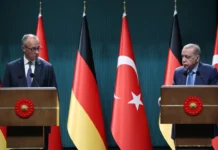
Human rights groups said on Wednesday that the European Union’s 2016 migration deal with Turkey left a legacy of suffering for asylum seekers and weakened legal protections, as the bloc marked 10 years since the finalizing of the agreement, which helped cut crossings into Greece but also reshaped Europe’s broader relationship with Ankara, Turkish Minute reported.
In a joint statement marking the anniversary, Germany’s PRO ASYL and Greece-based Refugee Support Aegean said the deal trapped thousands of people in poor conditions on the Greek islands, encouraged policies that undermined asylum rights and became a model for later efforts to shift refugee responsibilities outside the EU.
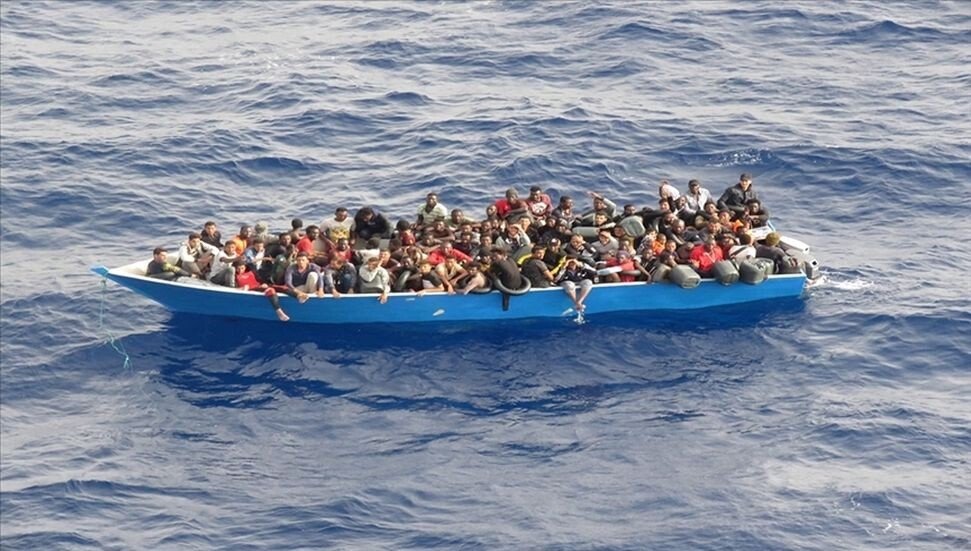
The deal, announced on March 18, 2016, came at the height of Europe’s migration crisis after large numbers of refugees and migrants, many fleeing the Syrian civil war, crossed from Turkey into Greece and moved deeper into Europe.
Under the arrangement, all new migrants illegally crossing from Turkey to the Greek islands after March 20, 2016, were in principle to be returned to Turkey, while for every Syrian returned, another Syrian would be resettled from Turkey to the EU. The agreement also promised faster disbursement of billions of euros in aid for refugees in Turkey, movement on visa liberalization for Turkish citizens and renewed discussion of Turkey’s long-stalled bid to join the bloc.
The policy had an immediate effect on the main migration route across the Aegean Sea. According to United Nations refugee agency data, sea arrivals in Greece fell from 856,723 in 2015 to 173,450 in 2016 and then to 29,718 in 2017. In 2025, the figure stood at 41,696, still far below the level seen before the deal.

That drop made the agreement one of the most important migration arrangements in recent EU history. It also gave Turkey new leverage over Europe at a time when President Recep Tayyip Erdoğan was taking a more authoritarian line at home and a bellicose posture abroad.
Critics say that tradeoff shaped how European governments dealt with Ankara in the years that followed.
After a failed coup in Turkey in July 2016, the European Parliament called for a halt to accession talks, condemning what it called “disproportionate repressive measures” by the Turkish government. Yet migration cooperation continued even as EU institutions raised concerns about democratic decline, the judiciary, civil society and the treatment of the opposition. The European Parliament later said Turkey’s accession process had remained at a standstill since 2018 because of persistent rule of law and rights concerns.
The return mechanism, which was central to the 2016 arrangement, has effectively been frozen since March 2020, when Turkey stopped accepting returns from the Greek islands. Returns under the deal were always limited. Fewer than 2,300 people were sent back from Greece to Turkey under the arrangement, while Syrian resettlement from Turkey to EU countries reached only about 45,000, far below the political weight once attached to the one-for-one formula. Still, neither side has formally terminated the agreement, and EU officials continue to treat it as remaining in force politically and technically.
The financial and political side of the arrangement has continued long after the returns track stalled.
On March 6, the European Commission said the original Facility for Refugees in Turkey, which mobilized 6 billion euros between 2016 and 2019, had completed its role as a coordination mechanism. But it also said EU refugee support had continued beyond that framework, with a further 6 billion euros mobilized for 2020 to 2027. The commission now says the EU has directed close to 12.4 billion euros to refugees and host communities in Turkey since 2011.
That continued support is one reason the deal is still relevant 10 years later, even in a reduced form. EU institutions still see migration cooperation with Turkey as necessary, while many of the parts Ankara expected in return remain stalled.
Turkey’s accession talks were never revived. Visa-free travel for Turkish citizens has also not been achieved because Ankara still has not met all of the benchmarks in the EU’s visa roadmap. The long-discussed modernization of the EU-Turkey customs union also remains blocked by member state politics and wider disputes over democracy, rights and foreign policy.

“The experience with the EU-Turkey Deal should serve as a lesson for the European Commission and the Member States,” Wiebke Judith, legal policy spokesperson for PRO ASYL, said in the anniversary statement. She said such deals violate refugee and human rights law, cause suffering and “do not even work in practice.”
Minos Mouzourakis, a lawyer and legal and advocacy officer at Refugee Support Aegean, said the deal’s legacy was “human suffering and rule of law breakdown.”
The groups’ statement comes as the EU is again debating tougher external migration arrangements.
A recent debate in Europe has focused on sending rejected asylum seekers or migrants to third countries outside the bloc, an approach critics compare to the United Kingdom’s failed Rwanda plan. Rights groups say the Turkey deal helped open the door to that thinking by making outsourced migration control appear politically workable even when it produced legal and humanitarian problems.
The deal’s broader effect on EU-Turkey ties may have been just as lasting.
As relations with Ankara deteriorated over drilling disputes in the eastern Mediterranean, Cyprus, military tensions and Erdoğan’s rhetoric toward Europe, the EU often kept migration cooperation separate from those disputes.
That balancing act has continued into 2026. Reuters reported last month that Turkish Foreign Minister Hakan Fidan planned to press the EU for a new framework on migration cooperation based on “fair sharing of burden and responsibility” while also seeking progress on customs union modernization and visa issues.
EU officials, for their part, say the 2016 statement still produces results and remains a key framework for cooperation, even if the circumstances have changed dramatically since the height of the Syrian refugee crisis. They are also expected to keep funding refugee support in Turkey in the next long-term EU budget cycle. The commission says its current priorities include support for border and migration management, continued aid for Syrians in Turkey and support linked to voluntary, safe and orderly returns to Syria after the political changes there.
For critics, the real legacy of the March 18, 2016, deal is a decade in which migration control became the main lens through which Europe managed an increasingly authoritarian Turkey.