A Turkish teacher imprisoned over alleged links to the Gülen movement said doctors called for an emergency blood transfusion when she was finally taken to a hospital with critically low blood levels, but claimed the treatment was initially delayed after prison officials said it could not be carried out immediately because of administrative procedures.
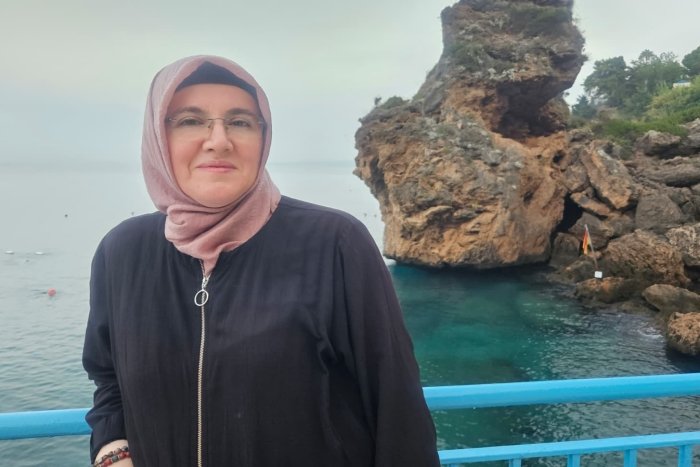
According to the TR724 news website, the account appears in a letter written by Asuman Birinci, a physics teacher held at Antalya L-Type Prison in southern Turkey, who described months of deteriorating health and what she called repeated failures by prison authorities to provide adequate medical care.
Birinci said blood tests taken shortly after she entered prison on May 29, 2024, showed severe anemia, with ferritin and hemoglobin levels already dangerously low. She wrote that she was initially given iron medication but that prescriptions were not renewed regularly despite repeated written requests.
“My blood values could not recover,” she wrote, adding that she experienced heavy menstrual bleeding, heart palpitations, ringing in her ears and severe fatigue while awaiting further treatment.
A new test conducted in January 2026 showed her condition had worsened significantly, she said.
Birinci said the prison doctor refused to prescribe vitamin D despite her concerns about limited sunlight and diet in prison and dismissed her requests for additional treatment.
“I didn’t put you in prison,” she quoted the doctor as saying.
She wrote that severe bleeding continued for about 20 days while she waited for hospital referrals to be carried out.
When she was eventually taken to a city hospital, Birinci said doctors reviewing her test results reacted with alarm and told her an emergency blood transfusion was needed.
“Didn’t you receive treatment after these results?” she quoted a doctor as asking after learning that she had not been hospitalized earlier.
According to Birinci, a prison officer told hospital staff the transfusion could not immediately proceed due to procedural requirements. She said she was later transferred between hospitals before receiving treatment.
Doctors later diagnosed uterine fibroids as the likely cause of the prolonged bleeding and recommended surgery, she wrote. Birinci said she declined the operation because she did not want to undergo surgery while being treated in custody, where she said she had been handcuffed during treatment and guarded by male gendarmes in her hospital room.
She wrote that she struggled to obtain food and drinking water during the hospital stay and was at one point hungry for hours before a guard brought her a small food package found in the ward.
“Being sick is hard,” she wrote in the letter to her husband. “But feeling devalued as a prisoner hurts even more.”
Human rights organizations including Amnesty International and Human Rights Watch have repeatedly criticized prison healthcare conditions in Turkey, warning that delays in treatment and restrictions on hospital transfers can put inmates with serious medical conditions at risk.
Birinci, who has been in prison for about 21 months, said the experience left her fearful of being sent back to the hospital again.
“I am praying not to have to go to the hospital again from prison,” she wrote.
Birinci is serving a six-year, three-month sentence over alleged ties to the Gülen movement. According to her husband, the charges stemmed from her employment at a Gülen-linked private tutoring center, enrolling her children in a Gülen-affiliated school and depositing money in the now-defunct Bank Asya, which authorities have also tied to the Gülen movement.
President Recep Tayyip Erdoğan has been targeting followers of the Gülen movement, inspired by the late Muslim cleric Fethullah Gülen, since corruption investigations in December 2013 implicated him as well as some members of his family and inner circle.
Dismissing the investigations as a Gülenist coup and a conspiracy against his government, Erdoğan began to target the movement’s members. He designated the movement as a terrorist organization in May 2016 and intensified the crackdown on it following an abortive putsch in July of the same year that he accused Gülen of masterminding. The movement strongly denies involvement in the coup attempt or any terrorist activity.