Turkey’s Supreme Court of Appeals has upheld a six-year, three-month sentence for a dismissed primary school teacher who has end-stage cancer and a 65 percent permanent disability rating, the TR724 news website reported.
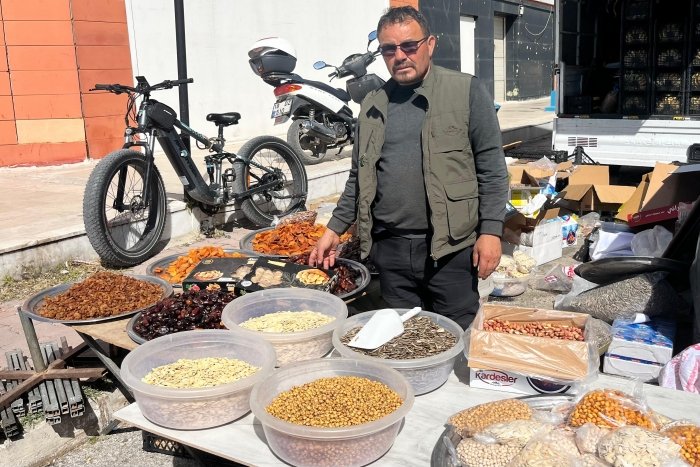
Arif Büyükgursak, who was removed from his teaching job without trial under sweeping government emergency decrees in the aftermath of a 2016 coup attempt and has since supported himself selling dried fruit and nuts at a street market, said he learned of the ruling on March 4 and wept with his son.
He holds a government-issued disability certificate rating him at 65 percent permanently disabled — 40 percent attributable to the cancer and 25 percent to his other conditions, which include chronic venous insufficiency causing persistent swelling in his right leg, diabetes, peripheral neuropathy and chronic prostatitis.
“My sentence was unfortunately upheld today despite my lymphoma, four documented illnesses and a 65 percent permanent disability report,” he said.
Turkey experienced a controversial military coup attempt on the night of July 15, 2016, which, according to many, was a false flag operation aimed at entrenching the authoritarian rule of President Recep Tayyip Erdoğan by rooting out dissidents and eliminating powerful actors such as the military in his desire for absolute power.
Büyükgursak, who had worked as a public school teacher for 16 years, most recently at a primary school in the Afyonkarahisar province of western Turkey, was dismissed under by a decree issued in September 2016 over alleged links to the Gülen movement.
Turkish President Erdoğan has targeted followers of the Gülen movement, inspired by the late Muslim cleric Fethullah Gülen, since corruption investigations in December 2013 implicated him as well as some members of his family and inner circle. He dismissed the probes as a Gülenist conspiracy and later designated the movement a terrorist organization in May 2016, intensifying a sweeping crackdown after the failed coup in July of the same year that he accused Gülen of orchestrating. The movement denies involvement in the coup attempt or any terrorist activity
Büyükgursak was arrested in June 2017 and spent six months in pretrial detention before being released on grounds of health.
He was convicted in 2021 by the Antalya 10th High Criminal Court on two grounds: a charge that he used the ByLock messaging app and the testimony of a single witness identified in court documents as Ahmet Y.
Turkish authorities have considered ByLock to be a secret tool of communication among supporters of the Gülen movement since the 2016 coup attempt despite a lack of evidence that ByLock messages were related to the abortive putsch.
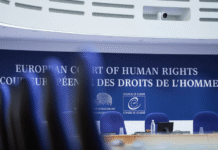
Although the European Court of Human Rights (ECtHR) has in many cases made clear that use of the ByLock messaging app does not constitute a criminal offense, detentions and arrests of individuals continue in Turkey for their alleged use of the ByLock application.
Büyükgursak denied using ByLock and, in a supplementary appeal filed with the Supreme Court of Appeals on December 26, 2025, alleged that the witness had fabricated his testimony to avoid prosecution himself.
In his appeal Büyükgursak argued that his right to a fair trial had been violated because he was never confronted by his accuser in court, that other individuals named in the witness testimony were never summoned to testify and that no concrete evidence was produced independently verifying the ByLock allegation.
He said the stress of the legal proceedings had worsened his condition. “My vital functions have weakened,” he wrote in the December appeal. “The severity of my illness has increased due to the distress and anxiety caused by living through this.”
Büyükgursak was first diagnosed with B-cell lymphoma, an aggressive form of blood cancer, in 2009 and underwent six months of chemotherapy at Ankara University’s medical faculty. The cancer recurred during his time spent under arrest in 2017, prompting his transfer to Sincan Prison in Ankara to remain close to the hospital, and his subsequent release.
Following the supreme appeals court ruling, Büyükgursak said he planned to file an immediate motion for reconsideration. If the motion fails, he faces imprisonment despite his medical condition. Turkish law permits courts to defer sentences on health grounds, but such relief is not automatic and must be applied for separately.
He has one son. His marriage ended during the years of legal proceedings.
Following the coup attempt, the Turkish government declared a state of emergency (OHAL) that remained in effect until July 19, 2018. During this period, the government carried out a purge of state institutions under the pretext of an anti-coup fight by issuing a number of government decrees, known as KHKs. Over 130,000 public servants, including 4,156 judges and prosecutors, as well as more than 24,000 members of the armed forces were summarily removed from their jobs for alleged membership in or relationships with “terrorist organizations” by emergency decree-laws subject to neither judicial nor parliamentary scrutiny.