A Turkish opposition lawmaker on Monday called on parliament to use ongoing peace talks with Kurdish militants as an opportunity to redress unlawful mass dismissals after a failed coup in 2016, demanding that victims of post-coup emergency decrees receive justice along with any legal changes made for former militants.
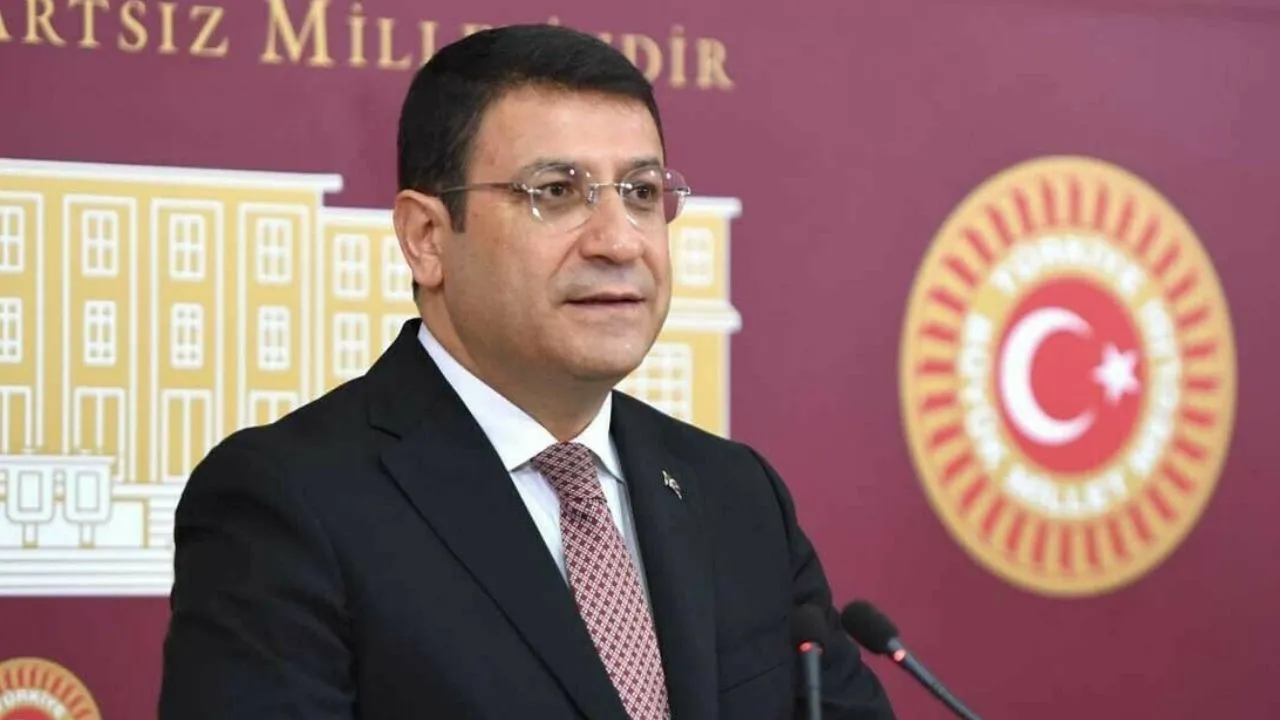
İdris Şahin, an Ankara lawmaker for the opposition Democracy and Progress Party (DEVA) and a practicing lawyer, addressed a parliamentary commission currently drafting legislation tied to the government’s peace initiative with the outlawed Kurdistan Workers’ Party (PKK). In a statement posted on X, Şahin said any legal reforms the commission produces must apply equally to all victims of rights violations, including the tens of thousands of public employees dismissed without due process after the failed coup in July 2016.
“The work being carried out in parliament is a test of conscience and the rule of law,” Şahin said. “All legal arrangements must comply with the constitutional principle of equality. You cannot build an atmosphere of peace and stability in this country while leaving new victims behind.”
In the aftermath of the July 15, 2016, coup attempt, the government of President Recep Tayyip Erdoğan declared a state of emergency that continued for two years, during which the government issued 32 emergency decrees, bypassing parliament entirely.
The decrees allowed the government to dismiss public employees by name, with no individual investigation, no requirement for evidence and no right of appeal. More than 130,000 civil servants, including judges, prosecutors, teachers, academics, police officers and health workers as well as members of the military, were removed from their jobs, many with a lifetime ban on government employment. Tens of thousands more were arrested.
The decrees mostly targeted real or perceived members of faith-based Gülen movement, inspired by the late Turkish Islamic scholar Fethullah Gülen. President Erdoğan has been targeting followers of the Gülen movement since the corruption investigations of December 17-25, 2013, which implicated then-prime minister Erdoğan, his family members and inner circle.
Erdoğan dismissed the investigations as a Gülenist coup and conspiracy against his government. After targeting alleged members of the Gülen movement for two years, Erdoğan designated the movement as a terrorist organization in May 2016. He intensified the crackdown on the movement following the abortive putsch in July 2016 that he accused Gülen of masterminding. The movement strongly denies involvement in the coup attempt or any terrorist activity.
The US had earlier rejected Turkey’s request for Gülen’s extradition, saying Ankara did not provide any evidence linking him to the coup bid.
Human Rights Watch, Amnesty International and the Council of Europe all criticized the measures as sweeping and arbitrary, with no individualized evidence required for dismissal.
The UN human rights office said the decrees “broadly refer to link or connection with terrorist organisations without describing the nature of such links,” leaving authorities broad discretion to purge workers without due process.
While a government-established review commission later reinstated some workers, rights groups say it processed cases slowly, rejected the vast majority and provided no path to compensation. People cleared of criminal charges still cannot return to their jobs.
“Those who were acquitted still cannot return to their positions,” Şahin said. “Decisions of non-prosecution produce no practical result. People are condemned to a civil death that will last a lifetime.”
Şahin’s call came as a 48-member cross-party parliamentary commission called the Commission on National Solidarity, Brotherhood and Democracy continues drafting legislation related to Turkey’s ongoing efforts for peace with the PKK, the Kurdish militant group that took up arms against the Turkish state in 1984 and whose insurgency has cost more than 50,000 lives. Turkey and its Western allies designate the PKK as a terrorist organization.
The PKK announced it will lay down its arms and disband in May after its imprisoned founder, Abdullah Öcalan, called on his followers to abandon their armed campaign. Öcalan, 76, has been imprisoned on İmralı Island in the Marmara Sea since 1999. The commission is now working on legislation that would set the legal terms for the PKK’s political integration, the return of thousands of fighters from hiding in northern Iraq and potentially a conditional release for Öcalan.
The commission is backed by Erdoğan’s ruling Justice and Development Party (AKP) and its key ally, the far-right Nationalist Movement Party (MHP), whose leader, Devlet Bahçeli, launched the peace initiative in October 2024 when he unexpectedly invited Öcalan to address parliament and called for his release from prison. The pro-Kurdish Peoples’ Equality and Democracy Party (DEM Party) has also actively participated. The main opposition Republican People’s Party (CHP) has attended commission sessions but refused to join a parliamentary delegation that visited Öcalan on İmralı, citing a lack of transparency.
Şahin, whose DEVA Party is led by former economy minister Ali Babacan, a one-time AKP bigwig who broke with Erdoğan, outlined four concrete demands for the commission.
First, he said all consequences of the emergency decrees must be re-examined under universal legal principles. Second, decisions not to prosecute and acquittals in court must automatically result in reinstatement to public service. Third, people who believe they were wrongfully convicted must be given the right to a new trial before an independent and impartial court. Fourth, those who suffered losses must receive both material and moral compensation.
“Justice is not a matter of preference. It is a requirement of being a state,” Şahin said. “Social peace cannot be achieved without adherence to the rule of law.”
Şahin said the human cost has extended well beyond the dismissed individuals themselves.
“Condemnation without due process, wholesale dismissals without evidence and other practices that violate the law [have marked this process]. After more than nine years, it has left many jobless and poor, ruined reputations and fractured families,” he said.
The post-coup dismissals have spawned a civil society movement in Turkey. The Platform for Decree Victims, a grouping of dismissed public employees, has held regular protests for years, calling on successive parliaments to pass a comprehensive rehabilitation law. Its members include teachers, doctors, academics and soldiers who say they lost their careers, livelihoods and social standing as a result of baseless allegations.