
A Turkish prosecutor on Thursday sought up to 20 years in prison for lawyer and pro-Kurdish activist Nurcan Kaya on terrorism-related charges, the Medyascope news website reported.
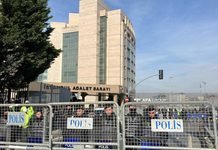
At the second hearing of her trial, the Istanbul 13th High Criminal Court upheld Kaya’s travel ban as proceedings continue over her alleged links to the Peoples’ Democratic Congress (HDK). The next hearing is scheduled for February 24, 2026.
According to the indictment, prosecutors accuse Kaya of “membership in a terrorist organization” and of violating Turkey’s law on preventing the financing of terrorism.
Kaya was detained on February 18 as part of a wider investigation into the HDK, an umbrella organization for left-wing and pro-Kurdish groups. The investigation also led to the detention of 52 others, including politicians, journalists and artists, across 10 provinces. She was put under house arrest on February 21 and released under judicial supervision on May 15.
Prosecutors accuse the HDK of operating as a “legal front organization” for the outlawed Kurdistan Workers’ Party (PKK) and operating as an “alternative assembly” to the Turkish Parliament, alleging that it follows the orders of PKK executives. They also cited a 2019 ruling by Turkey’s Supreme Court of Appeals that designated the Democratic Society Congress (DTK), an entity closely linked to the HDK, as a terrorist organization.
Founded in the late 1970s by Abdullah Öcalan, the PKK launched an armed insurgency in 1984, sparking a conflict that has claimed more than 40,000 lives. The group is designated as a terrorist organization by Turkey and its Western allies, including the European Union and the United States.
In May the PKK announced that it would lay down its arms to pursue a democratic struggle to defend the rights of the Kurdish minority, in line with a call by Öcalan. The Turkish Parliament in August established a special parliamentary commission to oversee the peace efforts.
Kaya was previously tried in 2021 and received a suspended 15-month sentence for allegedly “disseminating the propaganda of a terrorist organization” through social media posts. In her tweets Kaya criticized Turkish military operations against the PKK in southeastern Turkey and against Kurdish militant groups in northern Syria.
Turkey’s use of counterterrorism laws against human rights defenders, lawyers and opposition figures has attracted sustained criticism from international bodies including the United Nations, the European Union and the Council of Europe, which have urged Ankara to end violations of international human rights standards and restore key legal safeguards.