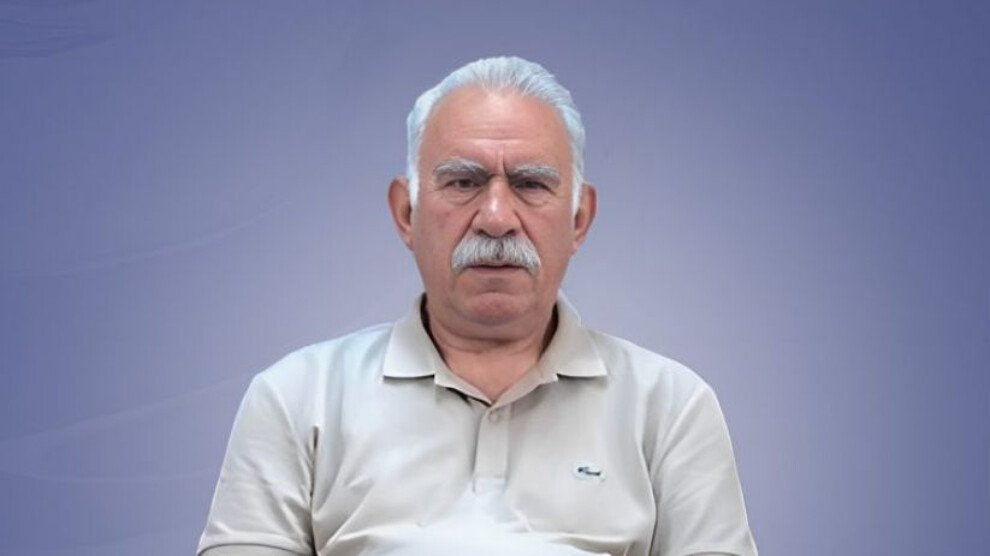
The jailed leader of the outlawed Kurdistan Workers’ Party (PKK) has warned that Ankara’s renewed peace efforts with the group “must succeed,” saying that failure would activate “coup mechanics” that in Turkey evoke not only military takeovers but also crisis-era emergency rule and broad crackdowns that could target many groups in the country, according to a lawmaker who met with him on a prison island last week, Turkish Minute reported.
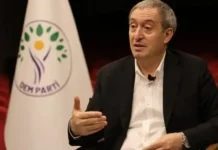
The account came from MP Gülistan Kılıç Koçyiğit, a senior figure from the pro-Kurdish Peoples’ Equality and Democracy Party (DEM Party) and a member of a special parliamentary commission that visited Abdullah Öcalan in his cell on İmralı Island in the Sea of Marmara.
Öcalan is the founder of the PKK, a militant group that took up arms against the Turkish state in 1984. Turkey and its Western allies have designated the PKK as a terrorist organization. The conflict has killed tens of thousands of people over four decades.
Koçyiğit said Öcalan backed the new process that culminated in PKK’s move to lay down arms and disband its structures but warned of serious consequences if the talks break down.
The jailed leader referred to the collapse of an earlier peace process between 2013 and 2015 and claimed that “forces against a solution” had sabotaged those talks. He warned that similar dynamics could reappear if the current effort stalls.
Visit by cross-party delegation
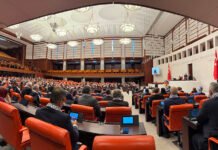
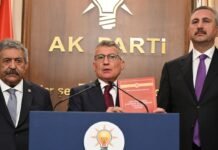
The recent meeting on İmralı brought together three lawmakers, one each from the ruling Justice and Development Party (AKP), its nationalist ally the Nationalist Movement Party (MHP) and the DEM Party. They traveled under the authority of the National Solidarity, Brotherhood and Democracy Commission, a 51 member body created by parliament to manage political steps after PKK’s eventual disbandment.
The main opposition Republican People’s Party (CHP), the nationalist İYİ (Good) Party and several smaller parties refused to join the delegation, though some continue to sit on the commission.
Koçyiğit said the meeting lasted several hours and that the National Intelligence Organization, (MİT) recorded the session and produced a full written transcript. She said the three MPs signed the minutes and delivered them to the speaker of parliament.
“We believe those minutes should be shared with the commission as they are, from start to finish,” she said. “In our view they should also be open to the press. The whole public should know what was said so there is no room for speculation.”
She added that the DEM Party wants “Turkey’s peoples” to see Öcalan’s views on a democratic solution to the Kurdish question, arguing that publication would undercut claims and rumors about his position.
Koçyiğit said Öcalan’s main message was that the state and Kurdish actors now have an understanding to pursue an end to the armed campaign and that both sides must protect it.
According to her account, Öcalan said regional and international players who oppose peace could move to block progress, citing the sudden death in 1993 of then-president Turgut Özal, who had opened limited contacts with Kurdish groups, as an example he views with suspicion.
Focus on Syria
Koçyiğit said much of the discussion focused on the history of Turkish Kurdish relations and on the future of Kurdish-held areas in neighboring Syria.
Koçyiğit said Öcalan spoke about the Kurdish-led Syrian Democratic Forces (SDF), which works with the United States against the Islamic State group. He pointed to a March 10 agreement between the SDF leadership and the Syrian government and said that deal should be carried out, including provisions to fold fighters into state armed forces and local security units.
According to Koçyiğit, Öcalan argued that local democracy and self organization through councils and civil society were essential for lasting stability in Syria and for communities such as Kurds, Turkmens and Circassians.
She said he expressed confidence that Kurdish forces in Syria would listen to Öcalan if conditions allowed him to communicate with them but added that he stressed the need for a proper “dialogue ground” and legal arrangements first.
Call for legal changes
Koçyiğit said Öcalan framed the PKK’s disbandment as part of a broader understanding with the state. He reportedly described the shift from armed conflict to negotiations by saying that “we carried a Kurdish revolt from the gallows to the table, and we will conclude it with peace.”
He also pointed to the absence of casualties since a ceasefire that he dates to March 1 and said he welcomed a ceremony on July 11 when PKK fighters symbolically burned weapons, as well as a later pullout of PKK units from Turkey.
At the same time, Koçyiğit cited him as complaining that those who gave up their arms or left the country had not been able to return to Turkey due to the lack of legal safeguards.
Öcalan’s warning came before senior PKK figures signaled on Saturday that the group will not take further steps unless Ankara moves next.
In an interview with Agence France-Presse in northern Iraq, PKK executive Amed Malazgirt said the organization has carried out all the measures Öcalan called for, including a ceasefire, a halt to attacks and the withdrawal of fighters from Turkey into northern Iraq, and will now wait for the Turkish state to act.
He said the PKK wants Öcalan’s release and constitutional recognition of Kurds in Turkey and added that the group is ready to pursue a “democratic struggle” if space for legal politics opens inside the country.
Another senior commander, Serda Mazlum Gabar, told AFP that PKK members see their own freedom as tied to Öcalan’s and that “the path to freedom passes through the freedom of our leadership,” while also insisting that the guerrilla movement will not simply disappear but will have to “restructure itself” and “continue the struggle with different methods.”