
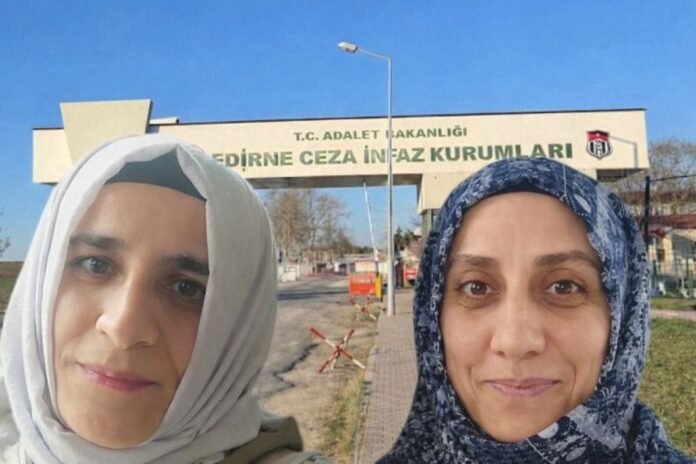
Two pregnant women imprisoned in Turkey over alleged links to the Gülen movement have been subjected to harsh treatment during hospital visits, including being denied food for hours, their families said after visiting them at a prison in the country’s northwest.
According to the TR724 news website, the women, who are seven and eight months pregnant, are held at Edirne L-Type Prison near Turkey’s border with Greece. Relatives said they are taken to hospitals for routine pregnancy checkups early in the morning and kept waiting until evening without being given food while medical procedures for other detainees are completed.
According to the Law on the Execution of Sentences and Security Measures, the enforcement of prison sentences for women who are pregnant or within six months of giving birth is postponed. If the baby dies or is placed in the care of someone other than the mother, the sentence is deferred until two months after birth. This provision is intended to protect the mother’s health during pregnancy and after delivery as well as the development of the baby.
Family members said being kept at hospitals for hours without food during medical visits has worsened the women’s health and left them under severe physical and psychological strain.
One of the inmates, Nazife Karakoç, is eight months pregnant and has developed serious medical complications, according to her family. Relatives said doctors recently detected fluid buildup in the fetus’s lungs. They also said Karakoç suffers from thyroid disease and recurring high blood pressure that has worsened during detention.
The second woman, Leyla Arslan, who is seven months pregnant and held in the same prison ward, faces similar health concerns, her family said. Relatives said Arslan experiences frequent spikes in blood pressure and has been prescribed medication several times a day since becoming pregnant.
Relatives of both women said prison meals are unsuitable for pregnancy, describing them as excessively salty and contributing to blood pressure problems.
Karakoç was detained with her husband, Nihat Karakoç, on October 17 while trying to cross into Greece to seek asylum. They were arrested by a court the next day.
Karakoç had previously been arrested in February 2022 after being sentenced to prison for over six years and served four months before being released pending appeal. Her sentence was based on multiple charges, including working at a Gülen linked schools, using the ByLock messaging app, staying at a hotel allegedly affiliated with the Gülen movement and taking part in religious gatherings. Her case is currently under review by the Supreme Court of Appeals.
Arslan was arrested on August 4, 2025, in Edirne shortly after trying to cross into Greece to seek asylum.
Arslan had been sentenced to eight years, nine months in prison over alleged links to the faith-based Gülen movement and was waiting for the Supreme Court of Appeals to review her case.
Turkish President Recep Tayyip Erdoğan has been targeting followers of the Gülen movement, inspired by the late Muslim cleric Fethullah Gülen, since corruption investigations revealed in 2013 implicated then-prime minister Erdoğan as well as some of his family members and inner circle.
Dismissing the investigations as a Gülenist coup and a conspiracy against his government, Erdoğan began to target the movement’s members. He designated the movement as a terrorist organization in May 2016 and intensified the crackdown on it following an abortive putsch in July of the same year that he accused Gülen of masterminding. The movement strongly denies involvement in the coup attempt or any terrorist activity.
Although the European Court of Human Rights has in many cases made clear that use of the ByLock messaging app does not constitute a criminal offense, detentions and arrests of individuals continue in Turkey for their alleged use of the ByLock application, an encrypted messaging app that was available on Apple’s App Store and Google Play.
Since the coup attempt, the Turkish government has accepted such activities as having an account at Bank Asya, one of Turkey’s largest commercial banks at the time; using the ByLock messaging application; and subscribing to the Zaman daily or other publications affiliated with members of the movement as benchmarks for identifying and arresting alleged followers of the Gülen movement on charges of membership in a terrorist organization.