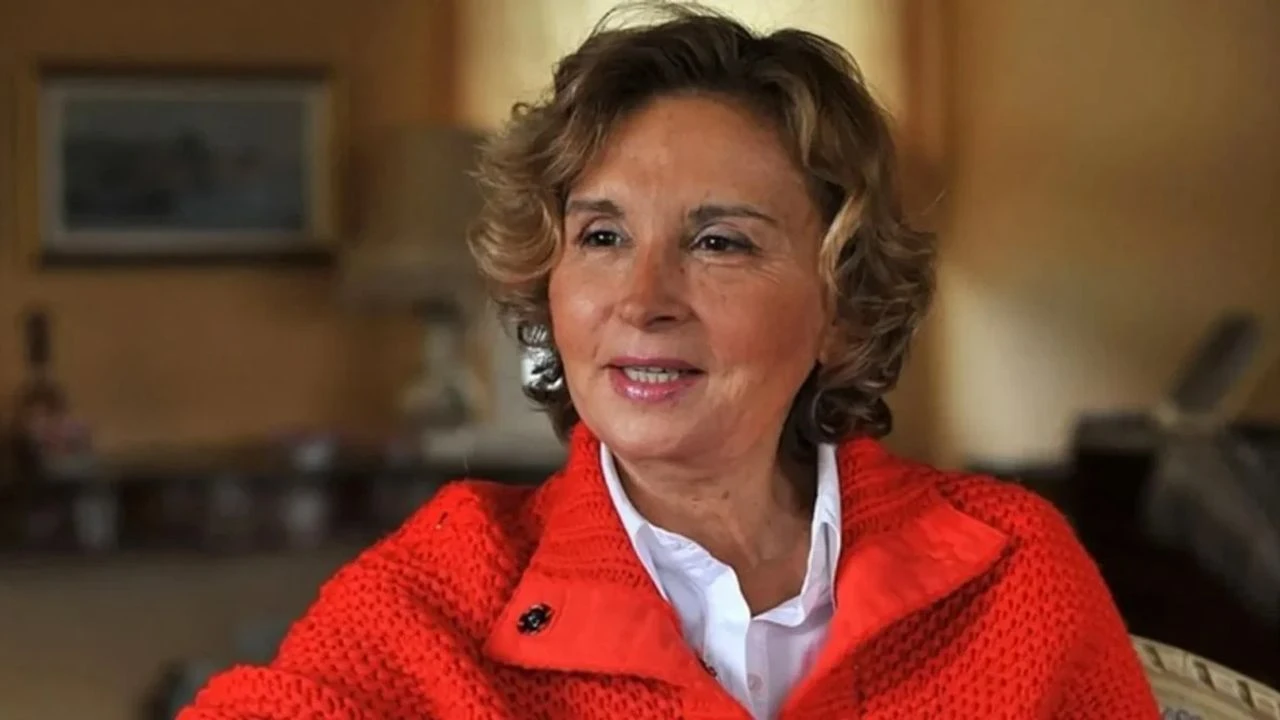
Veteran Turkish journalist Nazlı Ilıcak, who was jailed on terrorism-related charges in a mass crackdown following a failed coup in Turkey in 2016, has said she “hit a wall” that night, reflecting on years of political misjudgment, her prison experience and Turkey’s democratic decline, Turkish Minute reported.
In a rare interview with the Medyascope news website, Ilıcak, 81, said her detention marked a turning point in her political perspective, forcing her to reassess her past support for the ruling Justice and Development Party (AKP) and her assumptions about the role of religious movements and power in Turkey.
Ilıcak said she had supported Recep Tayyip Erdoğan and the AKP during the party’s early years in power, citing what she described as discriminatory treatment toward religious conservatives and efforts to politically sideline Erdoğan, including his imprisonment and political ban.
In 1998 Erdoğan, who was the mayor of İstanbul at the time, was convicted of inciting religious hatred and banned from politics after reciting a poem that compared mosques to barracks and the faithful to an army. He was released from prison in 1999 and established the AKP, abandoning openly Islamist policies.
She recalled being impressed by what she perceived as Erdoğan’s personal modesty and said the pressure he faced in the early 2000s helped create a broad sense of victimhood that later carried him to power.
“I did support the AKP at the beginning, and I voted for it,” Ilıcak said. “But I don’t approve of its practices today. I can’t, because I have always opposed injustice.”
Prison experience and criticism of pretrial detention
Ilıcak, who has been jailed multiple times over her journalistic work and spent more than three years in prison after her 2016 arrest following the July 15 coup attempt, said her incarceration fundamentally changed her perspective on the justice system.
“As someone who has been in prison, I defend the principle that people should be tried without detention,” she said, stressing that pretrial detention should remain an exception rather than the rule.
Commenting on the recent imprisonment of main opposition figures, including İstanbul Mayor Ekrem İmamoğlu, Ilıcak warned that policies that turn political rivals into victims often backfire, noting that Erdoğan himself had once benefited politically from being perceived as wronged.
The main opposition Republican People’s Party (CHP) has been under a heavy crackdown for more than a year that saw the arrest of at least 15 mayors and hundreds of party officials including İmamoğlu.
İmamoğlu, the most powerful political rival of President Erdoğan who was named his party’s presidential candidate in March, was arrested in the same month as part of a corruption investigation targeting the İstanbul Municipality.
Rethinking religious movements after July 15
Addressing her past views on religious communities, Ilıcak acknowledged a deep misjudgment. “I was wrong about religious people,” she said, adding that she had long believed religious identity would act as a safeguard against wrongdoing.
She pointed to periods of judicial and military tutelage, including restrictions on religious groups and efforts to block Erdoğan’s political career, saying these developments had reinforced her belief that she needed to oppose such practices and actively challenge what she saw as injustice.
“But I now see that we have not reached a better point. It means I treated a mistaken reference as a guarantee for Turkey’s future,” she added.
After the coup attempt, Ilıcak was prosecuted due to her work at media outlets allegedly linked to the faith-based Gülen movement, accused by the government of masterminding the coup attempt.
The Gülen movement, inspired by Islamic scholar Fethullah Gülen who lived in exile in the United States until his death in October 2024, strongly denies any involvement in the failed putsch.
Erdoğan’s government labeled the group as a “terrorist organization” in May 2016, before the failed coup took place, a designation not recognized by other governments and major international bodies, including the United States and the European Union.
Erdoğan intensified the crackdown on the movement following the coup attempt. The movement strongly denies involvement in the abortive putsch or any terrorist activity.
According to the latest figures from the Justice Ministry, more than 126,000 people have been convicted of alleged links to the movement since 2016, with 11,085 still in prison.
In addition to the thousands who were jailed, scores of other Gülen movement followers had to flee Turkey to avoid the government crackdown.
Ilıcak said she now believes a clandestine structure did exist within the movement but criticized the scope of post-coup prosecutions, arguing that operations went far beyond those directly responsible and created widespread injustice.
“Had only the top leadership and the so-called ‘confidential structure’ been punished, I would not object,” she said. “But the operations were expanded far too broadly.”
Ilıcak said that even groups considered part of the opposition showed little mercy toward people accused of ties to the Gülen movement, with elderly and ailing people, mothers with young children and pregnant women also targeted in the government-led crackdown on the group.
She said this kind of exclusion still persists and that the opposition remains focused mainly on injustices against people close to its worldview.
In the end, she said, the climate of injustice eventually turned on those who once believed themselves immune, as more people were sent to prison.
From confidence to caution
Reflecting on her early career, Ilıcak said she was fearless and outspoken when she began journalism in 1974, a mindset that lasted for decades.
“That attitude carried me straight into the wall on July 15, 2016,” she said. “Today I am much more cautious. If I speak once, I stay silent three times.”
Still, she urged younger journalists not to imitate her restraint, encouraging them instead to remain outspoken in defense of democracy.
Ilıcak was released under judicial supervision in 2019.
In early 2024 she was again released from prison on probation after serving part of a sentence related to libel charges stemming from an article written in 2016. Her imprisonment despite her advanced age drew criticism from rights groups and press freedom advocates.
Ilıcak became critical of the AKP government, particularly after the corruption investigations of December 2013, in which the close circle of then-prime minister and current president Erdoğan was implicated, and has been vocal in her views despite intimidation.
Her long career as a journalist notwithstanding, Ilıcak entered politics from the ranks of the Virtue Party (FP) and served in parliament for one term with politicians who established the AKP after the closure of the FP.