Far-right Nationalist Movement Party (MHP) leader Devlet Bahçeli warned Monday that attempts to alter Turkey’s founding principles or its unitary state structure amount to “treason,” in remarks that analysts read as a message aimed at his ally, President Recep Tayyip Erdoğan, as his ruling party weighs steps tied to a peace with Kurdish militants and a possible new constitution, Turkish Minute reported.
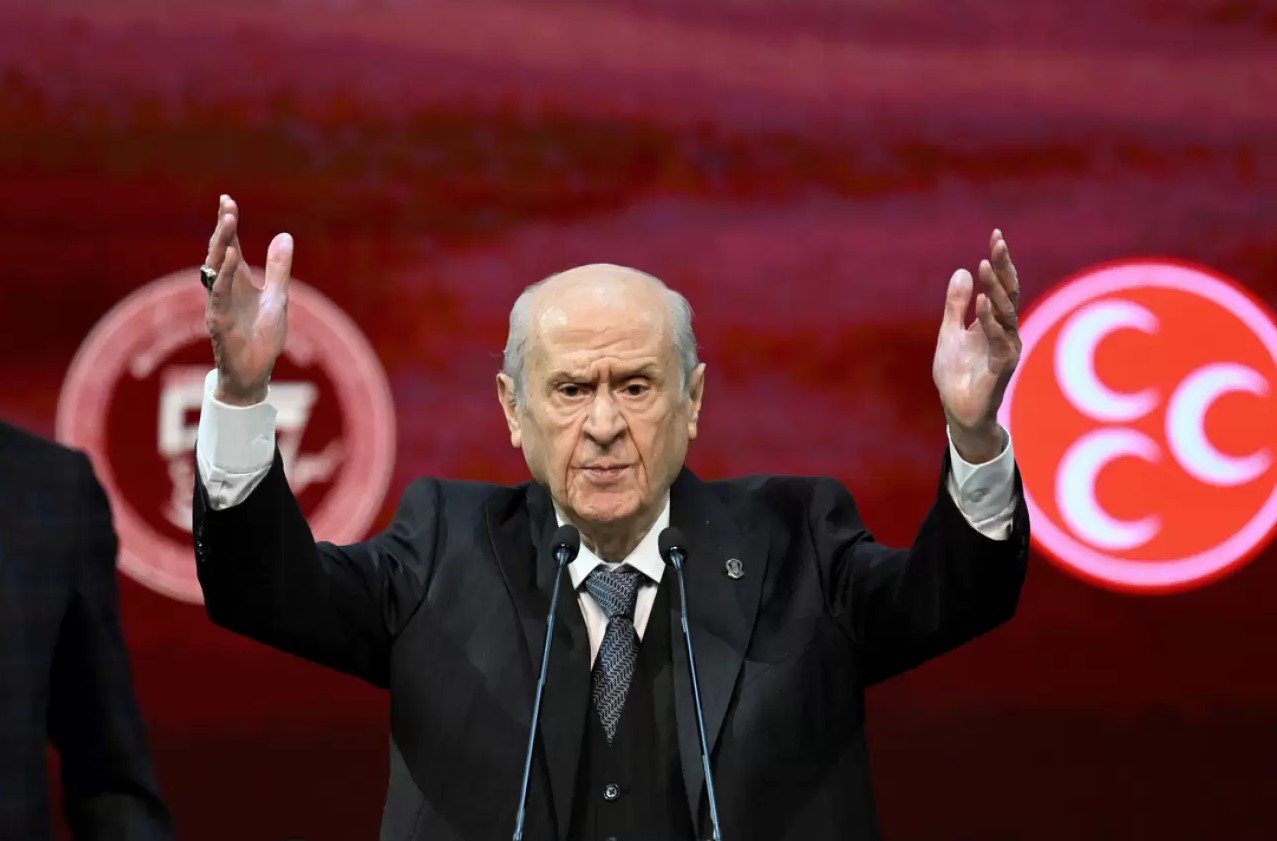
Speaking at an event in Ankara marking the 57th anniversary of the MHP, Bahçeli said opening “the founding principles and structure of the Republic” to debate and attempting to “destroy them based on ethnic differences” would undermine the state’s existence. “This is also called treason,” he said.
Bahçeli, whose MHP is Erdoğan’s ruling Justice and Development Party’s (AKP) main parliamentary ally and a part of pro-Erdoğan electoral alliance called People’s Alliance, framed Ankara as a symbol of Turkey’s unitary structure, pointing to the founding year of the republic in 1923.
Even though he did not name Erdoğan or the AKP, Bahçeli’s language echoed Turkey’s long-running political red lines around the first articles of the constitution, which define the state as secular, unitary and name Ankara as the capital, provisions widely treated in Turkish politics as off-limits for change.
In the same speech Bahçeli tried to draw a distinction between ethnic nationalism and citizenship-based civic nationalism, arguing that “any form of racist nationalism based on blood ties and ancestry” is contrary to Turkish nationalism. He said the Turkish nation would carry its “victorious past” into the future “with the Turk and the Kurd,” presenting that unity as a duty to be fulfilled “even at the cost of our lives.”
Bahçeli also used the anniversary address to attack political figures who have left his party or shifted alliances, calling them “political converts” and deriding what he described as opportunism among self-described nationalists.
The remarks came as Turkey’s ruling camp tries to maintain their nationalist base while exploring steps that could lower tensions with Kurdish political actors and address a conflict that has killed tens of thousands since the 1980s.
The Kurdistan Workers’ Party (PKK), which is designated a terrorist organization by Turkey and its Western allies, has waged an insurgency since 1984. A previous peace initiative collapsed in 2015. In early 2025 the PKK declared a ceasefire after a call by its imprisoned leader, Abdullah Öcalan, for the group to lay down arms and disband, steps that would have major implications for domestic politics and for Kurdish armed groups in neighboring Syria and Iraq.
At the same time Erdoğan has repeatedly signaled interest over the years in replacing Turkey’s 1982 constitution, a document drafted after a military coup. The politics of any rewrite are sensitive because Turkish nationalists have long opposed constitutional amendments that could alter how citizenship, language and the unitary state are defined, areas closely tied to Kurdish demands for greater cultural and political recognition.
Some commentators have argued that winning support from the pro-Kurdish Peoples’ Equality and Democracy Party (DEM Party) could become relevant in any constitutional push that requires votes beyond the AKP-MHP bloc, even as the DEM Party operates under sustained legal and political pressure.
Erdoğan, who has governed Turkey for more than two decades, sent Bahçeli an arrangement of 57 roses shaped as the Turkish flag to mark the party’s anniversary. Bahçeli publicly thanked Erdoğan for the gesture during the program at a venue in Ankara.