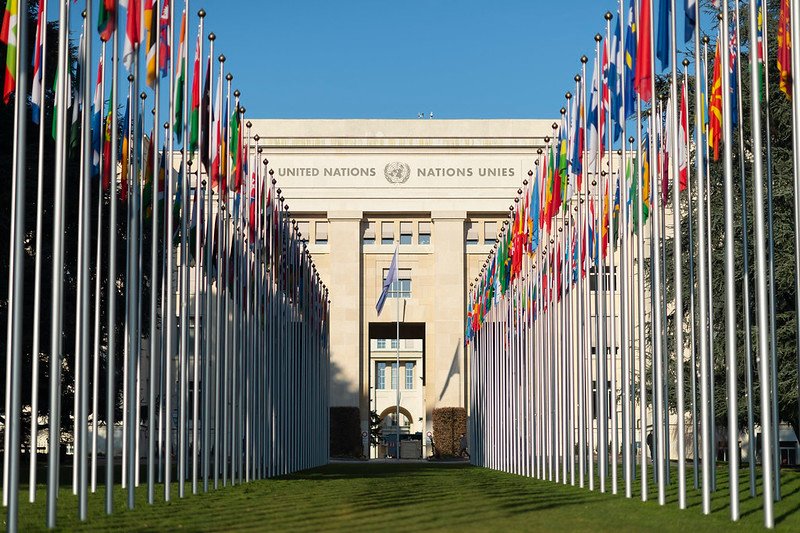
United Nations special rapporteurs have accused Turkish authorities of using criminal proceedings and an association closure case to harass an İzmir-based LGBTI+ group over social media posts, describing the action as part of a broader crackdown on LGBTI+ rights defenders.
In a letter dated February 11 and made public on Monday, the rapporteurs said the prosecution of the Young LGBTI+ Association and efforts to shut it down appeared to rely on the group’s legitimate advocacy rather than any genuine violation.
The letter was signed by Mary Lawlor, the UN special rapporteur on human rights defenders; Irene Khan, the special rapporteur on freedom of opinion and expression; and Gina Romero, the special rapporteur on freedom of peaceful assembly and of association.
The case concerns 11 board members of the İzmir-based Young LGBTI+ Association, who are being tried for alleged violations of Turkey’s Law on Associations over five illustrations shared on social media between 2019 and 2022 that were deemed “obscene.” The first hearing took place on April 8, with the next hearing scheduled for October 14.
In a separate case an İzmir court ordered the association’s closure on December 11, 2025. The group has appealed the decision.
The rapporteurs said four of the five illustrations cited in the case had already been cleared in a previous audit, suggesting that the material was deliberately reused as a pretext to target the association over its broader advocacy work.
Referring to Article 19 of the International Covenant on Civil and Political Rights (ICCPR), they warned that freedom of expression includes the right to hold opinions without interference. Any restrictions, they said, must be strictly necessary and the least intrusive means available.
They also raised concerns about due process violations. They cited alleged involvement of the Governor’s Office, failure to notify the association’s lawyers of the first hearing and repeated changes of judges.
The rapporteurs urged Turkish authorities to present a legal basis for both the dissolution decision and the criminal case. They also called on authorities to ensure that human rights defenders can operate freely and without intimidation or harassment.
LGBTQ+ organizations have operated in Turkey since the 1990s, and the country was once seen as relatively open compared to others in the region. Istanbul hosted large Pride marches for years, drawing thousands of participants, before authorities began banning them in the mid-2010s.
Rights groups say restrictions have intensified in recent years, affecting both public events and civil society organizations. The report said administrative measures, including the closure of associations and the blocking of online platforms, have accompanied legal action.
Turkish President Recep Tayyip Erdoğan and senior officials from the ruling Justice and Development Party (AKP) have in recent years framed LGBTQ+ identity as a threat to family values while promoting policies aimed at increasing birth rates and encouraging traditional family structures.
Turkey was ranked 47th out of 49 countries in the 2025 Rainbow Index, an annual assessment of LGBTQ+ rights, which placed it among the bottom five in Europe.