
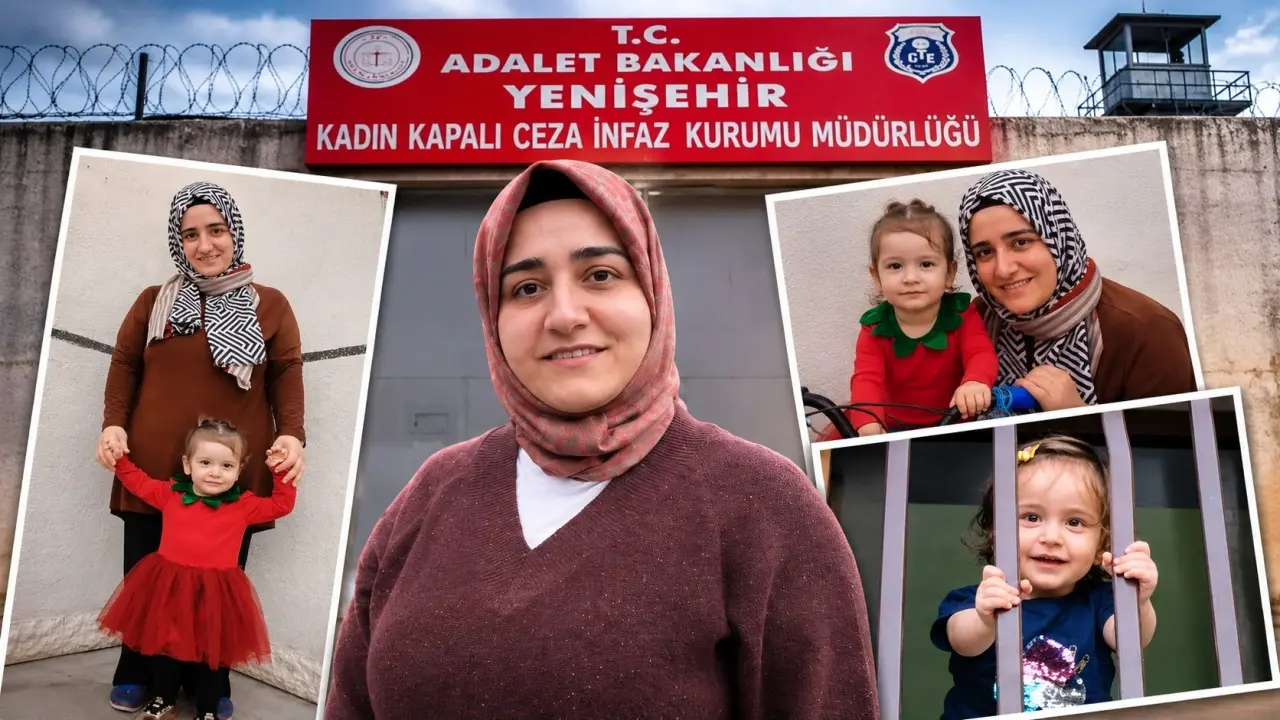
A Turkish woman jailed over alleged links to the Gülen movement says she was strip-searched and that her breastfeeding daughter was partly undressed by guards at a prison in 2020, the TR724 news website reported on Sunday.
Leyla Kaya said female officers at Yenişehir Women’s Prison in the western province of Bursa ordered her to remove all her clothing, including her headscarf, and instructed her to sit, stand and cough, while other guards removed her daughter Azra’s clothing down to her diaper. Kaya said the child cried and struggled as she was held by strangers during the search, which took place after Kaya was jailed pending trial in July 2020.
Turkish President Recep Tayyip Erdoğan has targeted the faith-based Gülen movement, inspired by Muslim cleric Fethullah Gülen, who died in 2024, since corruption investigations in December 2013 implicated him as well as some members of his family and inner circle. He dismissed the probes as a Gülenist conspiracy and designated the movement as a terrorist organization in May 2016, intensifying a sweeping crackdown after a coup attempt in July of the same year that he accused Gülen of orchestrating. The movement denies involvement in the attempted coup or any terrorist activity.
Kaya told journalist Sevinç Özarslan that she had kept the incident secret for years because she found it humiliating and difficult to discuss. She said she had previously told only her husband about the searches and decided to speak publicly because she wanted people to know what she and her daughter had experienced.
The Stockholm Center for Freedom reported at the time that Kaya was detained on July 9, 2020, and jailed the following day over alleged Gülen movement links. Her daughter, then about 18 months old, accompanied her to prison because she was still breastfeeding.
The case against Kaya involved a witness statement and her previous employment at a student dormitory affiliated with the movement. Kaya said investigators also questioned her about a Bank Asya account and alleged use of ByLock, an encrypted messaging application Turkish authorities associate with the movement. She denied committing any crime and said she was never allowed to confront the witness who testified against her.
Kaya also described poor conditions during the 15 days she and her daughter spent in quarantine cells amid the COVID-19 pandemic. She said they initially shared a single-person cell with another woman, lacked clean bedding and struggled to obtain drinking water and adequate facilities for bathing.
After their transfer to a communal prison ward, Kaya said her daughter received no separate food suitable for her age, leaving her dependent on food shared by other prisoners and continued breastfeeding.
Kaya said she was sentenced to six years, 10 months in prison on September 30, 2020, but the court ordered her release under house arrest with an electronic ankle monitor while her case was under appeal.
She said she remained under house arrest for approximately 18 months, until a regional appeals court upheld her conviction but lifted the restriction because of how long it had lasted. She was then able to leave her home while her case awaited a final decision from the Supreme Court of Appeals.
According to Kaya, the high appeals court upheld her conviction in July 2026, making the sentence final. Fearing renewed imprisonment and separation from her daughter, she said she and her family left Turkey for Germany.
Turkish prison regulations permit invasive searches under exceptional circumstances when there are reasonable grounds to suspect that prohibited items are being concealed. In a statement issued in December 2020, the Justice Ministry said such searches must respect prisoners’ dignity and privacy and should not leave them completely naked.
The United Nations Bangkok Rules, which establish international standards for the treatment of women prisoners, require prison personnel to respect the dignity of children accompanying imprisoned mothers during searches. They also state that such children must not be treated as prisoners.
Kaya’s allegations about the searches and prison conditions have not been independently corroborated. No case-specific response from prison authorities was available in the material reviewed.