
Thirty-six people, most of them university students, are still in pretrial detention three months after they were jailed in western Turkey over alleged links to the faith-based Gülen movement, with prosecutors yet to file an indictment, the TR724 news website reported.
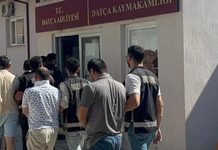
The 36 detainees were among 78 people taken into custody in an İzmir-based police operation on June 9 targeting individuals accused of links to the movement.
Turkish President Recep Tayyip Erdoğan has targeted followers of the Gülen movement, inspired by the late Muslim cleric Fethullah Gülen, since corruption investigations in December 2013 implicated him as well as some members of his family and inner circle. He dismissed the probes as a Gülenist conspiracy and designated the movement as a terrorist organization in May 2016, intensifying a sweeping crackdown after a coup attempt in July of the same year that he accused Gülen of orchestrating. The movement denies involvement in the coup attempt or any terrorist activity.
An İzmir court on September 1 ordered the continued detention of all 36, citing a strong suspicion that they had committed a crime as well as the possibility of flight or evidence tampering.
Defense lawyers said much of the evidence cited in the investigation concerned ordinary activities such as students sharing apartments and household expenses, meeting with friends, traveling and making funds transfers.
They said prosecutors had presented no concrete evidence showing that their clients were part of the movement’s hierarchy or had engaged in criminal activity.
Many of those jailed are university students between the ages of 19 and 24 studying subjects such as medicine, law, engineering and theology. Their lawyers said the detention has caused some to miss exams and could result in the loss of an academic year.
The Interior Ministry said after the June operation that 78 people had been detained in 12 provinces. Authorities accused the suspects of taking part in networks affiliated with the Gülen movement, providing financial support, attending gatherings abroad and helping cover rent or other living expenses for people allegedly connected to the group.
Forty-one suspects were subsequently jailed pending trial, while 23 were released under judicial supervision and 15 were released without restrictions. Five of those initially jailed have since been released, leaving 36 in custody.
Lawyers said some of the allegations against the students were based on renting apartments together, sharing utility bills, social contacts, travel to countries such as Bosnia and Herzegovina and North Macedonia, and funds transfers.
They also sought the release of several detainees on health or family grounds.
One student, identified only by the initials F.K., needs surgery for a corneal condition that her lawyers said could cause vision loss if treatment is delayed.
Another detainee, Meryem Yılmaz, has 22 screws in her spine and requires regular medical monitoring, according to her lawyers, who said there had been delays in transferring her from prison to a hospital.
According to the latest figures from the justice ministry, more than 127,000 people have been convicted for alleged links to the movement, and authorities had initiated legal proceedings against 720,338 people since 2016, with 10,485 still in prison. Investigations or trials involving another 83,404 are still ongoing.