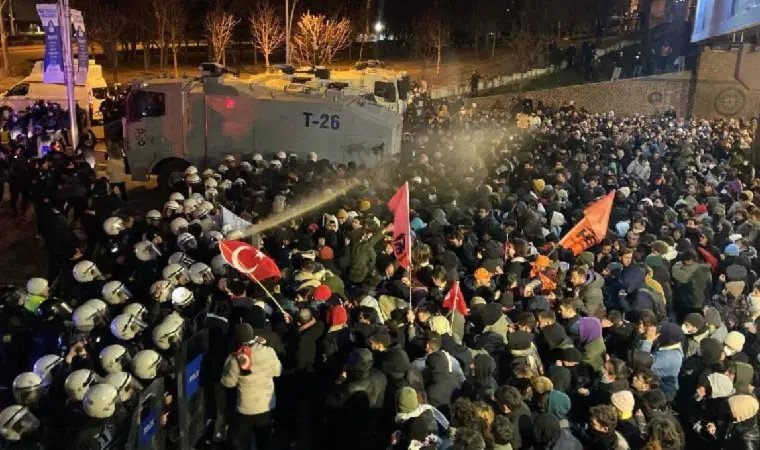
Turkish prosecutors have indicted 11 university students for taking part in protests following the detention of İstanbul Mayor Ekrem İmamoğlu in March 2025, the TR24 news website reported.
The students, all from Middle East Technical University (METU) in Ankara, face charges of “participating in unlawful meetings and marches” and “refusing to disperse despite warnings.”
The Ankara Chief Public Prosecutor’s Office alleged that the students organized unauthorized demonstrations at several locations in Ankara, including on the METU campus, in violation of a protest ban imposed by the provincial governor.
The protests were part of a nationwide wave of demonstrations triggered by İmamoğlu’s detention on March 19, 2025. Tensions reportedly arose on the campus when students refused police orders to disperse, leading to several detentions.
İmamoğlu, widely seen as President Recep Tayyip Erdoğan’s strongest political rival, was arrested in March 2025 on corruption charges that critics say are politically motivated and aimed at sidelining him ahead of the 2028 general election.
Nearly 2,000 people, including teenagers, students, lawyers, journalists, union leaders and human rights defenders, were detained nationwide during the large-scale protests that erupted after İmamoğlu’s detention. Approximately 300 of them were arrested.
The first hearing in the case is scheduled for June 9.
The METU Alumni Association criticized the prosecution in a statement, saying that “the exercise of constitutional rights can not be prevented through pressure, detentions, lawsuits or other legal measures.”
Turkey’s Law on Meetings and Demonstrations regulates the right to protest but has long been criticized for undermining it. While the Turkish Constitution guarantees peaceful assembly, the law gives governors and police sweeping authority to restrict or disperse gatherings.
Human rights groups say the law’s vague wording allows the government to criminalize otherwise lawful protests. It has increasingly been used against opposition politicians, students, journalists and activists. During the protests, authorities invoked the law to justify mass arrests and tight restrictions on rallies in Istanbul and other cities.