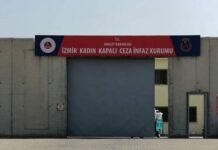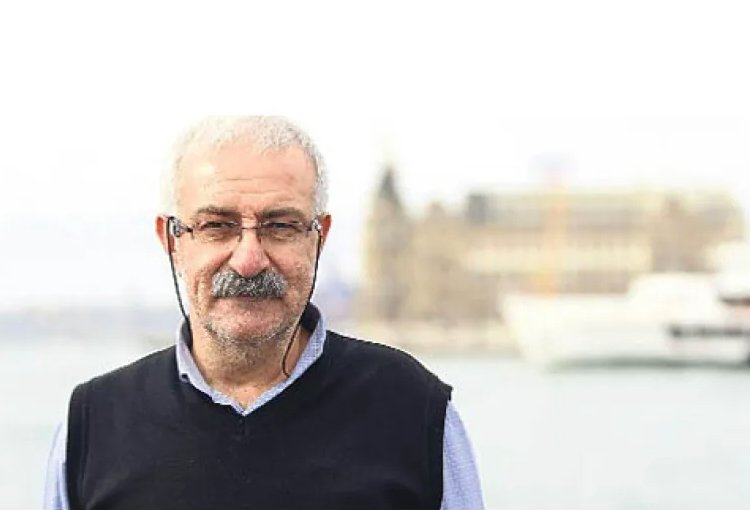
A Turkish prison board has denied a lawyer conditional release, saying he had not demonstrated good behavior, even though his good conduct assessment score was above the minimum required to qualify for release, the Medyascope news website reported.
Behiç Aşçı received a score of 44.06, above the minimum score of 40 required in the assessment. The prison’s Administration and Observation Board nevertheless concluded that he had not demonstrated good conduct and denied his release.
The board acknowledged that Aşcı had followed prison rules more closely over the past year and received no disciplinary penalties but said the change reflected his approaching conditional release date rather than a genuine improvement in his conduct. It also said the risk of him committing another offense or harming others was not low.
Aşcı, a lawyer with the People’s Law Office (HHB), was detained in September 2017 along with several other lawyers in an investigation in which prosecutors alleged that HHB was the lawyers’ network of the outlawed Revolutionary People’s Liberation Party/Front (DHKP-C), a group designated as a terrorist organization by Turkey.
Prosecutors cited the lawyers’ professional activities as evidence of alleged membership in the group, including representing educators Nuriye Gülmen and Semih Özakça, both of whom went on a hunger strike, and acting as defense lawyers in high-profile cases involving Berkin Elvan and Dilek Doğan, who were both killed in incidents involving the police.
The accusations also cited the lawyers’ participation in legal delegations investigating the Soma and Ermenek mining disasters, the Reyhanlı bombing and security operations in the predominantly Kurdish districts of Sur and Silvan in Diyarbakır province and Cizre in Şırnak province.
The İstanbul 37th High Criminal Court convicted Aşcı of membership in the DHKP-C in March 2019 and sentenced him to 12 years in prison. The Supreme Court of Appeals upheld the conviction in 2020.
Under Turkey’s Law on the Execution of Sentences and Security Measures, prisoners convicted of terrorism-related offenses may become eligible for conditional release after serving three-fourths of their sentence, provided they meet the good conduct requirement.
Administration and Observation Boards, established in Turkish prisons in January 2021, have faced criticism from opposition parties and human rights groups for arbitrarily rejecting or delaying the conditional release or probation of political prisoners on grounds such as “failure to display remorse.” They have described the repeated rejections as politically motivated and a violation of prisoners’ rights, saying the boards exceed their authority and act like courts.
Selçuk Kozağaçlı, honorary president of the Progressive Lawyers’ Association (ÇHD) and a co-defendant in the same case, has also been denied conditional release over an alleged lack of good conduct.
Lawyers and bar associations in Turkey have increasingly faced investigation and prosecution for their work, raising concerns over the erosion of legal independence. The government has been accused of criminalizing legal defense to intimidate lawyers representing clients associated with dissident groups.
In the latest global Rule of Law Index 2025 released by the World Justice Project, Turkey was ranked 118th out of 143 countries, falling one place from the previous year.