
A Turkish opposition lawmaker on Thursday criticized authorities for keeping a seriously ill prisoner behind bars despite two official medical reports recommending his release, after a prosecutor rejected the recommendations on the grounds of posing a threat to public safety.
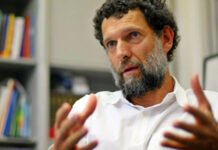
According to the TR724 news website, Ömer Faruk Gergerlioğlu, a member of the pro-Kurdish Peoples’ Equality and Democracy Party (DEM Party), said the reports concluded that Mehmet Gürler, a former military officer with advanced multiple sclerosis, was not fit to remain in prison.
He said prosecutor Hüseyin Türker refused to approve a sentence deferral, arguing that Gürler posed a threat to public safety despite his condition, which includes severe mobility impairment and difficulty standing.
The reports were issued by Turkey’s Council of Forensic Medicine, a state body whose medical evaluations are used by courts to determine whether prisoners are fit to remain in detention.
Gergerlioğlu questioned the legal basis for overriding the council’s findings and called on authorities to reconsider the decision.
In a February 9 report the council found that Gürler can no longer perform basic daily tasks on his own and that prison conditions are incompatible with his level of disability. An examination on January 30 recorded that he could only rise to his feet with another person’s assistance and faced a significant risk of falls. He also required help eating.
The council had reached the same conclusion in September 2024, finding permanent disability and chronic illness.
According to Law No. 5275, the sentence of a prisoner who, due to a serious illness or disability, is unable to manage life on their own under prison conditions and who is not considered a serious or concrete danger to society, may be suspended until they recover. However, the stipulated suspension of sentence is often not implemented.
Gergerlioğlu said his condition has worsened, with the disease reportedly spreading to the brainstem and causing balance and speech impairments.
The MP also alleged that Gürler did not receive adequate treatment in prison and was subjected to repeated long-distance transfers between facilities while handcuffed.
Rights groups and opposition figures have accused the ATK of inconsistently assessing prisoners’ health, in some cases concluding that seriously ill inmates are fit to remain incarcerated despite independent medical opinions. Critics also say that even when the council recommends sentence deferrals, decisions often come late, after inmates’ conditions have significantly deteriorated.
Gürler, 48, was arrested following a coup attempt in July 2016.
Turkey experienced the controversial military coup attempt on the night of July 15, 2016, which, according to many, was a false flag operation aimed at entrenching the authoritarian rule of President Recep Tayyip Erdoğan by rooting out dissidents and eliminating powerful actors such as the military in his desire for absolute power.
The abortive putsch killed 251 people and wounded more than a thousand others.
Following the failed coup, the Turkish government declared a state of emergency (OHAL) that remained in effect until July 19, 2018. During this period, the government carried out a purge of state institutions under the pretext of an anti-coup fight by issuing a number of government decrees, known as KHKs. Over 130,000 public servants, including 4,156 judges and prosecutors, as well as more than 24,000 members of the armed forces were summarily removed from their jobs for alleged membership in or relationships with “terrorist organizations” by emergency decree-laws subject to neither judicial nor parliamentary scrutiny.
Gürler was convicted of attempting to overthrow the constitutional order and sentenced to life in prison without the possibility of parole.
At trial, he denied any foreknowledge of the coup. At 11 p.m. on the night of the putsch, he told the court he was in shorts and a T-shirt some distance from the academy barracks, having individual conversations with officer candidates considering dropping out of the program. Around 1 a.m., he said, he ordered students onto buses believing he was moving them to safety, then reversed the order and prohibited anyone from leaving the base perimeter.
His health began declining in 2022, when he started experiencing double vision, involuntary eye movement and loss of balance. Neurological tests and MRI scans confirmed a diagnosis of multiple sclerosis, and his condition has worsened progressively since, to the point where he requires full-time assistance and can move only by wheelchair.